Wine Explained
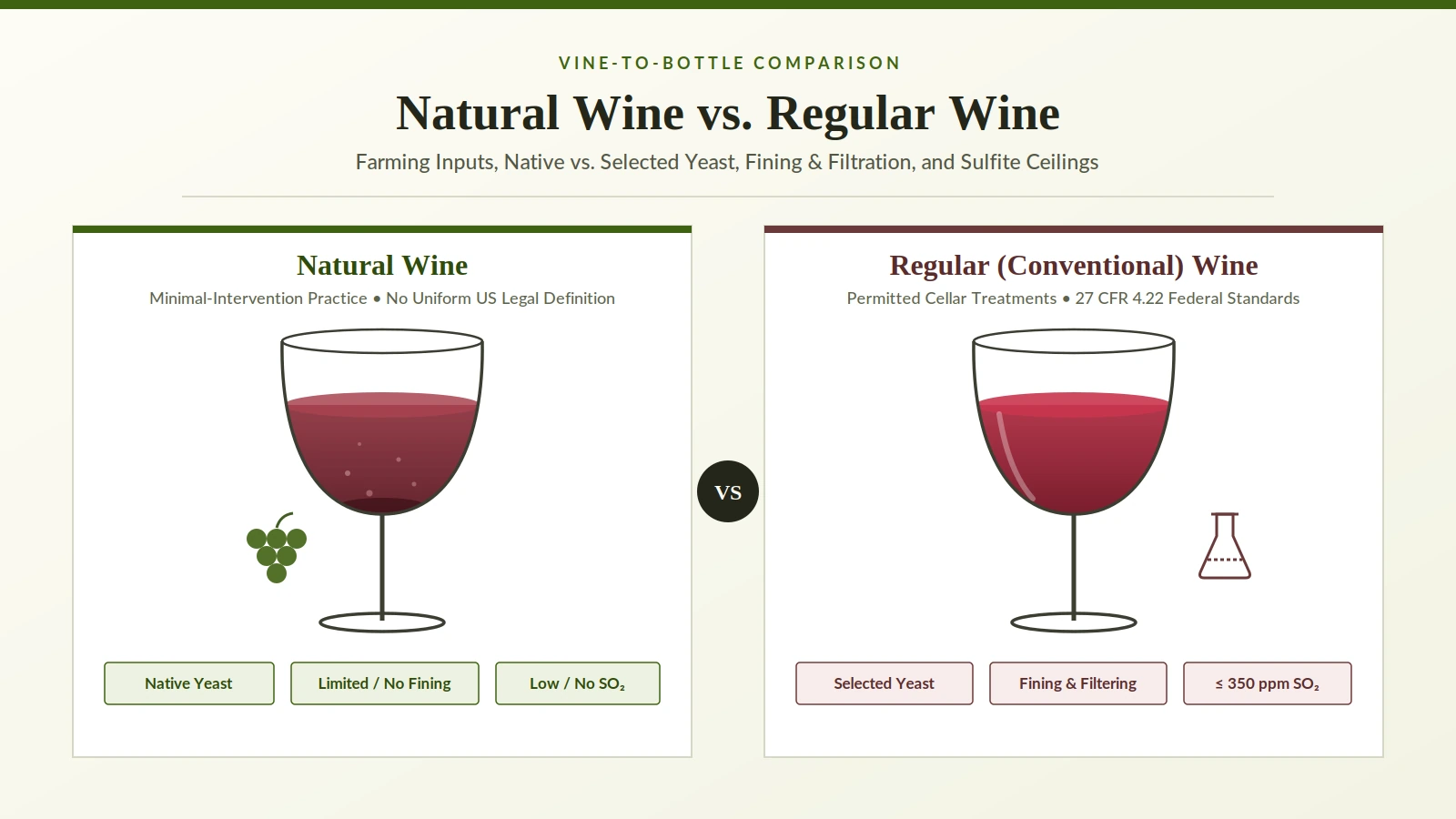
Natural Wine vs Regular: Farming, Yeast, Sulfites & Taste
Compare natural wine vs regular wine across pesticide-free farming, native yeast, fining, filtration, sulfite limits, organic and biodynamic rules.
Explore independent explainers on grape varieties, aging science, closures, labels, winery bottling technology, the 75-85-95 wine label rule, natural wine vs regular wine, wine vintage dates versus bottling dates, how to tell if wine is heat damaged, how long wine lasts after opening by style, and Napa estate bottled vs single vineyard label rules.
Compare natural wine vs regular wine across pesticide-free farming, native yeast, fining, filtration, sulfite limits, organic and biodynamic rules.
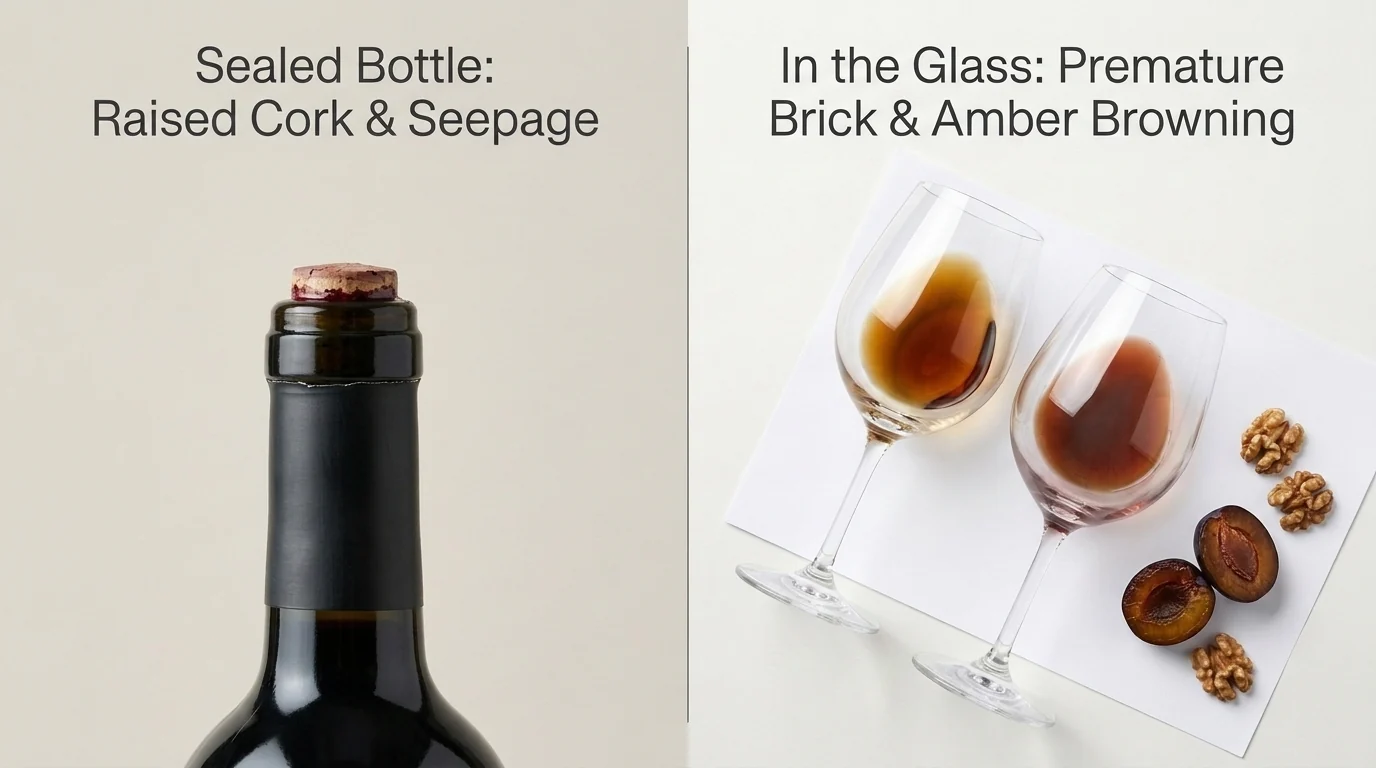
Heat-damaged wine shows a pushed-out or stained cork and seepage before opening, plus cooked-fruit and walnut aromas with premature browning once poured.
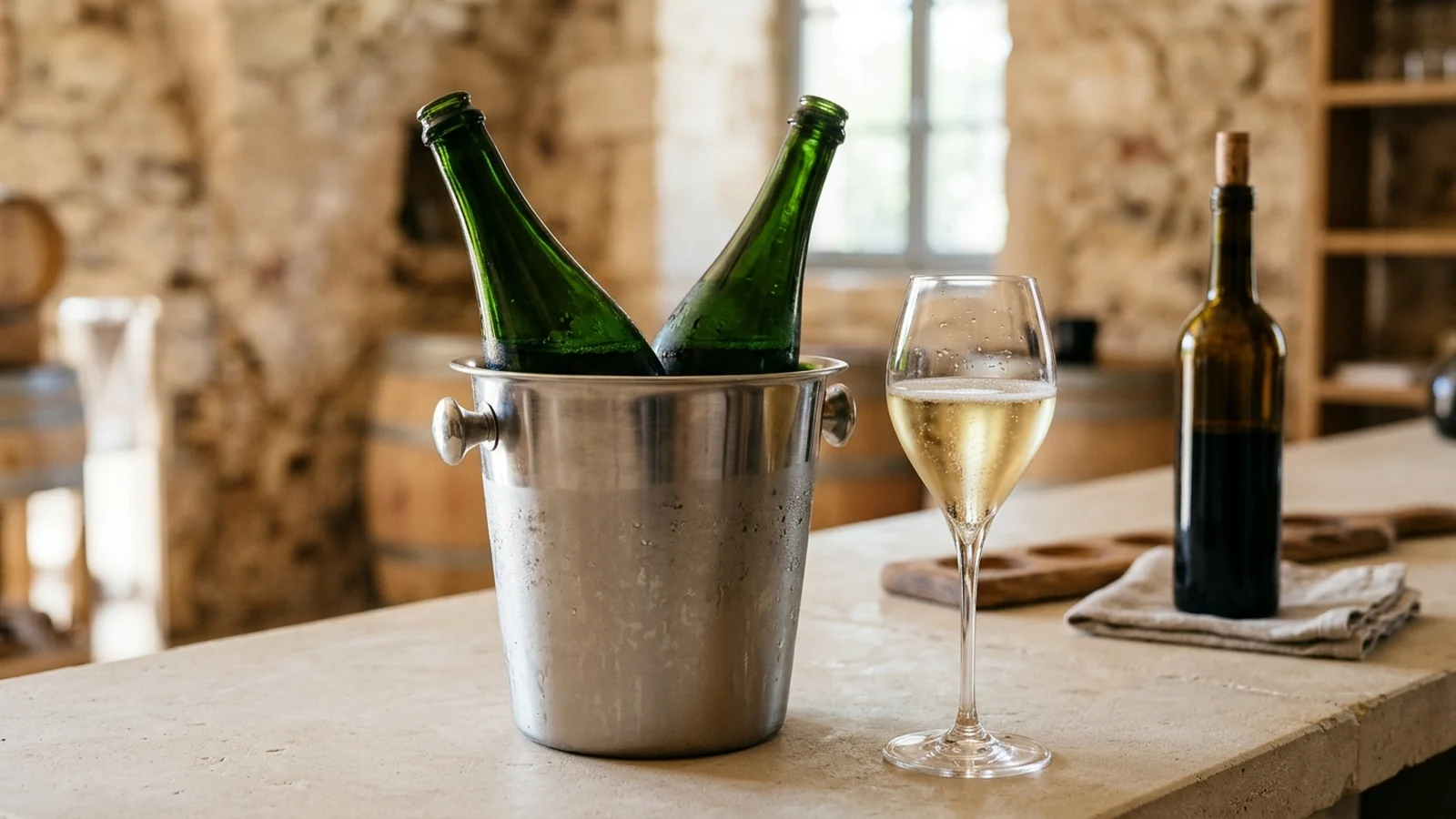
Guide to wine serving temperatures across sparkling, white, rosé, dessert, and red styles, covering CO2 solubility, aroma volatiles, and chilling rates.
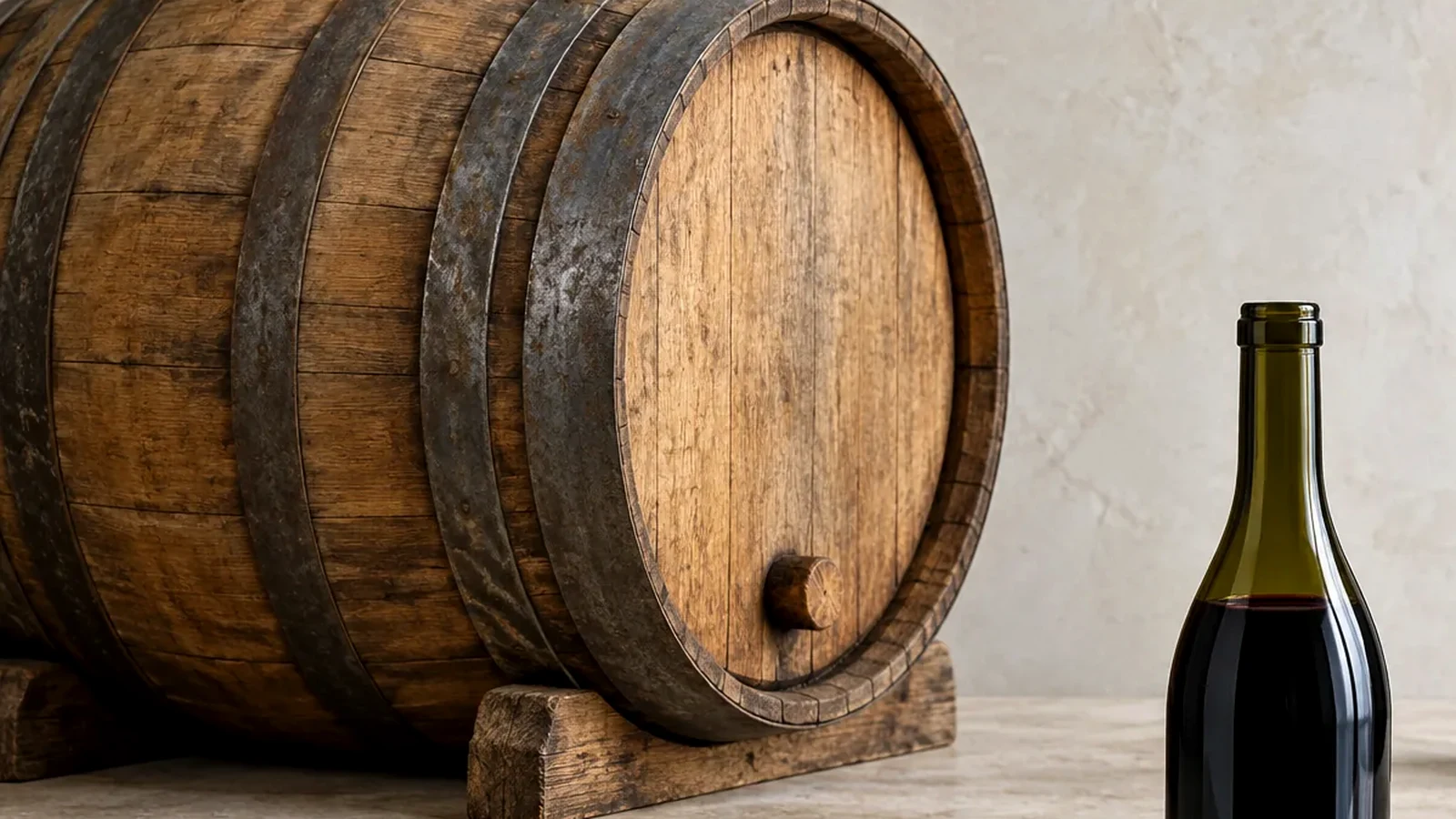
Practical cellar guide to maturing wine in oak barrels, managing liquid loss over time, controlling air exposure, and keeping vessels topped before bottling.
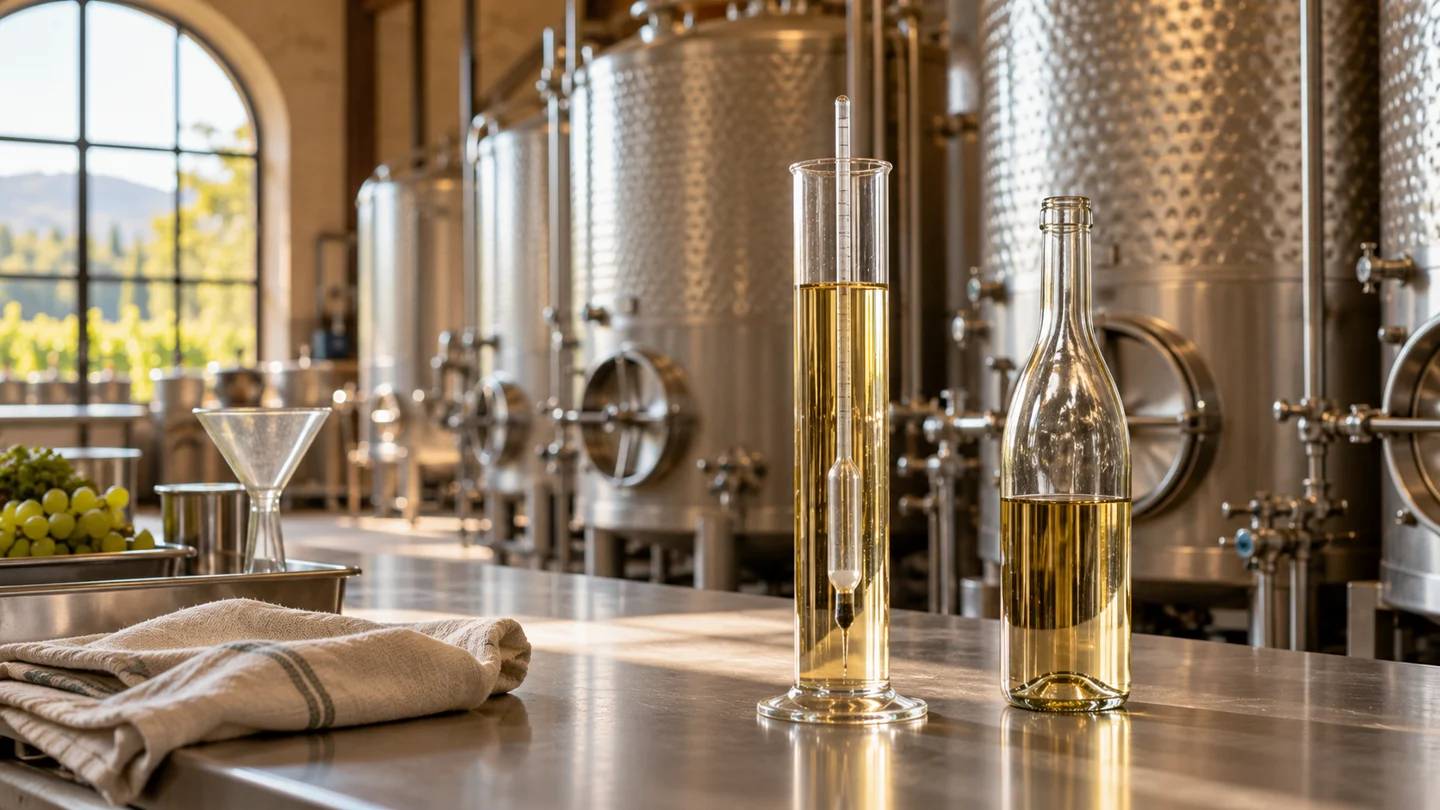
Check wine fermentation before bottling: explore specific gravity, residual sugar tests, malic-acid results and the questions to record for a bottling review.
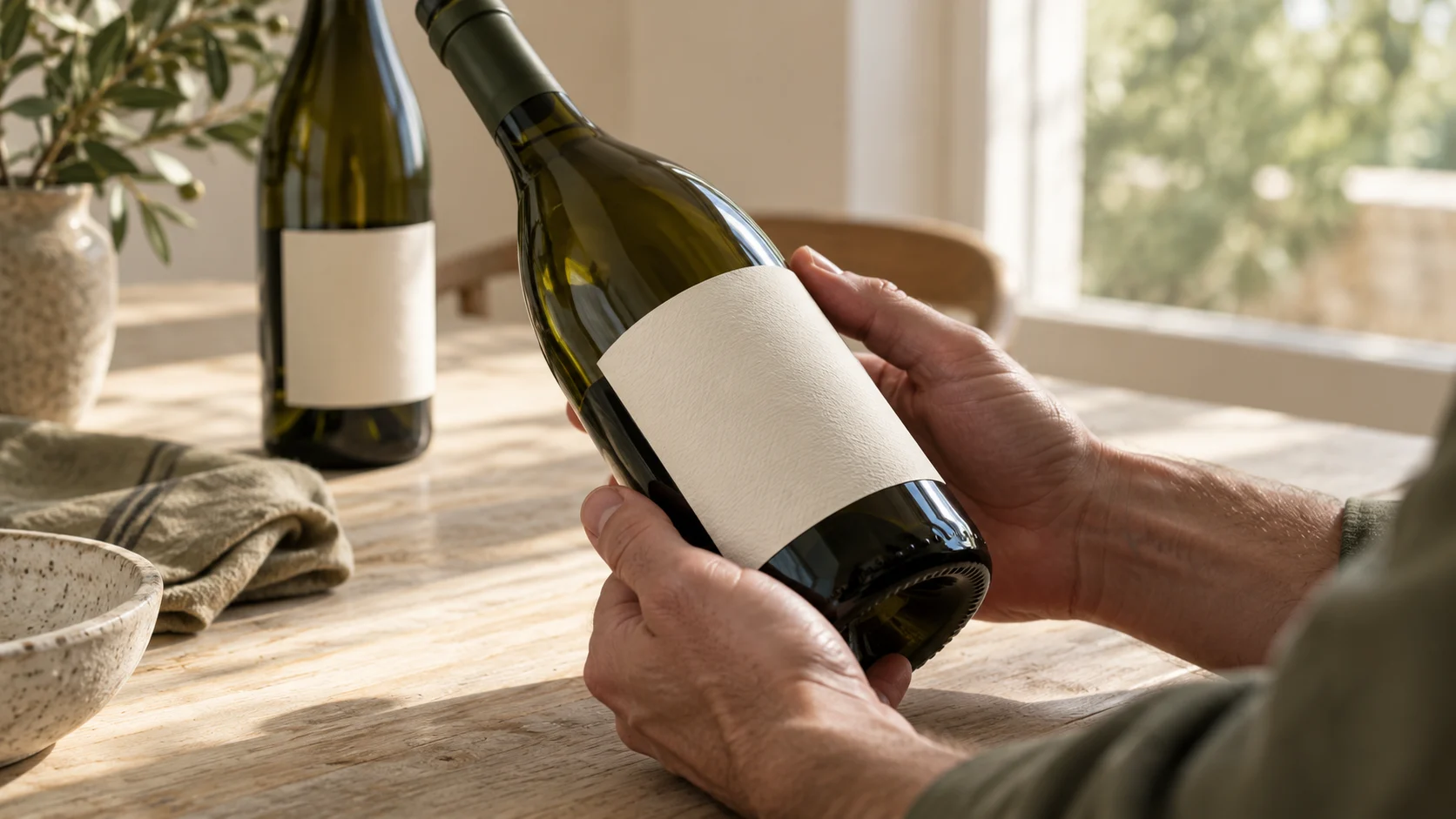
Learn how to read a wine label: find the brand and type, check appellation wording, compare alcohol tolerances, and decode estate bottled.
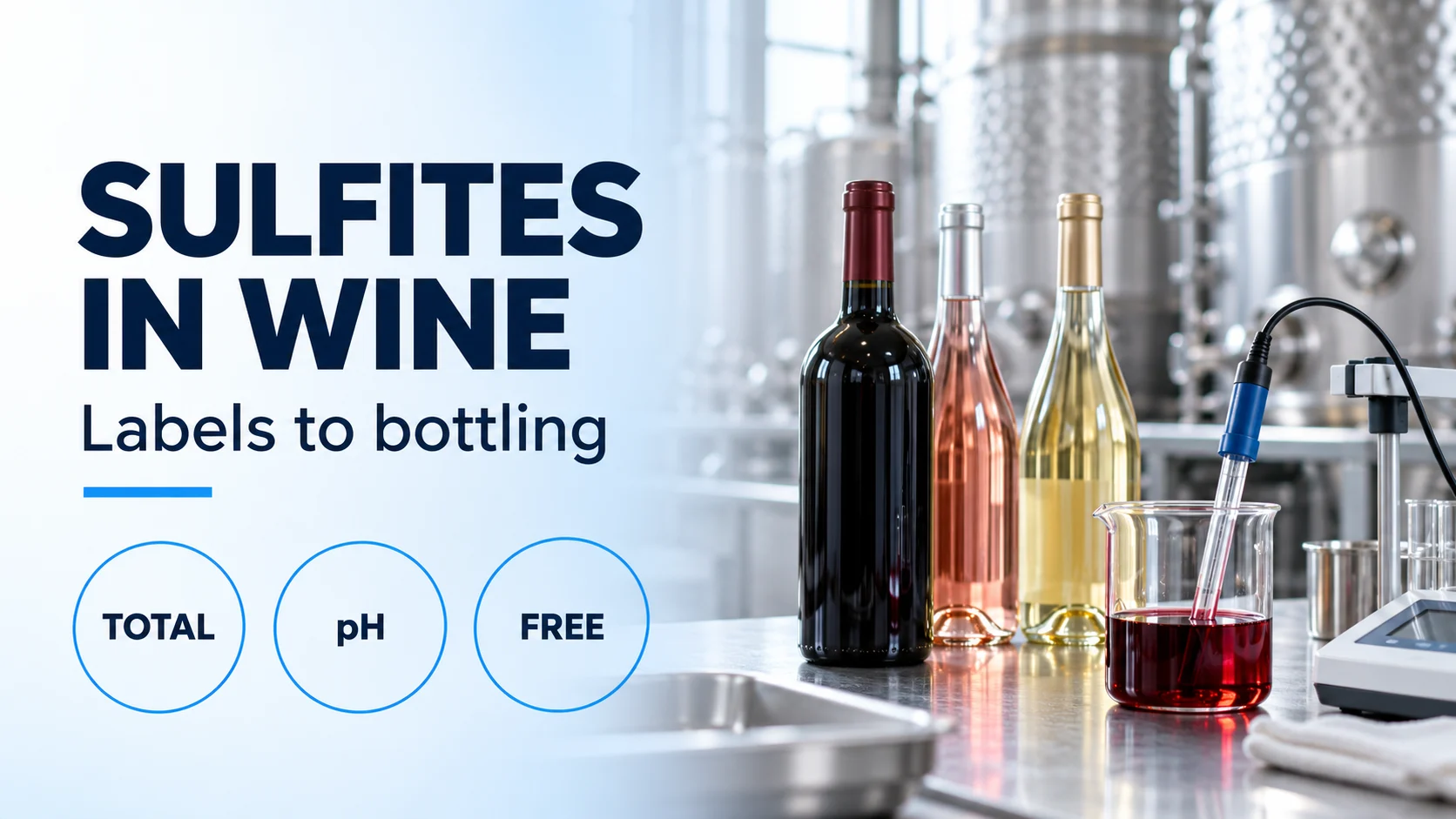
Understand the U.S. sulfite label threshold, organic wine claims, pH-dependent molecular SO₂ and the measurements that matter at bottling.
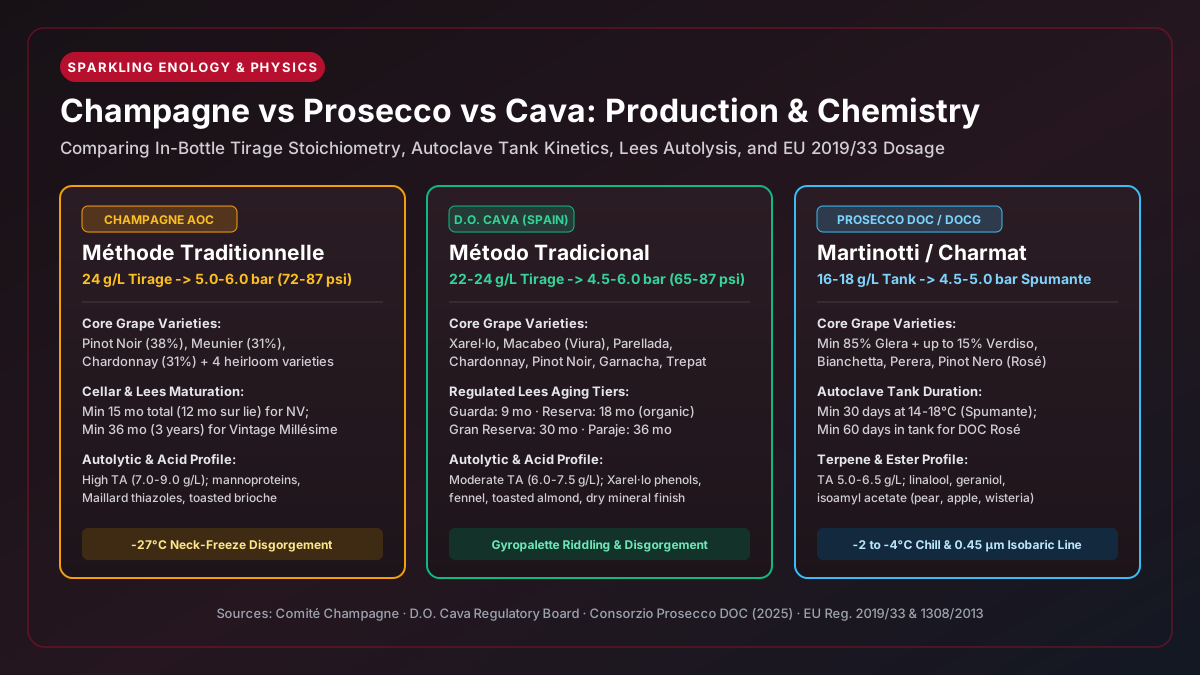
Compare Champagne AOC, Prosecco DOC/DOCG, and Cava DO across traditional method vs Charmat secondary fermentation, tirage pressure stoichiometry, lees autolysis, and Mimosa sugar balance.
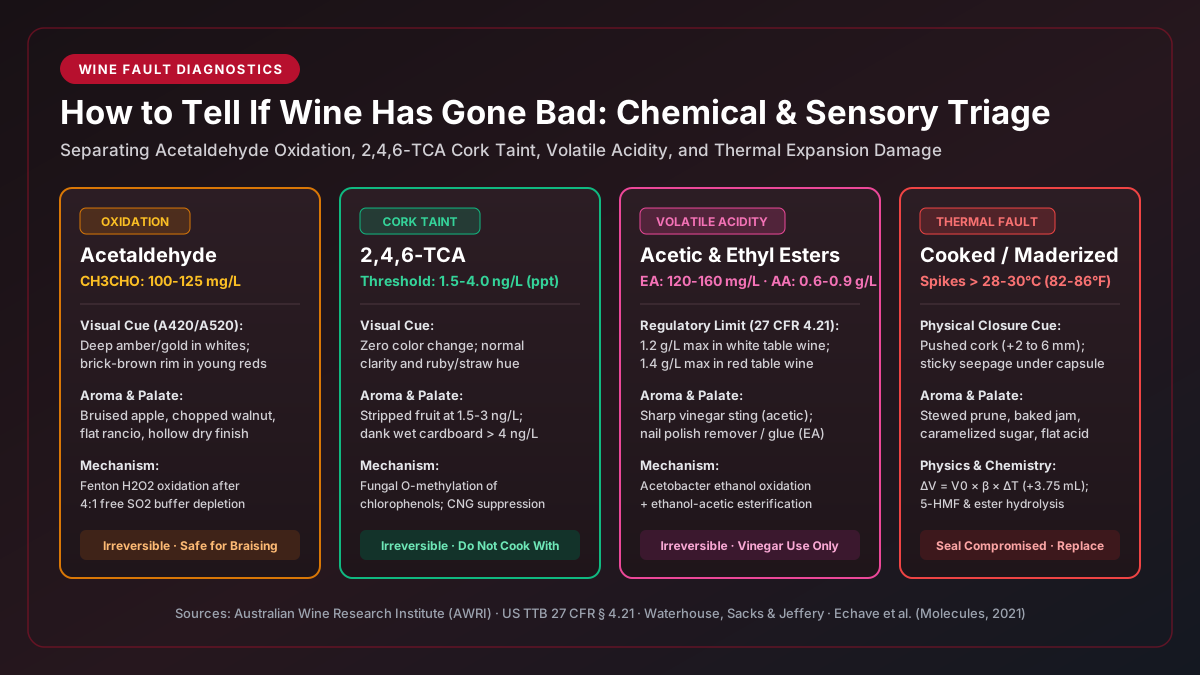
Identify spoiled wine through closure inspection, A420/A520 browning ratios, and chemical aroma thresholds for acetaldehyde, 2,4,6-TCA cork taint, and volatile acidity.
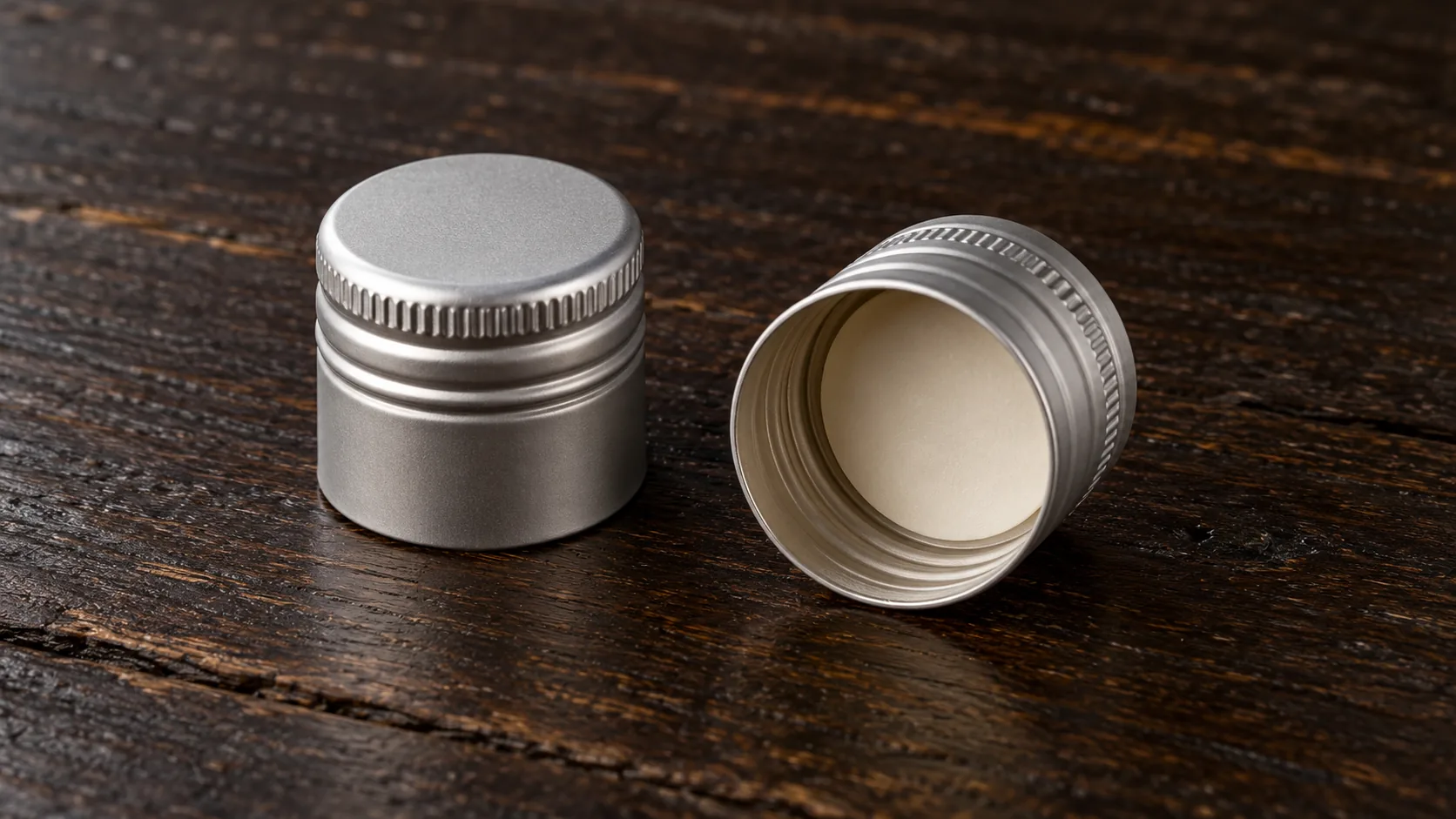
AWRI prints overlapping oxygen ranges for Saran Tin and Saranex. The endpoint ratio of those ranges is 2, so one liner is not ten times the other on every cap.
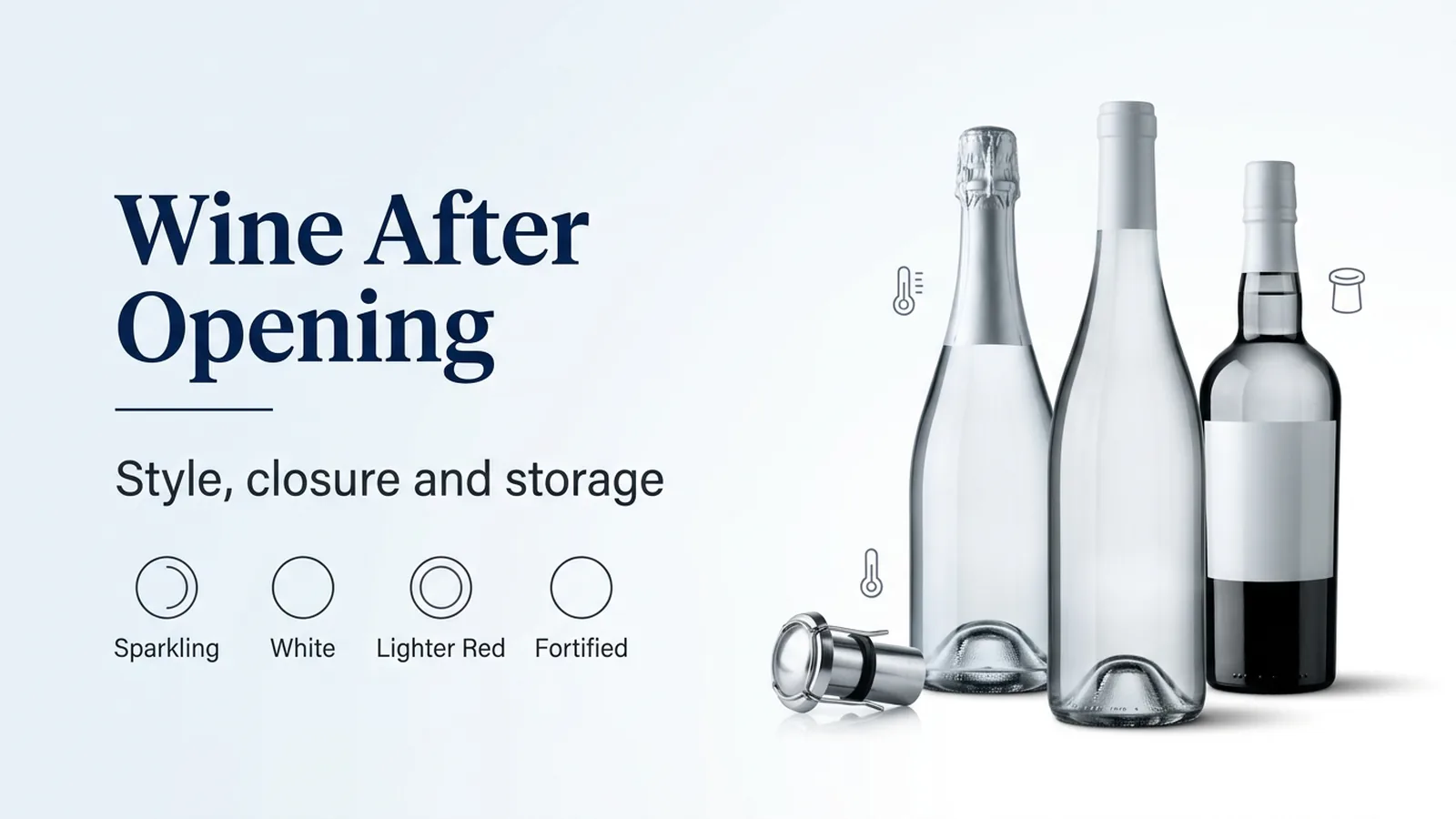
Opened wine lasts up to three days for sparkling, five days for white or rosé, seven days for red, and up to 4 weeks for fortified or bag-in-box wine.
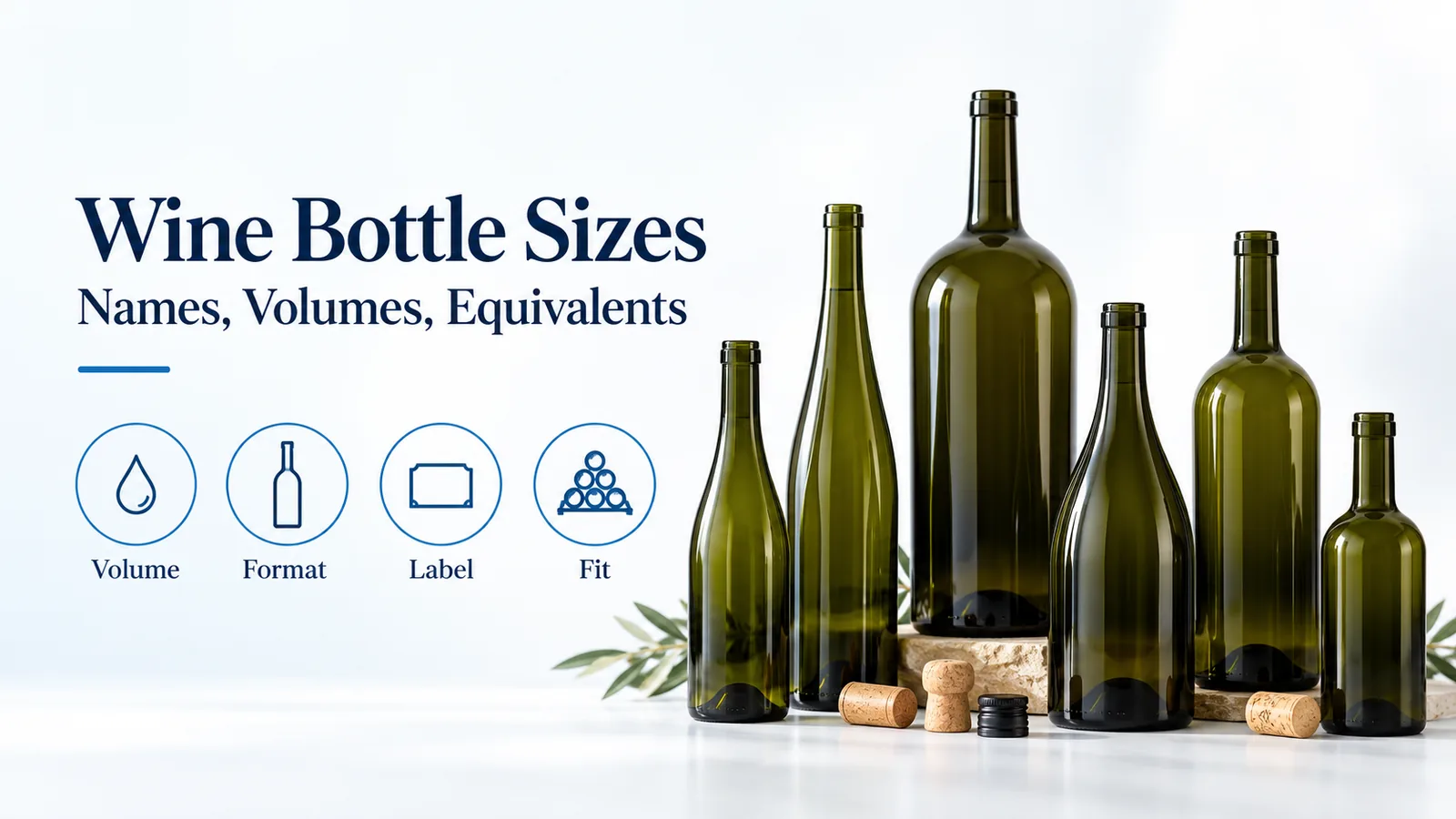
Compare wine bottle sizes by volume and standard-bottle equivalents, with Champagne names, US fill standards and checks for confusing formats.
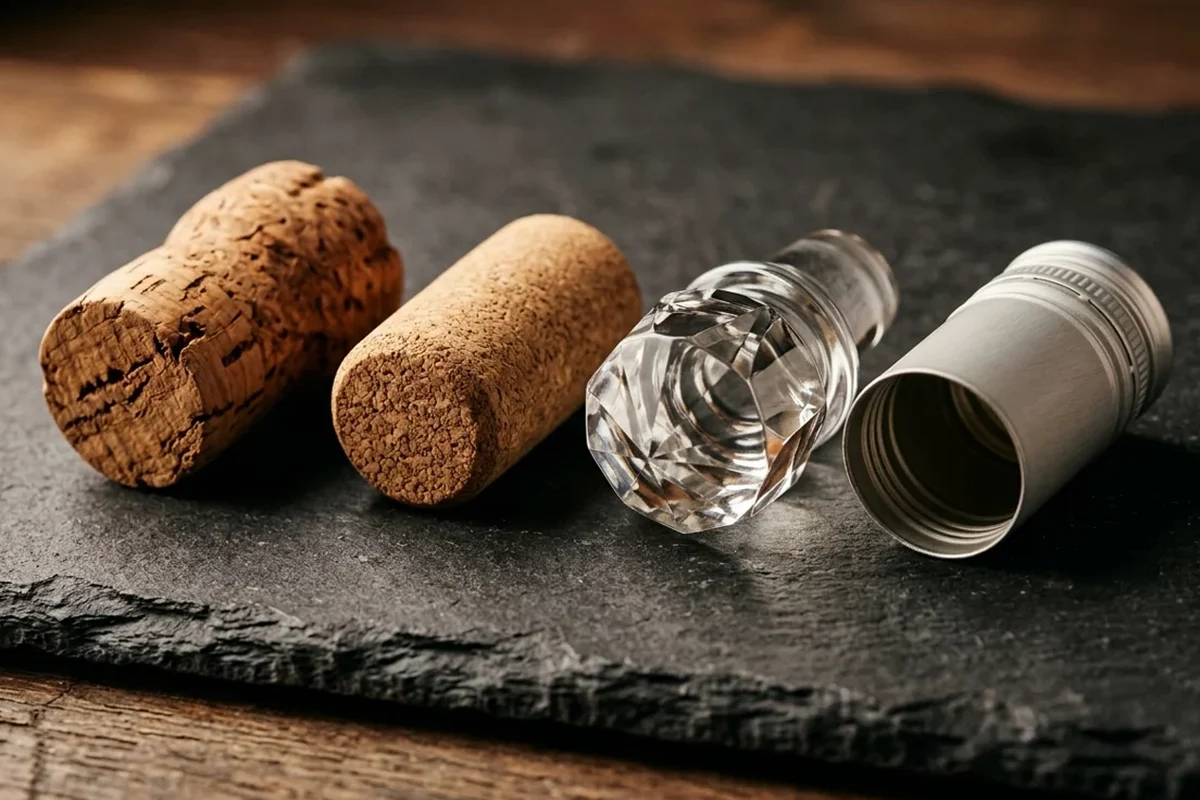
Yes, screw-cap wine can smell corked. Learn how TCA and TBA enter wine via oak barrels, chlorine sanitizers, water, or additives—and how to tell taint from reduction.
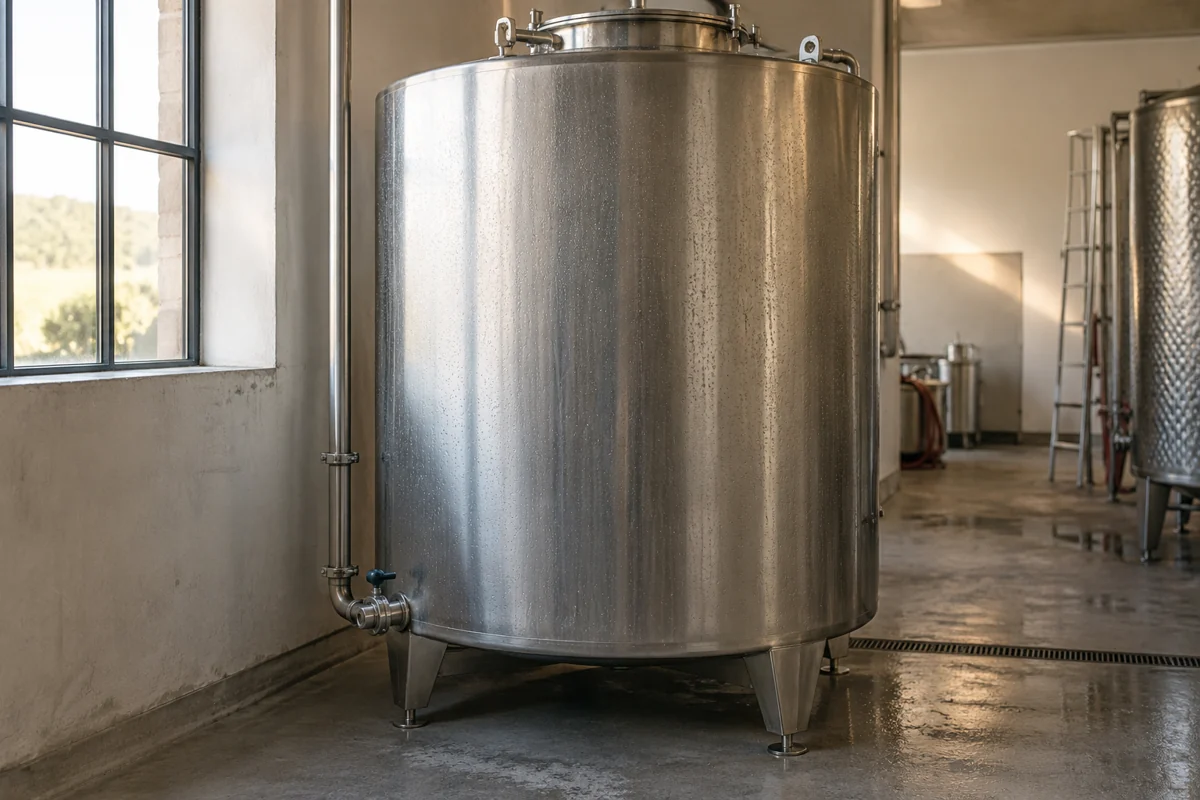
Cold stabilization targets potassium bitartrate crystals before bottling. See the cellar sequence, what a stability test means and which problems need separate checks.
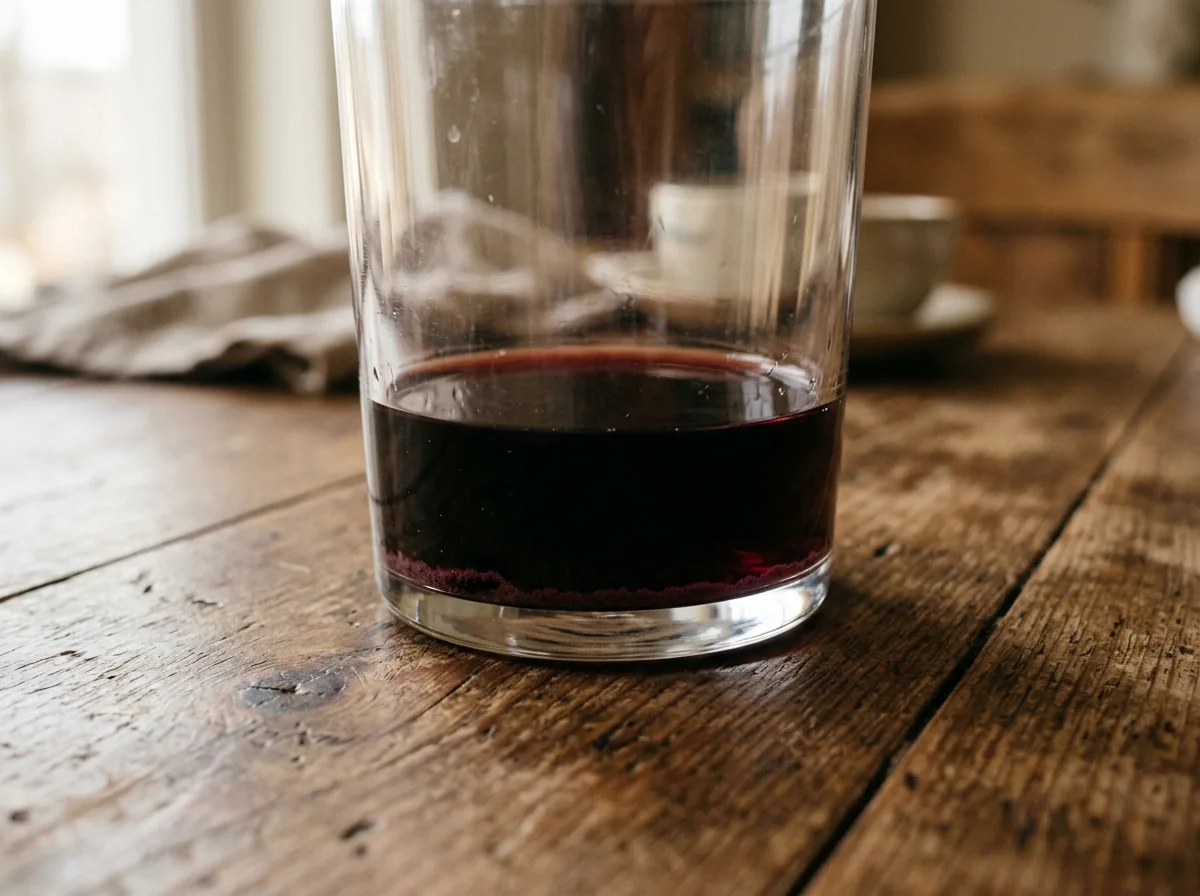
Wine sediment can contain tartrate crystals, pigments, tannins or yeast-containing lees. Compare the groups and the limits of identifying them by appearance.
Compare Napa estate bottled (100% owned or 3-year leased AVA grapes, bottled on-site) vs single vineyard (95% named-site fruit) under 27 CFR 4.26 and 4.39(m).
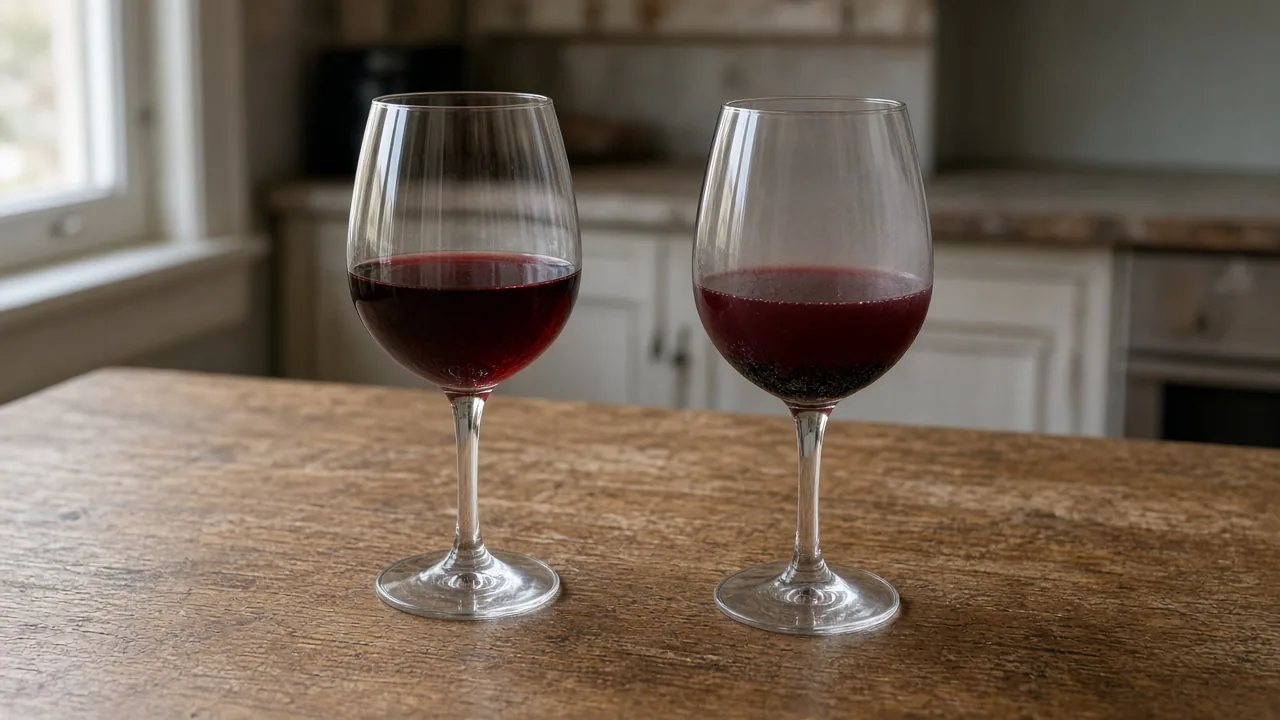
Unfined names a fining-agent step and unfiltered names a physical filter. AWRI pages read on October 11, 2026 keep the two apart. A clear glass does not prove either one.
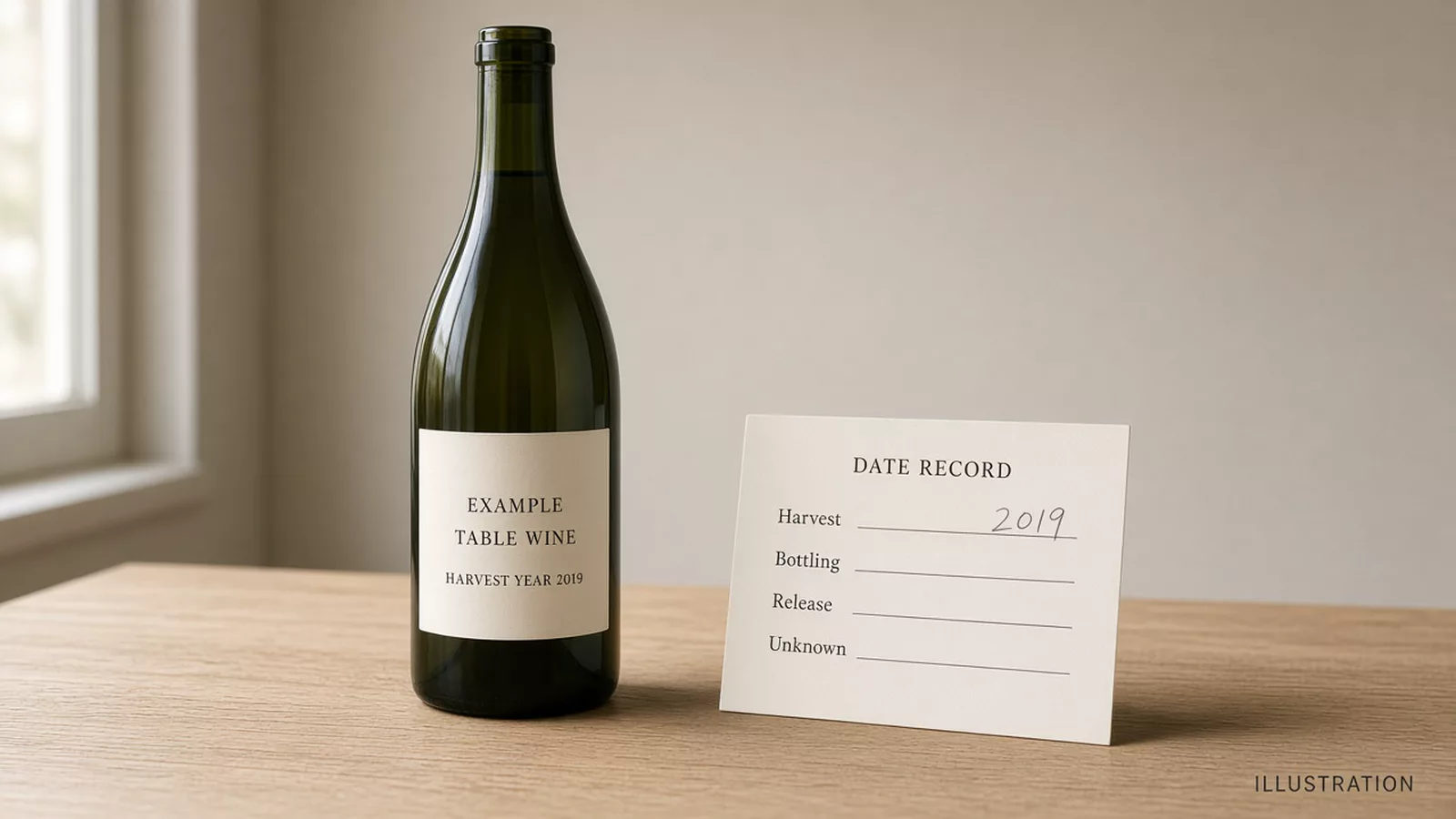
A wine vintage date is the grape harvest year, not the bottling date. Learn the 95% AVA and 85% US label rules, global minimums, and how to verify bottle dates.
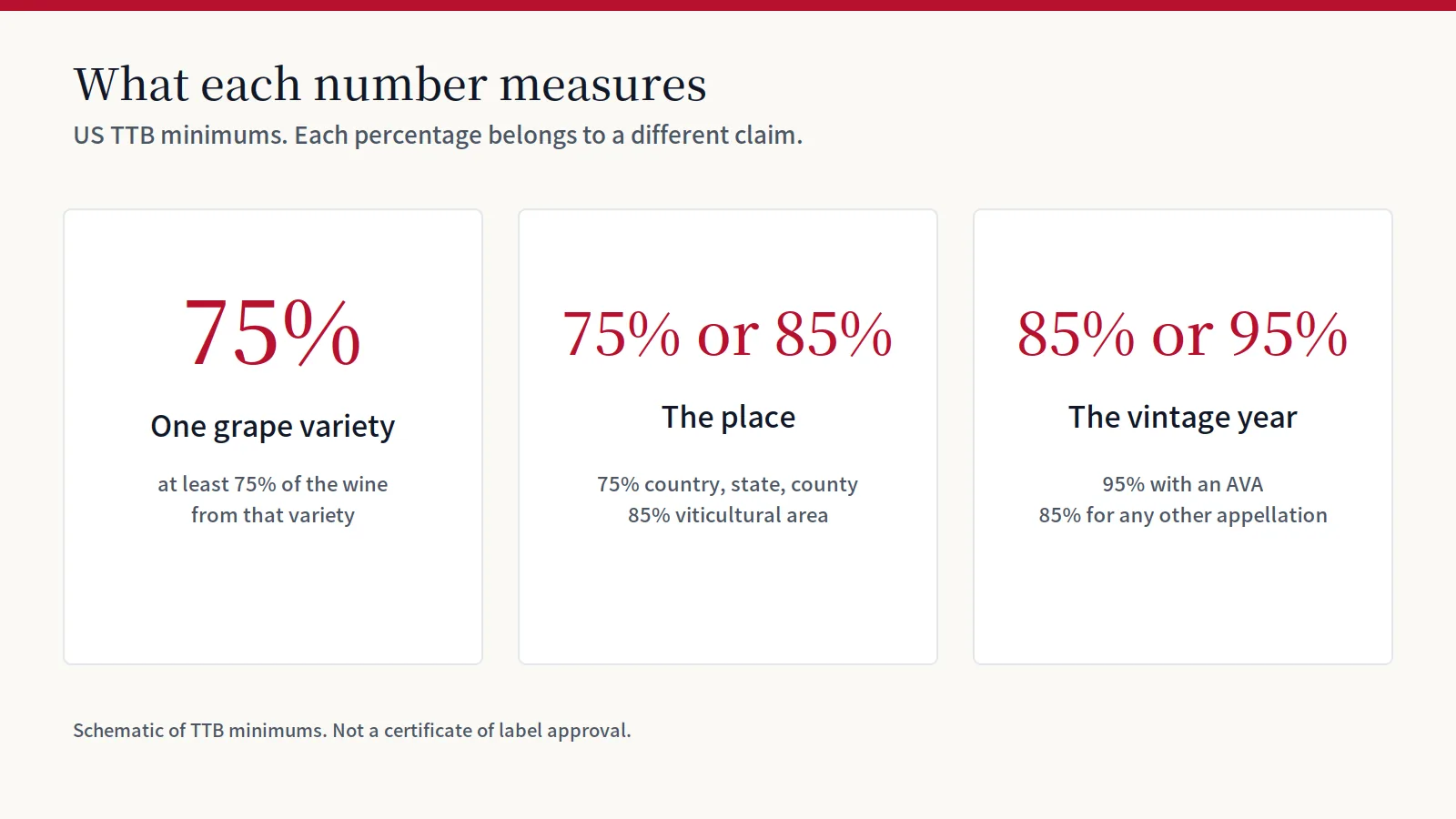
What is the 75-85-95 rule for wine? See the exact U.S. TTB minimums for grape variety, appellation, and vintage year, plus worked labels and key exceptions.
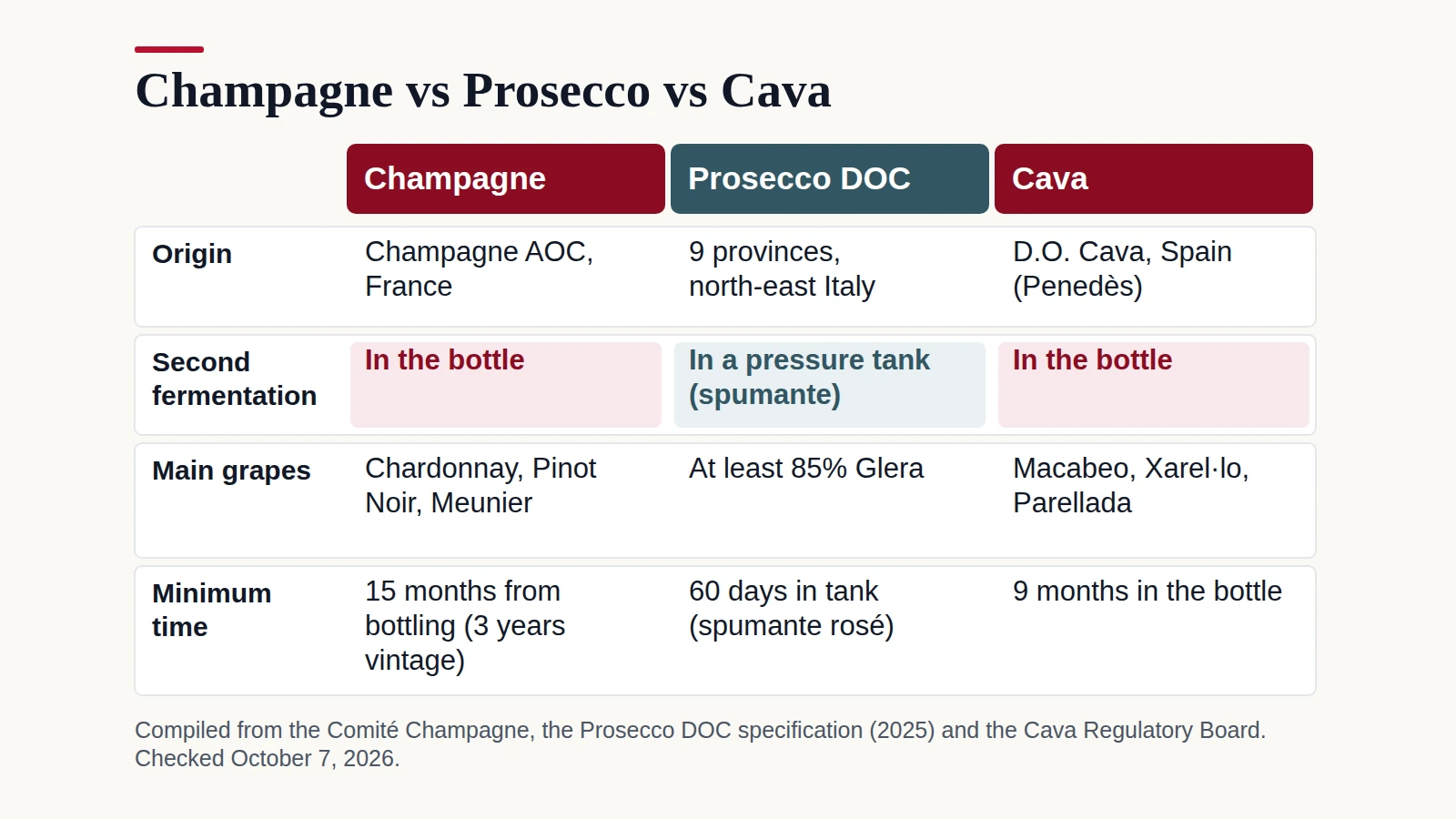
How Champagne, Prosecco and Cava differ in where they come from, how the bubbles are made, what Brut or Extra Dry means in grams per litre, and why the bottles are sealed differently.
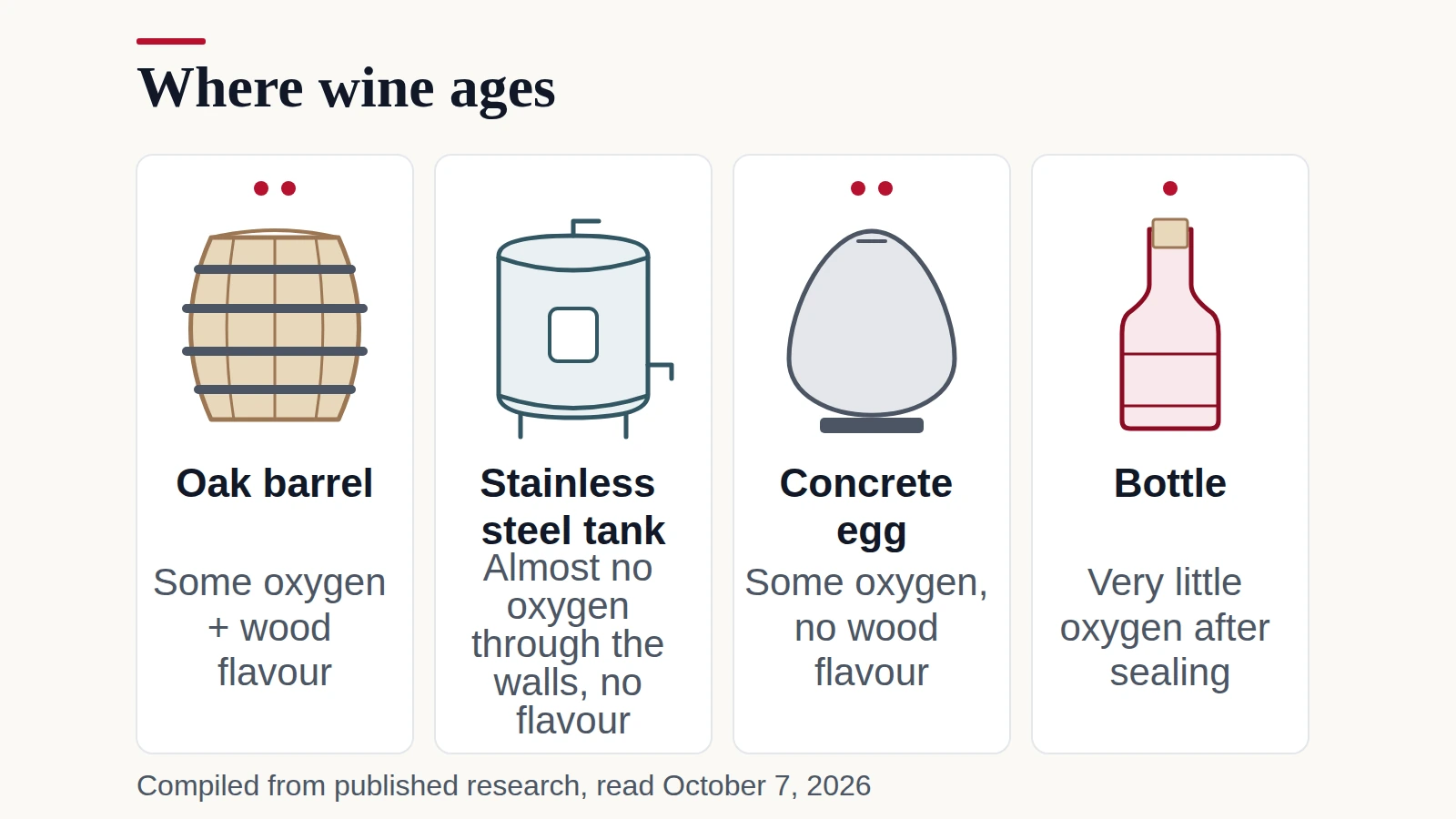
How wine aging works: what oxygen does, how oak barrels, steel tanks, concrete eggs and the bottle compare, what lees aging means, and what aging words on a label tell you.
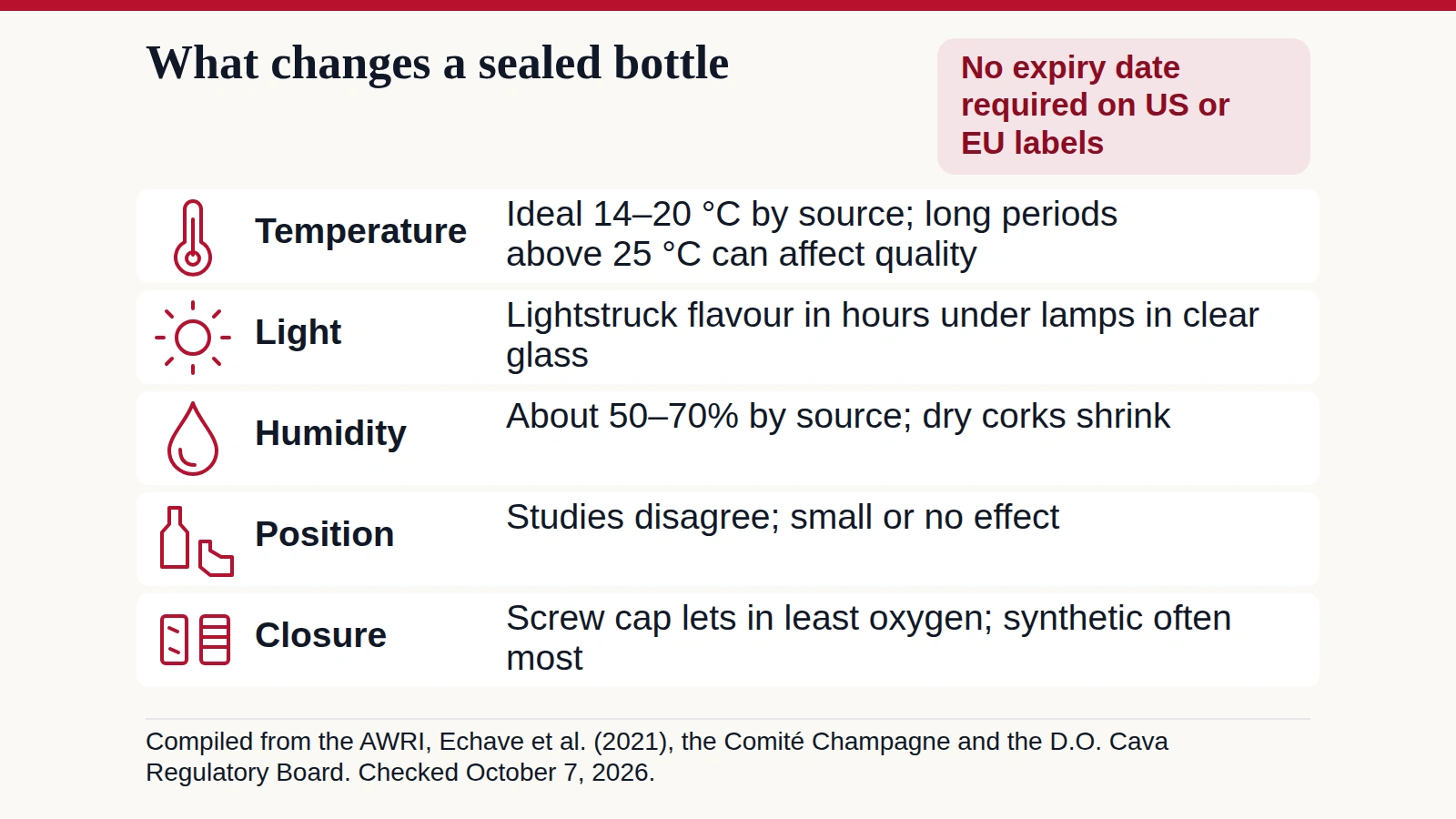
Wine labels carry no required expiry date, but sealed wine still changes. What research says about temperature, light, humidity, position and closures, plus a simple storage record.