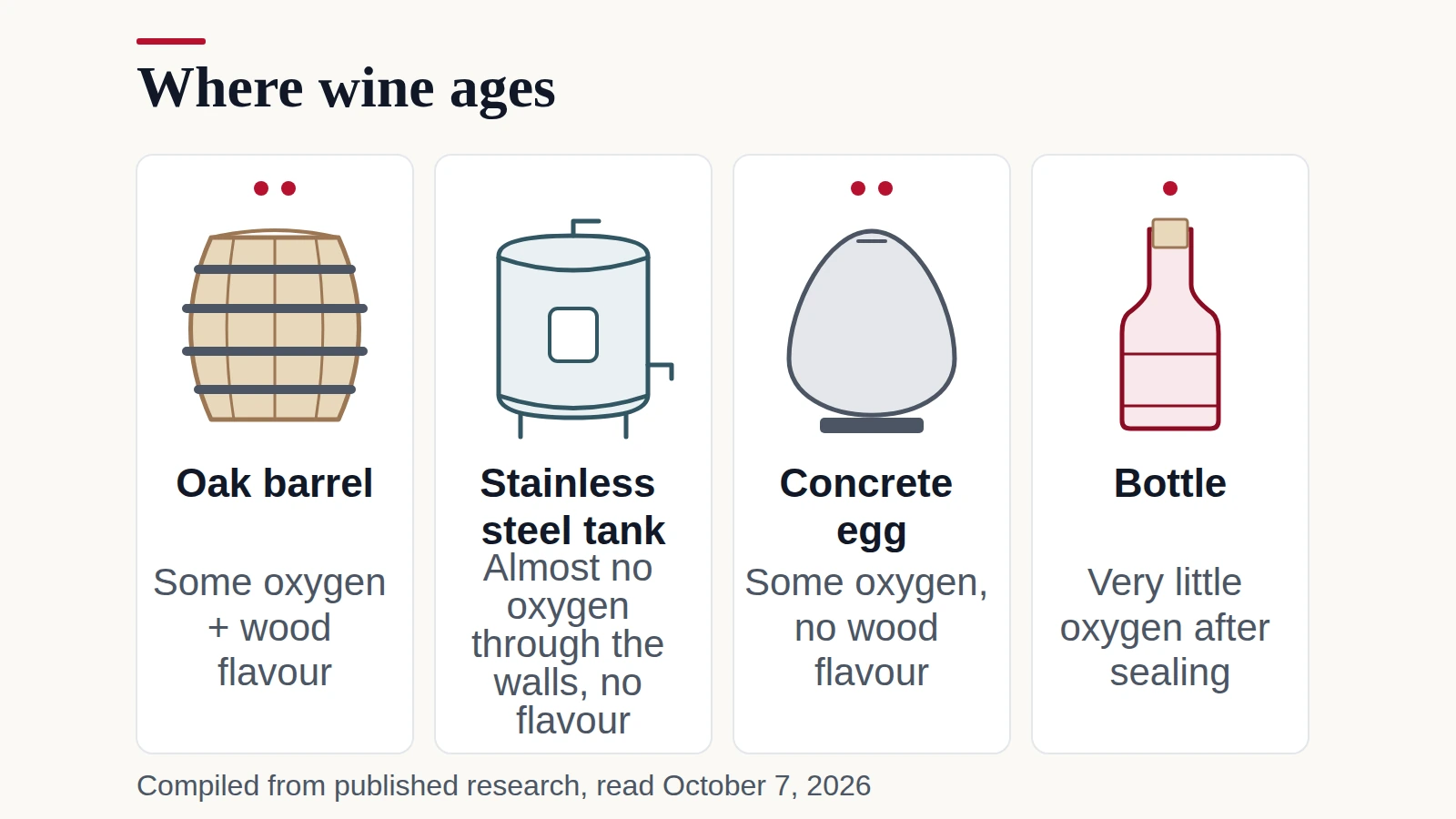
Reading “aged in oak” as a promise that a wine keeps improving can cost you the best years of a bottle. Aging is the slow chemical change that follows fermentation, and small amounts of oxygen are one of its main drivers: oak barrels let some in through the wood and add flavour, steel tanks let none through their walls, concrete lets a little through without adding flavour, and a sealed bottle admits very little.
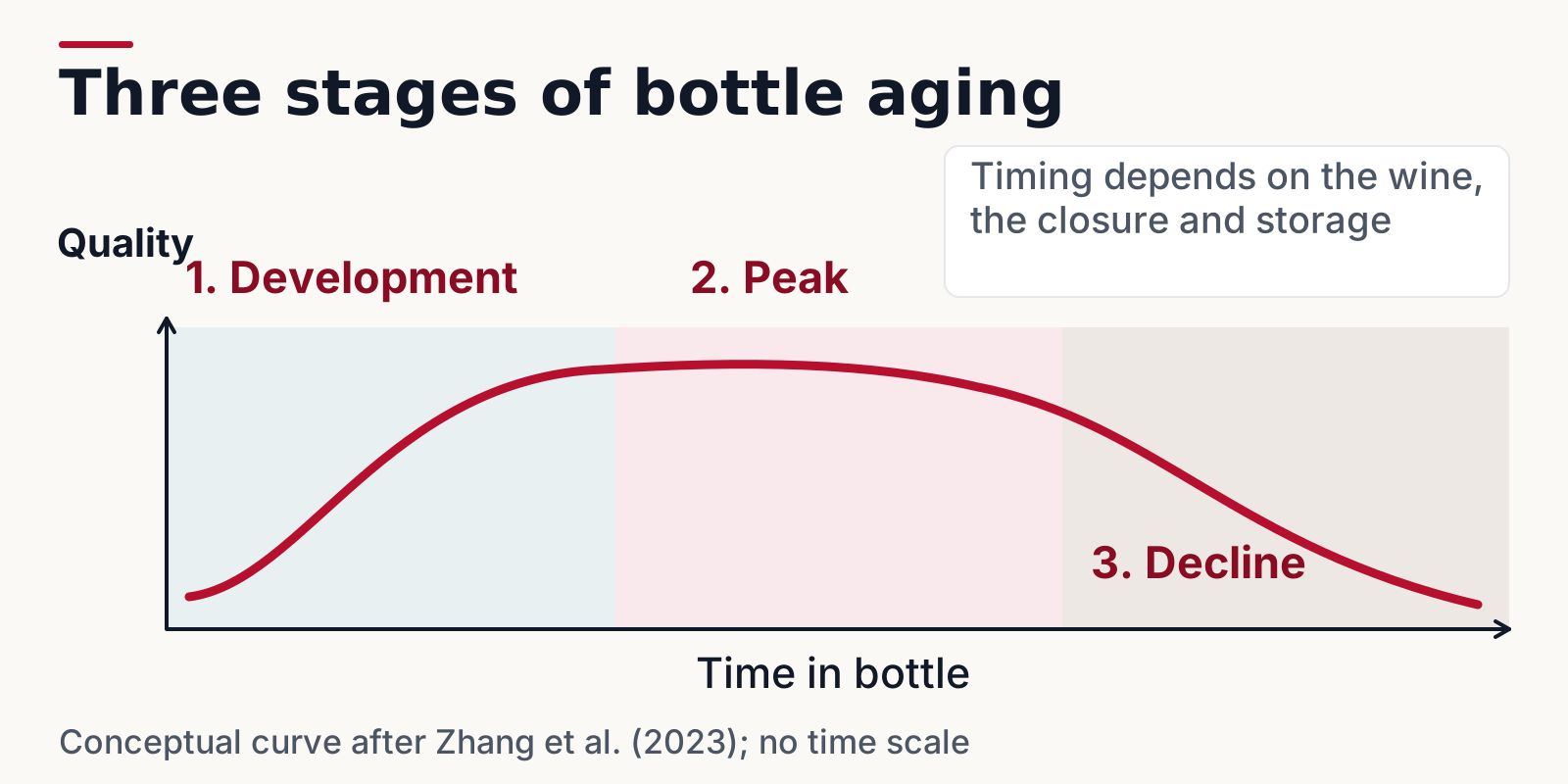
Wine aging covers the months or years between fermentation and the glass. According to a 2021 review in Molecules, barrel-aged wines usually spend 3 to 22 months in barrel, sometimes several years, while oxygen seeping through the staves drives tannin and pigment reactions and the toasted wood adds compounds such as vanillin and oak lactones. A 2023 review describes aging in the bottle as a three-stage curve: the wine develops, reaches its best, then usually declines. How far a wine travels along that curve depends on its composition, the vessel, the closure and storage.
This page compiles published research and the official Champagne and Cava bodies, read on October 7, 2026. It explains the mechanism and compares the vessels; it does not rate wines, say how long a particular wine will age or recommend what to buy.
Key points:
- Oxygen is a main driver. Controlled amounts soften red wine; too much browns it, too little favours sulfur smells. Other reactions, such as ester formation, run alongside.
- The vessel shapes the oxygen supply. Oak and concrete are porous, stainless steel walls are not, and after sealing a bottle admits oxygen only through or around the closure.
- Only oak adds flavour. Toasting changes which wood compounds reach the wine.
- Aging is a curve, not a climb. Wines improve, peak, then usually decline.
What is wine aging?
Aging, also called maturation, has two settings: a vessel at the winery, such as a barrel or tank, and then the bottle. In each, the wine’s colour, aroma and texture change through reactions with oxygen, with compounds from wood, with yeast lees, and between the wine’s own acids and alcohols, which form and break down esters (Zhang et al., 2023).
| Stage | Where it happens | What changes | Source |
|---|---|---|---|
| Fermentation (not aging) | Tank or barrel | Yeasts turn grape sugar into alcohol | Echave et al., 2021 |
| Vessel aging | Oak barrel, steel or concrete tank | Controlled oxidation; wood compounds pass into the wine if oak is used | Echave et al., 2021 |
| Bottle aging | Sealed bottle | Slow change with very little oxygen; colour darkens, astringency softens | Echave et al., 2021; Zhang et al., 2023 |
Wine scientists sort aroma into three groups: varietal aroma from the grape, fermentation aroma from the yeast, and aging aroma, which forms during maturation (Zhang et al., 2023). The barrel stage is often called “oxidative aging” and the bottle stage “reductive aging”, because one lets a little oxygen in and the other almost none. Our Wine Explained section covers other basic terms.
Takeaway: Treat “aging” as a stage after fermentation with its own vessels and time, not as a quality label.
What does oxygen do to aging wine?
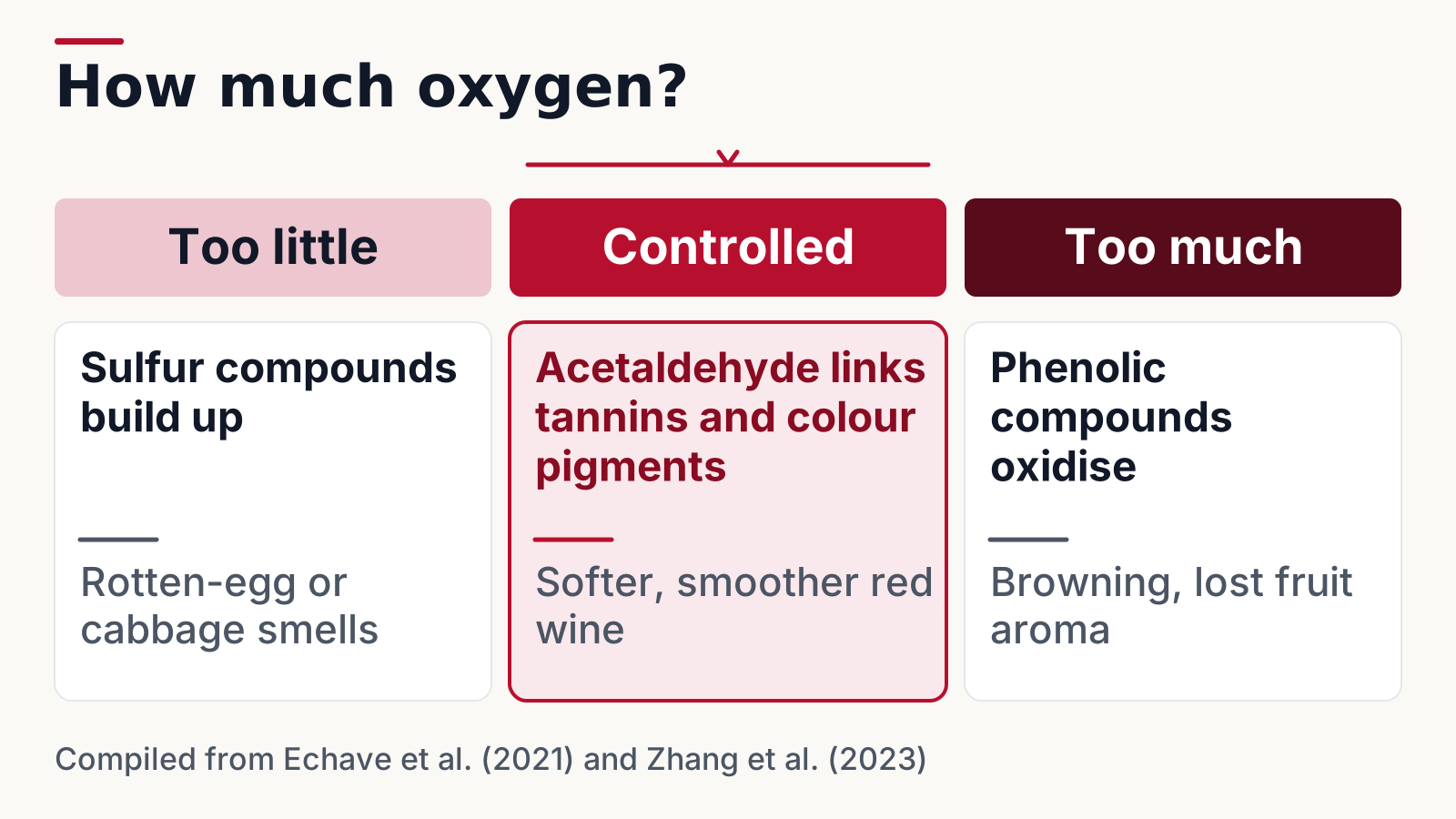
Oxygen drives many of the aging reactions, and the amount decides whether the result helps or harms. Small, steady amounts let tannins and colour pigments bind into larger molecules, which makes red wine feel softer; too much browns the wine and strips its aroma; too little favours sulfur compounds that smell of rotten eggs.
| Oxygen level | What happens | Signs | Source |
|---|---|---|---|
| Too little | Sulfur compounds such as hydrogen sulfide and mercaptans build up, more often in nearly airtight bottles | “Reductive” smells of rotten egg or cabbage, noticeable at very low concentrations | Echave et al., 2021; Zhang et al., 2023 |
| Controlled | Ethanol forms small amounts of acetaldehyde, which links tannins and anthocyanins (colour pigments) into larger molecules | Fuller, softer, smoother red wine | Zhang et al., 2023 |
| Too much | Phenolic compounds oxidise to brown pigments; ethanol to acetaldehyde in excess | Browning, “oxidised” aromas, loss of fruit; most visible in white wine | Echave et al., 2021 |
Two details explain why some wines cope better than others. The reactions need metal ions such as iron and copper as catalysts, and they consume the wine’s phenolic compounds, natural grape compounds that include tannins and colour pigments. Red wines carry far more of these than whites, which is why reds tolerate long aging better. Sulfur dioxide added before bottling reacts with oxygen first and protects them (Zhang et al., 2023). For the oxygen that reaches a sealed bottle through its stopper, see how cork and screw cap closures compare.
Takeaway: Ask how much oxygen a wine has seen, and when; that explains more about its development than the word “aged” on its own.
How do barrel, tank, concrete egg and bottle aging compare?
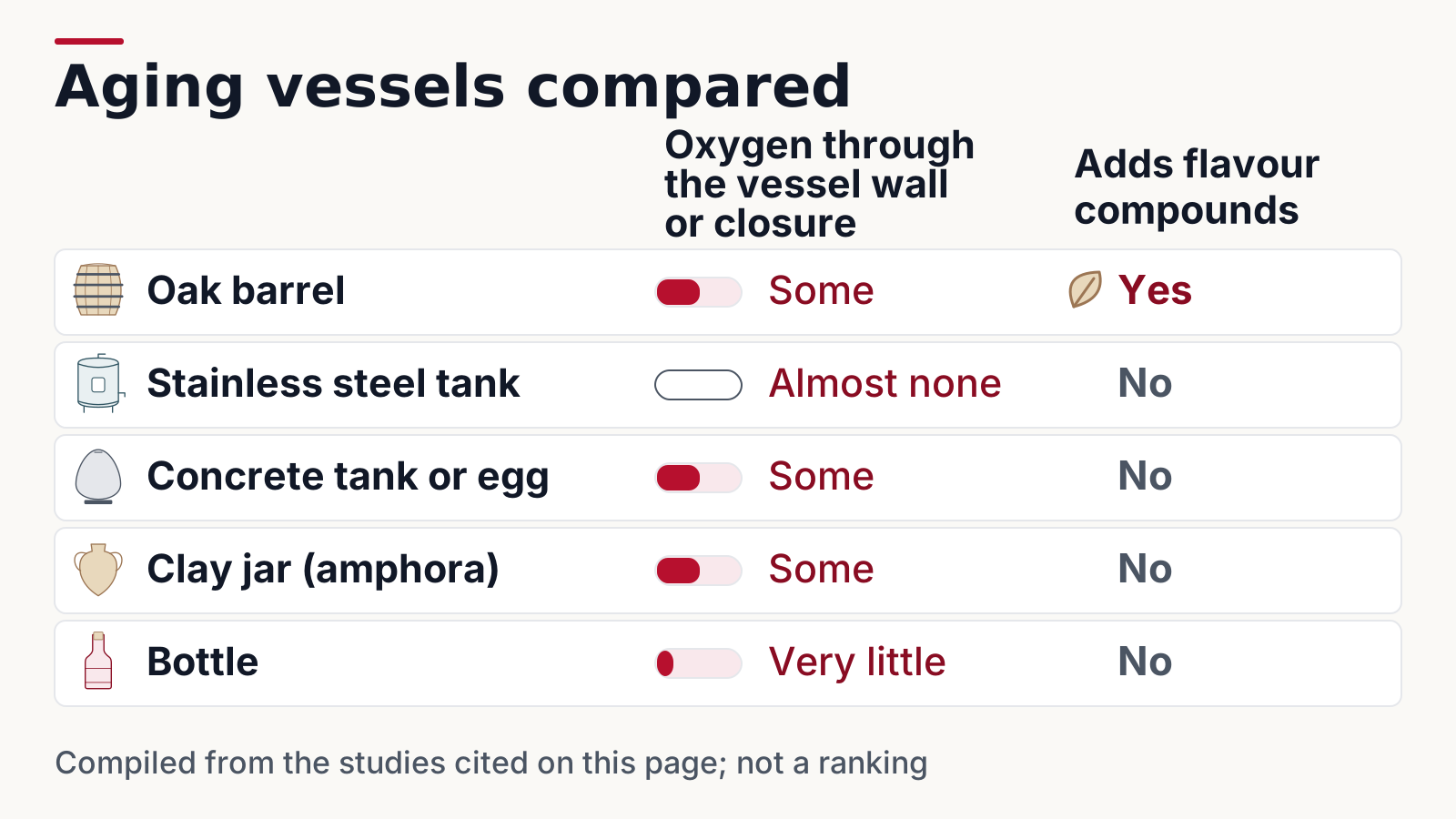
They differ in two ways that matter: how much oxygen passes through the vessel itself and whether the vessel adds flavour. Oak barrels do both; stainless steel does neither; concrete, including egg-shaped tanks, lets some oxygen through but adds no wood aroma; a sealed bottle lets in only what passes the closure. Wine also picks up oxygen during handling and bottling, and a bottle starts with some dissolved in the wine and in the headspace (Echave et al., 2021); the table compares only what the vessel adds.
| Vessel | Oxygen through the wall or closure | Adds flavour compounds? | What the research says | Source |
|---|---|---|---|---|
| Oak barrel | Some, through gaps between the staves and pores in the wood | Yes: wood compounds such as vanillin, oak lactones and ellagitannins | Barrel-aged wines typically spend 3 to 22 months in barrel, sometimes several years | Echave et al., 2021 |
| Stainless steel tank | Almost none; the steel is not porous | No | One comparison cited in a 2023 review found steel-aged wines kept more sulfur dioxide and more acetate and ethyl esters than oak-aged wines | Zhang et al., 2023; Nevares and del Alamo-Sanza, 2021 |
| Concrete tank or egg | Some; concrete is porous, and wetting it with wine sharply reduces how much passes | No wood aroma; walls are often lined with tartrate or epoxy, sometimes left bare | In one trial, Sauvignon Blanc made in concrete eggs had the highest pH and lowest acidity, probably from minerals released by the walls | Gil i Cortiella et al., 2021; Nevares and del Alamo-Sanza, 2021 |
| Clay jar (amphora) | Some; earthenware is very permeable and needs treatment before use | No wood aroma | In the same trial, wine from clay jars had the highest turbidity and soluble polysaccharides | Gil i Cortiella et al., 2021; Nevares and del Alamo-Sanza, 2021 |
| Bottle | Very little after sealing, through or around the closure | No | Continues the reactions slowly; often called reductive aging | Zhang et al., 2023; Echave et al., 2021 |
The same 2021 trial put the vessel effect in perspective. The same Sauvignon Blanc juice was fermented in each vessel and then kept on its own lees for six months, and the wines were analysed chemically. The authors judged every wine chemically sound, found the differences very small next to the normal variation among white wines, and concluded that the grapes and winemaking practices matter far more than the vessel. Another 2021 study measured in the laboratory how much oxygen passes through concrete and stone and estimated that, at a wall thickness of 10 cm, the concrete and granite tanks it modelled would let in more oxygen per litre than the average oak barrel.
Common mistake: Treating a concrete egg as sealed like a steel tank. Research describes concrete as porous to oxygen; how much passes depends on the concrete mix, its lining and whether the wall is wet.
We found no study among the sources above that isolates the effect of the egg shape itself, so this page does not repeat producers’ claims about it. The tank method used for Prosecco DOC spumante is a different use of a pressure tank, for the second fermentation; see how Champagne, Prosecco and Cava are made.
Takeaway: Read “oak” on a label as oxygen plus wood flavour, “steel” as neither, and “concrete” as some oxygen without wood.
What does an oak barrel add?
Oak adds two things: a slow supply of oxygen and a set of aroma and taste compounds from the wood. Which compounds reach the wine depends on the oak species and above all on how heavily the inside of the barrel was toasted when it was made.
| Compound from oak | Aroma it gives | Effect of toasting (in the studies the review cites) | Source |
|---|---|---|---|
| Oak lactones (“whisky lactones”) | Coconut, woody, vanilla; spicy notes | Fell sharply in some studies; the review notes others found the opposite | Tarko et al., 2023 |
| Vanillin | Vanilla | Increases with toasting | Tarko et al., 2023 |
| Furfural | Dried fruit, roasted almond | Increases with toasting | Tarko et al., 2023 |
| Guaiacol | Roasted, smoky | Formed mainly by toasting | Tarko et al., 2023 |
| Ellagitannins | Astringency; help the wine resist oxidation | Little change at light and medium toast; often lower at heavy toast | Tarko et al., 2023; Echave et al., 2021 |
| Toast level (one classification) | Heat treatment | Source |
|---|---|---|
| Light | About 120 °C for up to 90 minutes | Tarko et al., 2023 |
| Medium | Not above 230 °C | Tarko et al., 2023 |
| Heavy | Above 230 °C for more than 15 minutes | Tarko et al., 2023 |
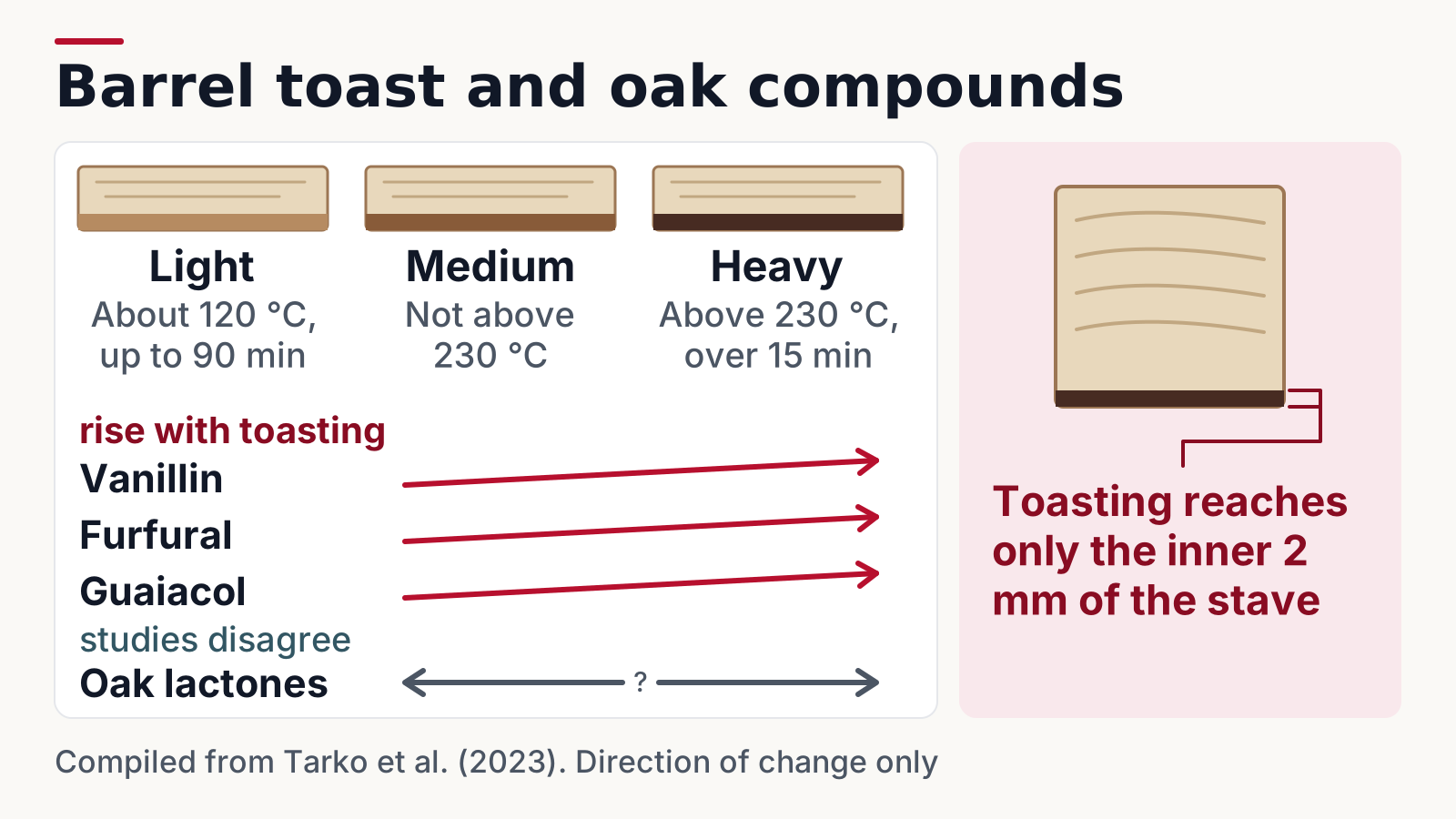
According to the same review, toasting affects only the inner layer of the stave, at most about 2 mm, because wood conducts heat poorly, and the species used for barrels include Quercus alba in the US and Quercus petraea and Quercus robur in Europe. Toast categories and their temperatures vary between coopers; the figures above are the review’s classification, not a standard. White wines were traditionally rarely aged in oak, because wood can mask their fresh fruit and floral aromas.
Takeaway: “Oak-aged” says the wine met wood, not how much wood flavour it carries; toast level, oak species and time decide that.
What does aging on the lees mean?
Aging on the lees means leaving the wine in contact with the dead yeast cells left after fermentation, often for several months. As the yeast breaks down it releases polysaccharides and lipids into the wine, which can change its texture and aroma. Winemakers adjust the effect through contact time, temperature, the yeast strain and stirring the lees, called bâtonnage (Gil i Cortiella et al., 2021).
| Wine | Where the lees contact happens | Time rule stated by the source | Source |
|---|---|---|---|
| Premium white wines | Usually in oak barrels | Several months; no fixed rule | Gil i Cortiella et al., 2021 |
| Champagne | In the bottle, until disgorgement | The Comité Champagne gives a total cellar minimum counted from bottling (see the label table below), not a separate lees minimum | Comité Champagne |
| Cava | In the same bottle as the second fermentation | At least 9 months on the lees; 18 for Reserva, 30 for Gran Reserva, 36 for Paraje Calificado | D.O. Cava Regulatory Board |
For bottle-fermented sparkling wine, lees aging is built into the method: the wine stays on its yeast until the sediment is removed at disgorgement. The comparison of Champagne, Prosecco and Cava explains how that differs from tank-fermented Prosecco.
Takeaway: Lees contact is about texture and yeast-derived aromas, not oxygen; on Cava labels, the category minimums are time on the lees.
Does wine keep aging after bottling?
Yes. The bottle continues the same reactions, slowly and with very little oxygen. A 2023 review describes three stages: the wine develops towards maturity, reaches its best, and then, as storage continues, usually declines. When each stage arrives depends on the wine, the closure and storage conditions.
| Stage (Zhang et al., 2023) | What happens |
|---|---|
| 1. Development | Taste and aroma improve as the wine matures |
| 2. Peak | Best sensory quality |
| 3. Decline | Quality usually falls with longer storage; whites tend to brown and lose characteristic aromas |
The changes the 2021 review lists for bottle aging include darker colour, more fruit, less astringency and a softer mouthfeel; it calls the bottle an active aging vessel. Storage decides the pace: higher temperatures speed up oxidation, and the closure decides how much oxygen gets in. Our guide to storage conditions for unopened wine sets out the figures, and the bottling and closures section covers the stoppers themselves.
Common mistake: Assuming every wine improves the longer it stays in the bottle. The research describes a peak followed by decline, and the reviews note that some white wines are not suited to long aging.
Takeaway: Bottle aging is real but finite; storage and closure decide how fast a wine moves along the curve.
What do aging words on a label tell you?
Some aging words are legally defined by the region named on the label; others are not. The examples below are defined by official rules; each region sets its own, so the same word can mean different things elsewhere.
| Label words | What they mean | Source |
|---|---|---|
| Cava de Guarda | At least 9 months in the bottle on the lees | D.O. Cava Regulatory Board |
| Cava Reserva / Gran Reserva / Paraje Calificado | At least 18 / 30 / 36 months in the bottle | D.O. Cava Regulatory Board |
| Vintage Champagne | Made only from that year’s grapes; at least 3 years in the cellar from bottling | Comité Champagne |
| Non-vintage Champagne | At least 15 months in the cellar from bottling | Comité Champagne |
| Prosecco DOC spumante “millesimato” | At least 85% of the wine from the stated year | Prosecco DOC specification (2025) |
This page found no single international definition for words such as “Reserva” or “aged in oak”; check the rules of the region on the label. Our label explainers cover more of these terms, and the wine aging tag groups related pages.
Takeaway: Trust aging words only as far as the region’s rules define them, and look up those rules for the region named on the label.
When this does not apply
This page explains the general mechanism from published research. It does not cover:
- Fortified and deliberately oxidised wines. A 2023 review names sherry, Madeira and port among highly oxidised wines that gain aroma from long storage; their aging is not covered here.
- Specific wines. No source here says how long a particular wine will age or when it will peak; that depends on the wine and is the producer’s call.
- Single-trial results. The vessel comparisons come from individual studies, one with a single Sauvignon Blanc, and laboratory measurements extrapolated to tanks.
- Storage advice and safety. Storage conditions are covered in how long unopened wine lasts; this page does not judge whether an old bottle is safe to drink and gives no health advice.
This is general information from an independent site; see the About page in the site menu for who runs it, or browse all articles.
Takeaway: Use the mechanism to understand labels and vessels, and ask the producer about any particular wine’s aging potential.
How this page was put together
We compiled this page from five open-access scientific papers published between 2021 and 2023 (two reviews of bottle aging, a review of wood compounds, and two studies of alternative vessels), the Australian Wine Research Institute’s note on heat, the official websites of the Comité Champagne and the D.O. Cava Regulatory Board, and the Prosecco DOC production specification published on September 30, 2025, all read on October 7, 2026. Where the papers report a single trial, the text says so. Nothing here comes from our own tasting or testing, and no producer was consulted.
Takeaway: Read the figures as the findings of the cited studies, under their conditions, not as rules for every wine.
Related reading:
- Champagne vs Prosecco vs Cava — See how lees aging and tank fermentation show up on sparkling wine labels.
- How long does wine last unopened? — Check the storage conditions and closures that set the pace of bottle aging.