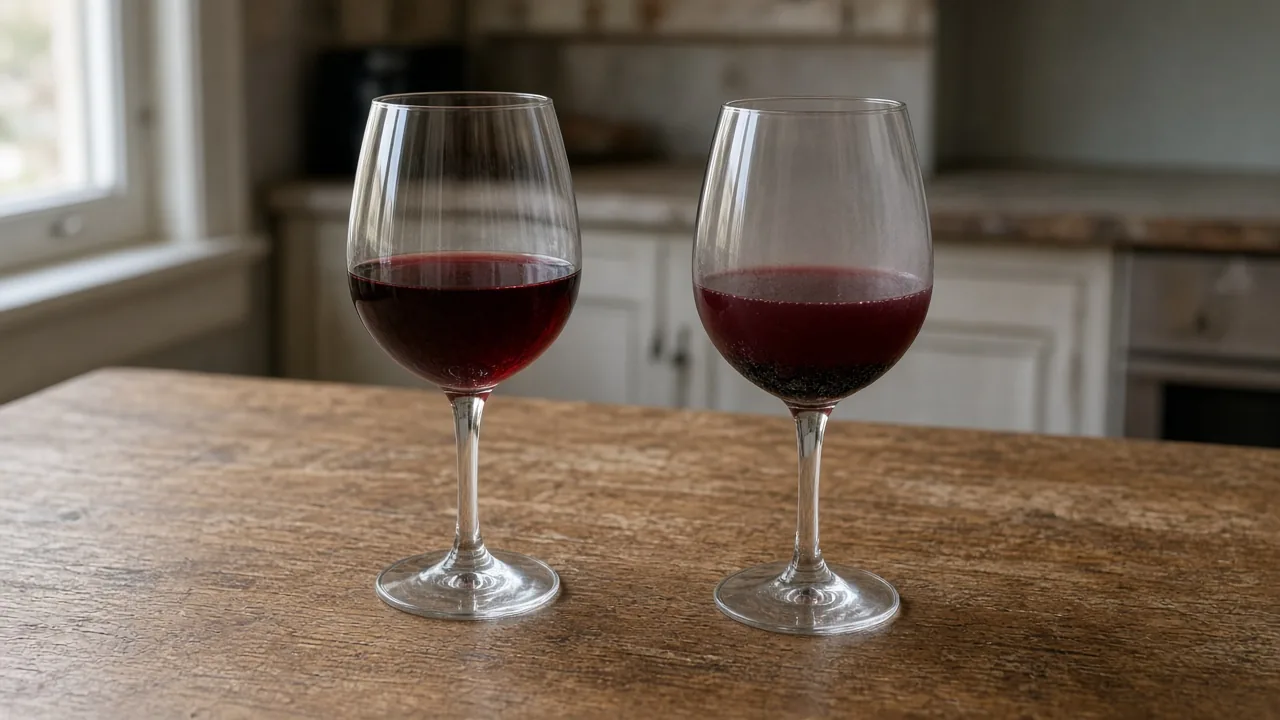
Reading a hazy glass as proof that a wine skipped fining, or a bright glass as proof that it was filtered, is the wrong check. Unfined names a fining-agent step, and unfiltered names a physical filter.
This comparison is compiled from two Australian Wine Research Institute pages read on October 11, 2026: the fining-agents FAQ and the filtration note on physical removal of microorganisms. It is not a tasting and not a test run for this site. Lees contact, yeast left after fermentation, is a different step on how wine aging works. More explainers are in Wine Explained.
Unfined and unfiltered are not two words for one skipped step. The fining-agents page says a fining agent reacts with wine components, chemically or physically, and forms a new complex that can separate from the wine. The filtration page describes filtration as physical removal of solids or microorganisms. The eye detects particles larger than 100 µm and does not resolve yeast and bacteria around 0.5–5 µm in diameter, so a bright glass is not a record of which step ran. Neither page states a US labeling rule, a quality rank, or a tasting score for these words.
| Input or item | Typical value or source | Why it matters |
|---|---|---|
| Fining | An added preparation reacts with wine components and forms a complex that can separate. AWRI fining-agents page, read October 11, 2026. | This is not a filter. |
| Filtration | Physical removal of solids or microorganisms. AWRI filtration page, read the same day. | This is not a fining reaction. |
| What the eye resolves | Particles larger than 100 µm. Yeast and bacteria are around 0.5–5 µm in diameter. Same filtration page. | Brightness does not show whether those organisms were removed. |
| Cellar bright | Below approximately 30 NTU. Same page. | A clear look is a turbidity band, not a log of the steps used. |
| Sterile-filtered share | Around 80% of wine by volume, against 20% ten years before, in Bowyer (2018) as cited on that page. | A volume report from 2018. Not a rank, and not a rule for one bottle. |
| US rule for these label words | The two pages do not state one. Leave the legal cell empty. | |
| Quality rank or tasting score | Neither page prints one. |
What is the difference between fining and filtration?
Fining adds a preparation that reacts with the wine. Filtration passes the wine through a physical medium. Settling is a third route already in the wine: solids precipitate, then drop.
The filtration page says wine naturally precipitates solids during fermentation and storage, and those solids traditionally settle in a natural clarification. Heat and cold stabilization are often used to speed that clarification. The same page says producers also choose to filter, to reach a greater level of clarity for a style or to remove microorganisms so the wine stays microbiologically stable after packaging. That sentence does not say every wine is filtered.
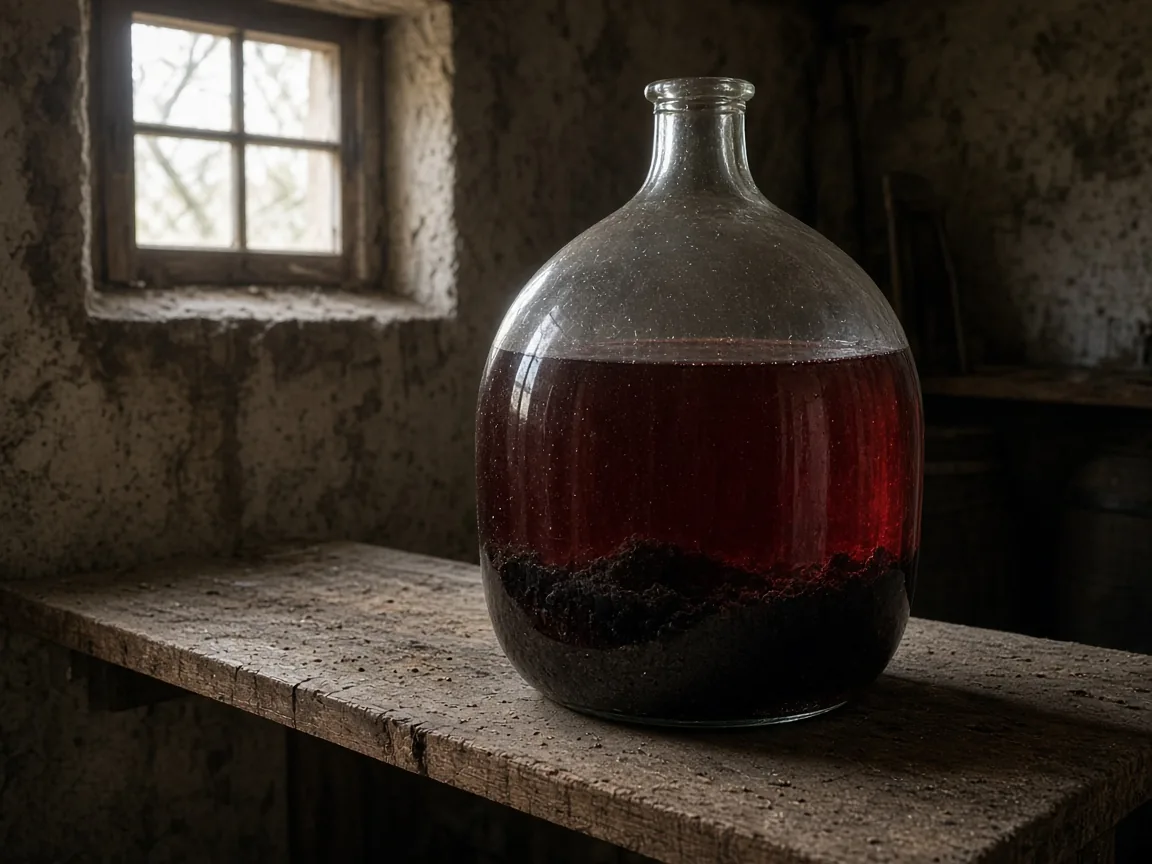
The fining-agents page states the purpose of a fining agent in one place: soften or reduce astringency and/or bitterness; remove proteins capable of haze formation; or reduce color by the adsorption and precipitation of polymeric phenols and tannins. The agent reacts chemically or physically and forms a new complex that can separate from the wine. The same page says fining should be done only when necessary, and at a lower rather than a higher addition rate, because it is possible to remove positive flavor characteristics. The rate, it says, is chosen by a laboratory sensory trial. This page does not reprint those addition rates.
Agents the page lists as some of the most commonly used and permitted are gelatine, isinglass, egg white (egg albumen), casein, skim milk, bentonite, carbon, and polyvinylpolypyrrolidone (PVPP). It says the choice depends on the destination market and the style, and that several agents should be trialed in the laboratory before a cellar addition. A comparison of which agent is stronger at color removal, tannin removal, over-fining, or clarity is printed on that page and is not copied here.
Bentonite, on the same page, is a very fine clay of aluminum-silicate, formed from volcanic ash. It is principally used to remove proteins from white wine and juice: a negatively charged clay colloid reacting with positively charged proteins. The page says use in red wines should be limited, because bentonite can reduce color by adsorption of anthocyanins. Effectiveness is greater at lower pH, because the positive charge on proteins is stronger there.
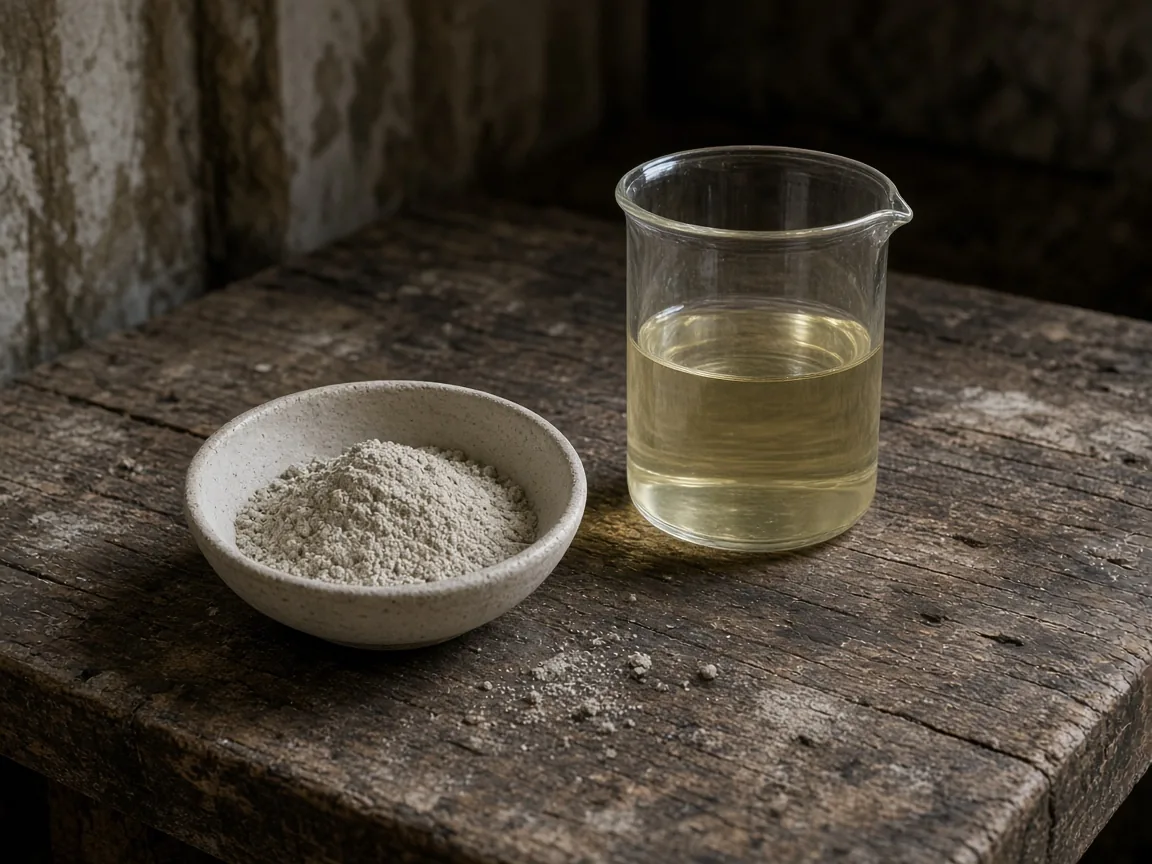
The other named agents, still from that page and still without doses: gelatine is described as the most aggressive of the proteinaceous fining agents and can over-fine. Isinglass is a collagen preparation used mainly to clarify white wines, with a less dramatic effect on astringency and body than gelatine. Egg white binds larger polymeric material tied to harsh astringency in red wines. Casein, the principal protein in milk, is used mainly on white wine and sherry to reduce phenolics tied to bitterness and browning. Skim milk removes similar phenolics and is less specific. Carbon adsorbs compounds tied to off-odors and to browning, pinking, or red color. PVPP, a synthetic polymer that is practically insoluble in wine, reduces low-molecular-weight phenolics tied to browning and astringency in white wine.
| Settling | Fining | Filtration | |
|---|---|---|---|
| What the pages say it does | Solids precipitate during fermentation and storage and traditionally settle. Heat and cold stabilization often speed that. | An added preparation reacts with wine components and forms a complex that can separate. | Physical removal of solids, or of microorganisms. |
| Stated purpose | Soften or reduce astringency and/or bitterness; remove haze-forming proteins; or reduce color from polymeric phenols and tannins. | Clarity for a style, or microbiological stability after packaging. | |
| Materials named | Gelatine, isinglass, egg white, casein, skim milk, bentonite, carbon, PVPP. | Depth media, including diatomaceous earth, perlite and cellulose pads. Surface membranes at 0.65 µm and 0.45 µm. Cross-flow described as nominally 0.2 µm. | |
| Flavor or color result stated for the step as a class | Positive flavor characteristics can be removed when the rate is higher than needed. | Depth media: some color loss can be expected. A red-wine measurement is in the next section. Not a score. | |
| US labeling rule | |||
| Quality rank |
Takeaway: Put settling, fining, and filtration on three lines. A sediment line in the glass fills none of them by itself.
What can a clear or cloudy glass show?
It can show particles large enough to see. It cannot show the cellar log.
The filtration page says the eye detects particulate matter larger than 100 µm and does not detect yeast and bacteria around 0.5–5 µm in diameter. Particulates it names are crystalline, commonly calcium or potassium bitartrate; amorphous or colloidal protein, tannin, polysaccharides, or metal complexes; microbiological yeast, bacteria, or mold; and other material, including silt, residual grape matter, and fining or clarifying agents. Which of those is in one bottle is not stated.
Turbidity is the page’s first check on clarity. The bands below are the page’s description of usual practice, not a standard this site measured.
| Stage on the filtration page | Turbidity | What the page says is usual |
|---|---|---|
| Just after fermentation | Often well above 200 NTU | Settled, fined, or centrifuged |
| Macro-filtration | 100 to 200 NTU | From coarse metal screens to earth filtration |
| Finer earth | 60 to 100 NTU | A finer earth filtration |
| Pads, cross-flow, then membrane | Below 60 NTU | Pad filters, often with earth, or cross-flow, then membrane filtration to remove yeast or bacteria |
| Cellar bright | Below approximately 30 NTU | Visually clear to the eye |
| A commonly used bottling threshold | Below 1.0 NTU | The page says this reading is not necessarily a guarantee that the filter medium will not block |
A wine can be cellar bright, below 1.0 NTU, and still block a membrane. The page says that is most often from macromolecular polysaccharide complexes. A second appearance table on the same page, summarized from Ribéreau-Gayon et al. 2006, uses different cutoffs by color:
| Wine color | Brilliant | Turbid |
|---|---|---|
| White | Below 1.1 NTU | Above 4.0 NTU |
| Rosé | Below 1.4 NTU | Above 5.8 NTU |
| Red | Below 2.0 NTU | Above 8.0 NTU |
The gap between those two columns is not named on the page. This table does not invent a middle grade.
Depth filters, the page says, are not absolute: they have no precisely defined pore size. Diatomaceous earth in that class has particle sizes from 2–40 µm, and the rating is also affected by flow rate, temperature, pressure, and viscosity. Surface filters are described as generally absolute. The page names 0.65 µm and 0.45 µm membranes as sterile filtration, used like a sieve. Cross-flow membranes are described as only nominally rated at 0.2 µm. Because that rating is nominal, and the filter cannot be pressure-tested for integrity before use, the page says a winery that wants sterile filtration still uses a membrane filter.
The same page cites Bowyer (2018) for a report that around 80% of all wine, by volume, was sterile filtered, compared with 20% ten years before that report. The sentence belongs to 2018. It is not a 2026 census and not a quality rank.
Takeaway: Read an NTU number as a look. The process that produced the look is a separate blank until a cellar record fills it.
What did the cited filtration measurements find?
On color and texture, the filtration page’s account of one commercial study found no consistent texture trend and unchanged tannin and color, inside the wines and grades it names. It also records some aroma or flavor attributes that did differ by grade inside a wine. That is not a score.
The page describes samples of four commercial wines, Cabernet Sauvignon and Shiraz from the 2013 and 2014 vintages, collected at two commercial bottling facilities. Points named: before and after cross-flow filtration and lenticular filtration; after a 0.65 µm membrane; and after a 0.45 µm membrane. The 2014 Cabernet Sauvignon was filtered through both polyethersulfone (PES) and nylon 0.45 µm membranes. In that account, average particle size decreased significantly with cross-flow filtration, polysaccharide concentration decreased with 0.45 µm filtration, and tannin and color remained unchanged. After 18 months of bottle aging, average particle sizes of the filtered and unfiltered 2013 wines were similar, while the filtered 2014 wines contained smaller particles than the unfiltered wines. Sensory analysis showed no consistent filtration-related trends in textural attributes across all four wines. Some aroma or flavor attributes did differ significantly for samples of different filtration grade within each wine. The page’s reading of those results suggests that commonly applied commercial filtration practices have no impact on wine color and minimal impact on sensory profiles of these red wines.
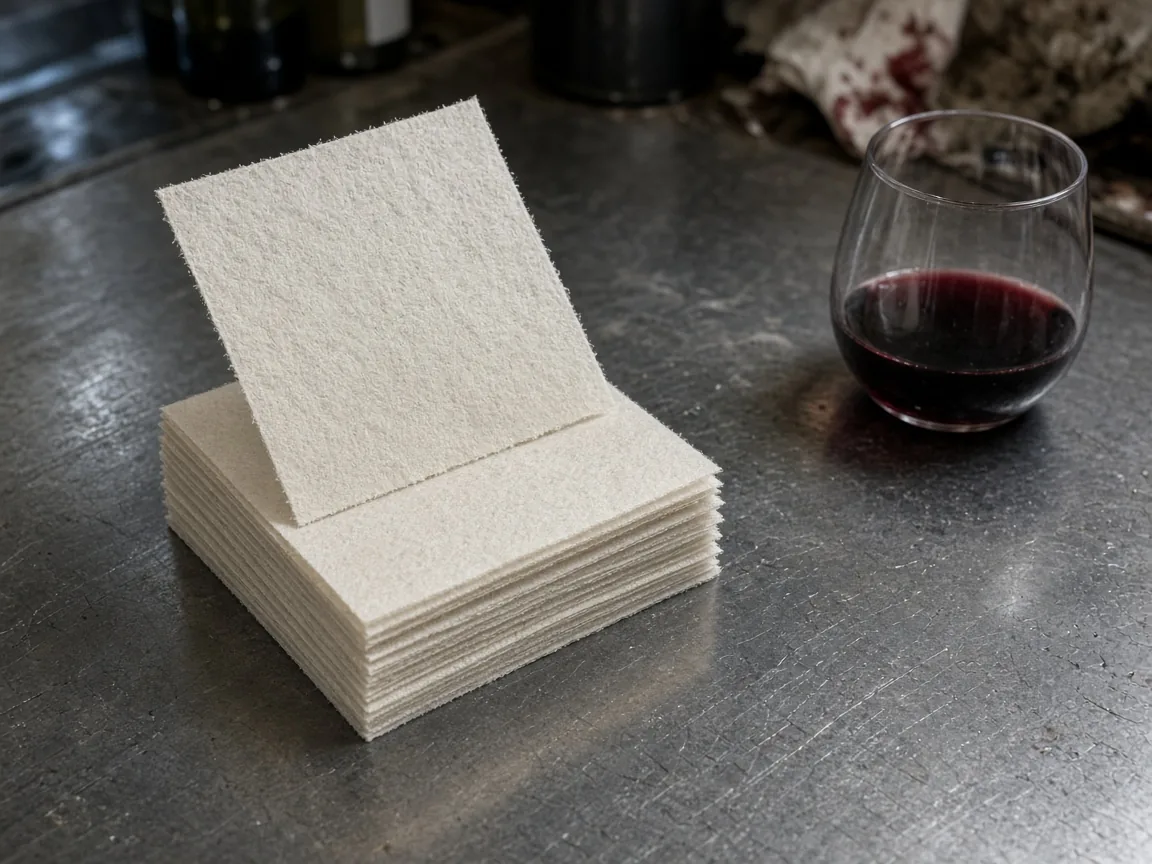
Two material notes sit beside that study, still on the filtration page. Depth filters are typically diatomaceous earth, cellulose, or a combination. Both are polar and bind polar color and phenolic components, so some color loss can be expected. Most modern surface filters, it says, are nylon, PES, and polyvinylidene fluoride (PVDF). Those are non-polar and cause minimal adsorption of color, a point the page attributes to Bowyer et al. 2013. The page also records a long-held industry belief that tight surface filtration below 0.45 µm strips aroma and color from big red wines. The measurements above are the page’s answer to that belief for the four wines, not a repeal of the belief for every wine.
A separate UC Davis study is cited as Bohanan et al. 2011. The filtration page, as read on October 11, 2026, still describes that work as in progress and says results after six months showed no sensory or chemical differences between control and filtered red wines. This page did not open the 2011 presentation. Wine identities, filter grades, and the panel method for that study stay empty here.
Common mistake: Turning “minimal impact” into “filtration never changes flavor.” The sentence is tied to four red wines, the grades named above, and an 18-month check, and the same paragraph records aroma or flavor attributes that did differ inside a wine.
Takeaway: Keep the vintage, the variety, the pore size, and the 18 months next to any flavor sentence from this study.
What can the words unfined and unfiltered prove?
They can record a producer’s statement about a step. They cannot show that statement in the glass, and the pages read here do not define them as a US labeling rule.
Read “unfined” as “a fining-agent preparation was not used,” and “unfiltered” as “the wine was not passed through a physical filter.” A bottle can carry one word and still have received the other step. Settling, centrifugation, and heat or cold stabilization are further sentences on the filtration page. A label that prints neither word does not inventory those sentences. Cellar bright, below approximately 30 NTU, is a look a settled wine can have with no filter log attached.
| Label words | Step the words are read as naming, from the process pages | What the glass shows | US labeling rule in these two pages | Quality rank |
|---|---|---|---|---|
| Unfined | No fining-agent preparation | A bright or cloudy glass does not record the step. The eye resolves particles larger than 100 µm, not yeast and bacteria around 0.5–5 µm. | ||
| Unfiltered | No physical filtration | The same limit. A wine below about 30 NTU can look clear after settling alone. | ||
| Both | Both of those steps were skipped. Other steps, including centrifugation and heat or cold stabilization, are not named by these two words. |
Takeaway: If a cell is empty, the two AWRI pages did not state it. Do not borrow a percentage or a score from another label term.
For the material itself, what wine sediment is made of separates tartrate crystals, pigment deposits and yeast-containing lees, including what appearance alone cannot identify.
When this does not apply
- Addition rates, stock-solution recipes, and cellar mixing steps. The fining-agents page prints them. This page does not, and it is not a home-winemaking sheet.
- Diet and allergen status. That page includes an Australian allergen-labeling note. This page does not restate it and does not decide whether a bottle suits a diet. Unfined and unfiltered are not a diet certificate in the pages read here.
- Which solids sit in one glass. The particle classes are listed above. Identifying a crystal, a pigment, or yeast in a bottle you hold is outside this page.
- Cold stabilization as its own procedure, beyond the one sentence that heat and cold stabilization are often used to speed clarification.
- A Certificate of Label Approval, or any judgment that a bottle you hold matches the words on it.
- Health, a hangover claim, or advice to drink. Koeppel on Wine is an independent information site. The About page states who operates it.
Takeaway: Use the two process names and the empty cells. Ask the producer for the cellar record this page does not have.
How this page was put together
The process sentences come from the AWRI fining-agents page and the AWRI filtration page, both read on October 11, 2026. The red-wine measurements are that filtration page’s account of McRae et al. 2017, in the American Journal of Enology and Viticulture. The six-month UC Davis note is the same page’s account of Bohanan et al. 2011. This site did not open those two papers, so further details from them stay empty. Supplier sheet grade codes on the filtration page are marked there as a guide from media suppliers. They are not copied here. The appearance cutoffs are the page’s summary of Ribéreau-Gayon et al. 2006. The 80% volume figure is the page’s citation of Bowyer (2018). No tasting was run for this page. Other explainers are listed on the articles page.