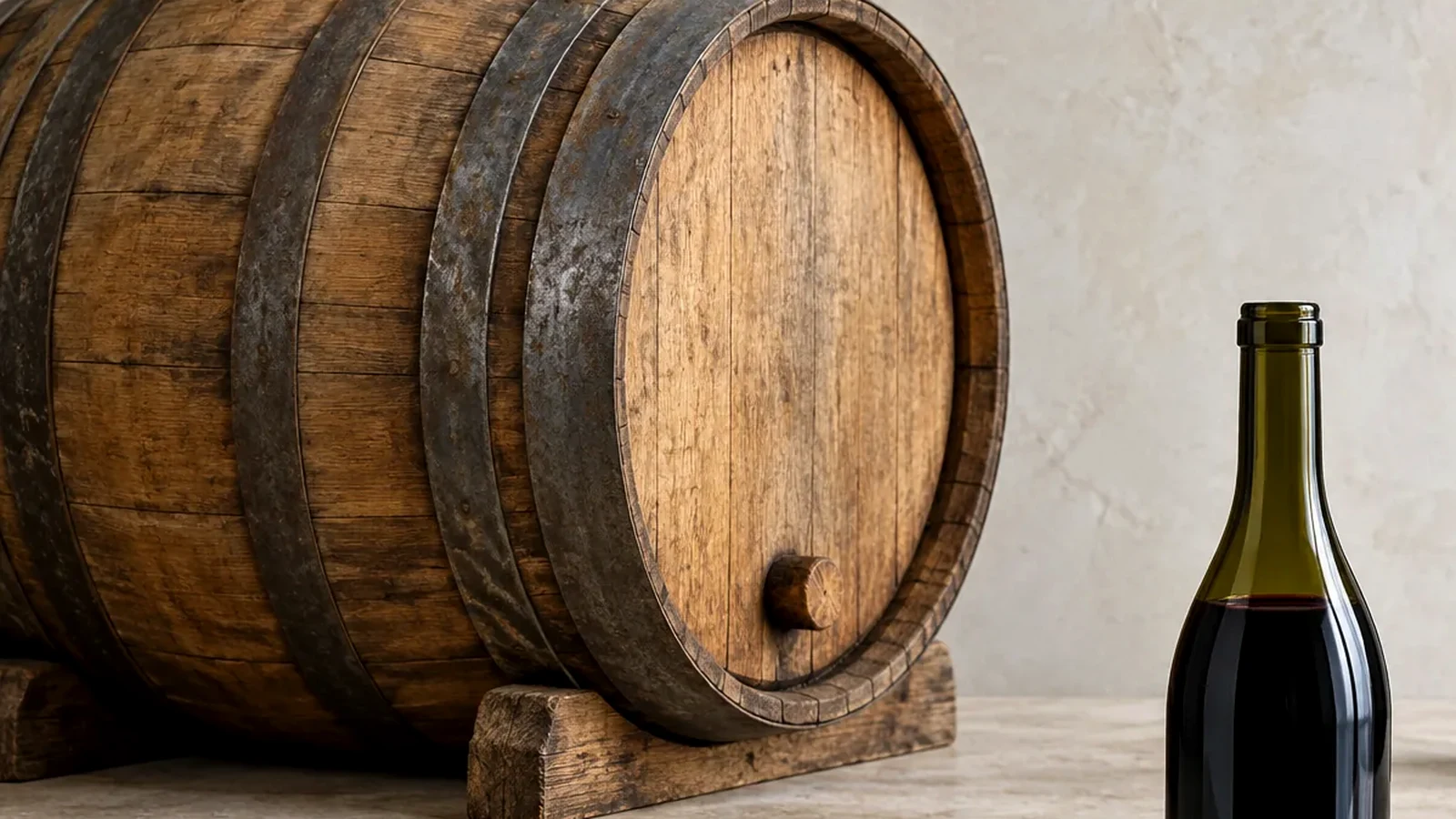
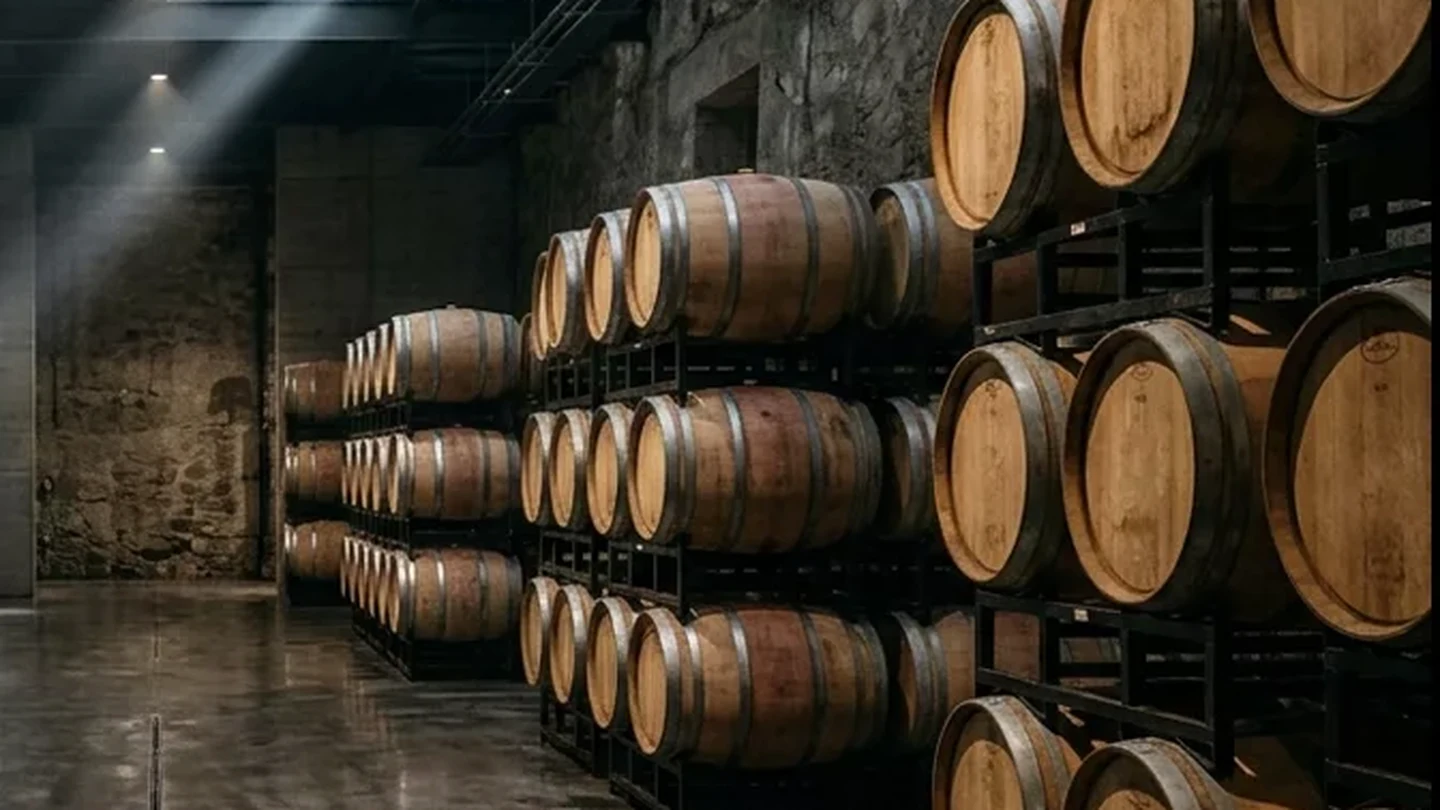
When aging wine in barrels, barrel-aged wines are stored from 3 to 22 months or even several years in oak wood barrels during the oxidative aging step, as low quantities of oxygen come into contact with the wine.
A new barrel can adsorb 5 to 6 L of wine and thus should be re-topped up two weeks after being filled, and then every 2 to 3 months.
Standard 225 + 3 L Bordeaux barrels made of Quercus alba—built with 25–27 mm stave thickness, a 50 + 5 kg weight, and a food-grade silicone barrel stopper—provide an internal wine contact surface area of 2.06 m2.
Across traditional wine aging barrel geometries, taller and narrower Bordeaux-style barrels hold 225 Liters, whereas shorter and wider Burgundy-style barrels hold 228 Liters.
Approximate oak flavor extraction across barrel fill years is 50% of flavor in a new barrel, 30% in the 2nd fill year, 15% in the 3rd fill year, and 5% or neutral in the 4th fill year, while a clean and maintained barrel can be used for micro-oxidation up to 8-10 years.
According to Purdue Extension, a new 60-gallon barrel should last 5 to 6 years, requiring a 17% to 20% annual replacement rate; over that life 1,500 to 1,800 bottles can be infused with toasted-oak notes—and at $300 to $1,000 per barrel adds a per-bottle cost of 16¢ to 67¢.
Readers exploring our published wine guides and our foundational overview of how wine aging works can compare how new and used barrels evolve across successive vintages in the table below.
| Barrel Age or Vessel Type | Capacity | Approximate Oak Flavor Yield |
|---|---|---|
| New Bordeaux Barrel (1st Fill) | 225 L | ≈50% of flavor |
| Second-Fill Oak Barrel (2nd Year) | — | 30% of oak flavor |
| Third-Fill Oak Barrel (3rd Year) | — | 15% of oak flavor |
| Fourth-Fill & Neutral Barrel | — | 5% or neutral; usable for micro-oxidation up to 8–10 years if kept clean and maintained |
How Oak Staves, Grain Density, and Bung Seals Govern Oxygen Transfer
In oak barrel oxygen pathway studies, researchers determined that 21% of total oxygen entered through the bunghole, 63% of oxygen entered between the staves, and 16% of oxygen entered through the wood itself.
Controlled comparisons show that medium-grain American oak barrels would provide an average of 11.3 mg/L of oxygen per year (ranging from 10.46 mg/L to 12.14 mg/L), whereas French oak barrels provided 8.18 mg/L per year (ranging from 7.81 mg/L to 8.97 mg/L).
Over one year of optical monitoring, a fine-grain American oak barrel supplied 11.62 mg/L per year, with a daily average dose throughout the year of 0.32 mg/L and between 0.029 mg/L and 0.038 mg/L of oxygen daily after the first month.
In those fine-grain American oak barrels, 7% of the total yearly oxygen entered in the first week, 17% to 20% of the total oxygen entered after three weeks, 23% entered after one month, and four months were required to dose the wine with 50% of its annual oxygen.
Similarly, six-month chemical trapping in barrels filled with a 500 mg/L solution of sulfur dioxide found oxygen entry rates of 10 mg/L per year for two used French oak barrels and 28 mg/L per year for two new barrels from central France.
In an evaluation of 12 new Bordeaux (225 liter) barrels stored at 15° to 16° C and 70% to 80% relative humidity using pure water and ethanol at 15% v/v and 3.5 pH, PSt6 sensors positioned at 156 mm and 468 mm from the bung confirmed that dissolved-oxygen concentrations decreased as distance from the bung increased.
Oxygen transfer in barrels with permanent topping-up at atmospheric pressure is 2 to 5 ml/L per year (1.48 to 3.69 mg/L per year), whereas in hermetically sealed barrels with an airtight bung it reaches 11.08 to 14.77 mg/L per year (around 15 to 20 ml per year, based on 1 mg ≈ 1.35 ml at 15° C).
When comparing bung orientation and sealing, the annual rate of oxygen entry is 28 mg/L per year when the bung is closed without sealing, 36 mg/L per year with the bunghole on the side, and 45 mg/L per year when sealed with a silicone bung.
In non-invasive sensor monitoring of sweet wines aged in barrel, glass bungs allow oxygen entrance around 6 mg/L near the bung, whereas elastomeric bungs reduce this concentration to 1 to 3 mg/L only.
Why Ullage Forms: Wood Imbibition, Cellar Humidity, and Ethanol Shifts
In instrumented cellar barrels, liquid wine progressed slowly into the oak wood and reached a stabilized moisture position after approximately 100 days, after which evaporation achieved an average rate of 20 mL per day.
In sealed barrels, negative pressure inside the ullage space created by wine loss is governed by cellar conditions, and above a critical negative pressure an air percolation threshold is reached, causing rapid entry of air into the barrel.
Humidity in cellars between 65 and 75% is optimum; lower humidity will encourage greater wine evaporation and higher humidity can encourage growth of spoilage microorganisms.
Extension guidelines for wine and aging specify an optimum barrel cellar temperature of 60F or below (where 55F is best, but not below 50F) alongside relative humidity between 65% and 75% while avoiding daily temperature fluctuations.
During barrel maturation, both water and ethanol evaporate: ethanol concentration slowly increases in dry cellars as water evaporates faster than ethanol, whereas in cellars with relative humidity over 70%, ethanol concentration slowly decreases.
In controlled cellar trials, ethanol concentration in barrel-aged wine dropped by 0.2% v/v when barrels were stored for 12 months at 15°C with relative humidity over 90%.
In red wine aged in two French and 2 American 228-L new oak barrels in a high-humidity cellar, the ethanol content of the red wine significantly decreased during the first month of aging with losses of about 0,3 p. cent.
In that trial, in American oak the staves were sawn rather than split like French oak, which caused a greater thickness impregnation inside the wood and placed the fiber saturation point nearer to the outer American barrel surface so ethanol diffused more easily.
| Cellar Condition or Closure Setup | Target Range or Physical State | Measured Impact on Evaporation, Alcohol, or Oxygen |
|---|---|---|
| Optimum Cellar Climate | 50F to 60F (55F best); 65% to 75% RH | Balances wine evaporation against external surface mould growth |
| Dry Cellar Environment | Low cellar humidity (below 70% RH) | Water evaporates faster than ethanol; ethanol concentration slowly increases |
| Humid Cellar Environment | Over 70% RH (or over 90% RH at 15°C) | Ethanol concentration slowly decreases (0.2% v/v drop over 12 months at >90% RH) |
| Elastomeric Bung vs Glass Bung (sweet-wine barrel ageing trial, Mirabel & Renouf) | 1 to 3 mg/L vs 6 mg/L near bung | Elastomeric bungs restrict local oxygen entrance near the bunghole |
| Excessively Humid Cellar | Above 75% relative humidity | Encourages external mould growth around the bunghole after topping spills |
Barrel Topping Protocols, Sanitation, and Empty Barrel Storage
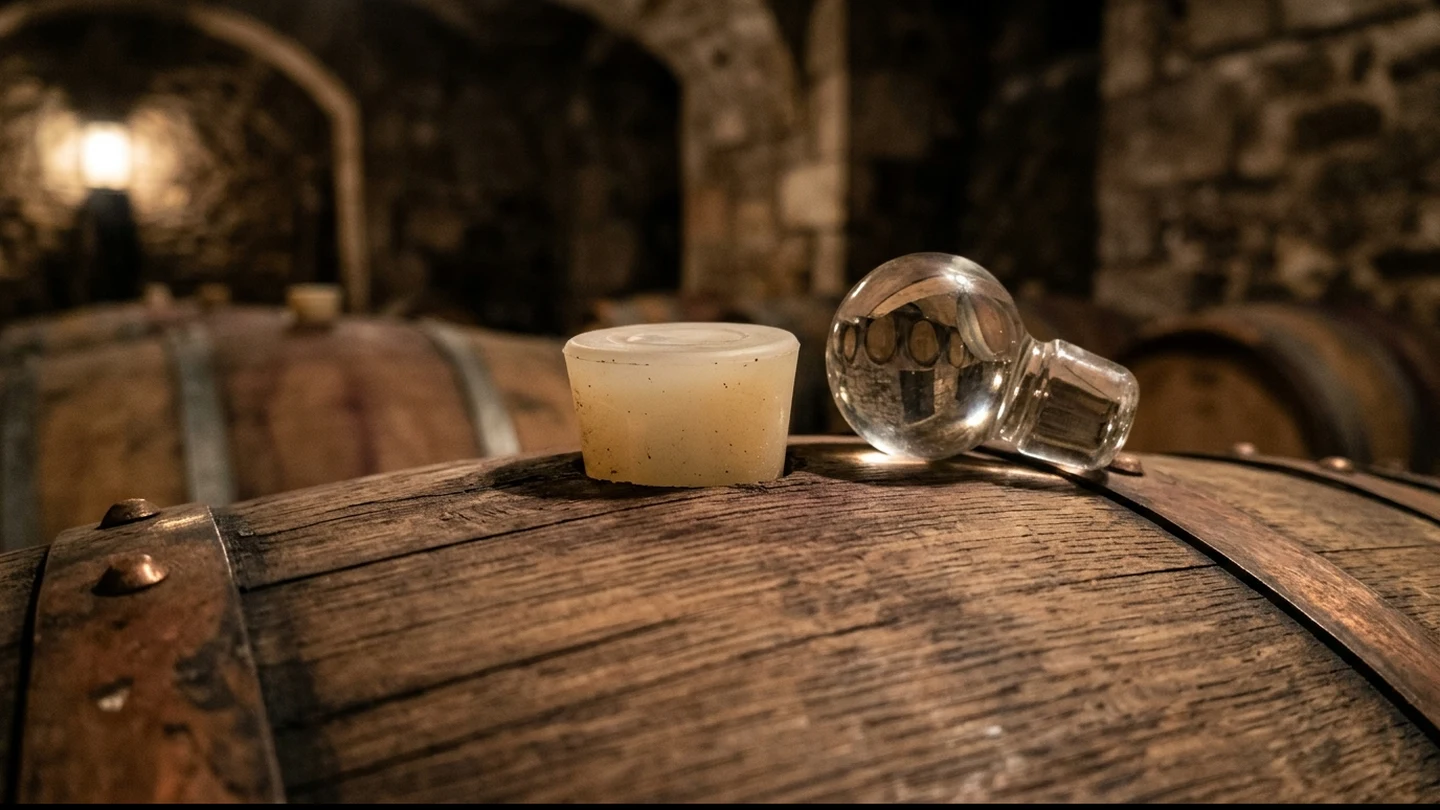
Under the commercial Gallo protocol for barrel topping every 4 weeks, barrels are unstacked, bungs are checked, the exterior is rinsed with hot water, the area around the bung is scrubbed with a 3g/L tartaric acid/water solution and rinsed, the bung is removed to observe the surface and smell the head-space, and the barrel is topped with clean wine to the bunghole-top before resealing with a clean sanitized bung.
Red wine stains, vinegar flies, or mould around the bung hole—often caused by spills or insufficient cleaning after topping—can be scrubbed with a 1:1 solution of SO2 and citric acid followed by water rinsing, while larger mould occurrences indicate cellar humidity is too high (>75%).
Before first use, new barrels of size around 300 L should be filled with 20 L hot water (60-80°C), rotated to wet the inside, and stored vertically for 2-4 hours on each head, or filled with 20 L cold water and stored for 12 hours on each head.
Purdue Extension notes that wood conducts heat very poorly—30 times less than stainless steel—and that a moderately hot (144°F) water rinse for 3 minutes dissolves potassium tartrate, which is 10 times more soluble in warm than in cold water.
When sanitizing contaminated vessels, treating barrel wood with hot water (at least 85°C) for 20 minutes has been shown to be successful in eliminating viable acetic acid bacteria, with the water found to be at about 60°C at the end of the cycle.
Similarly, holding water at 70°C for 30 minutes or 80°C for 20 minutes was able to eliminate Brettanomyces yeast from barrel wood at wood depths of up to 5-9 mm (Edwards and Cartwright 2018).
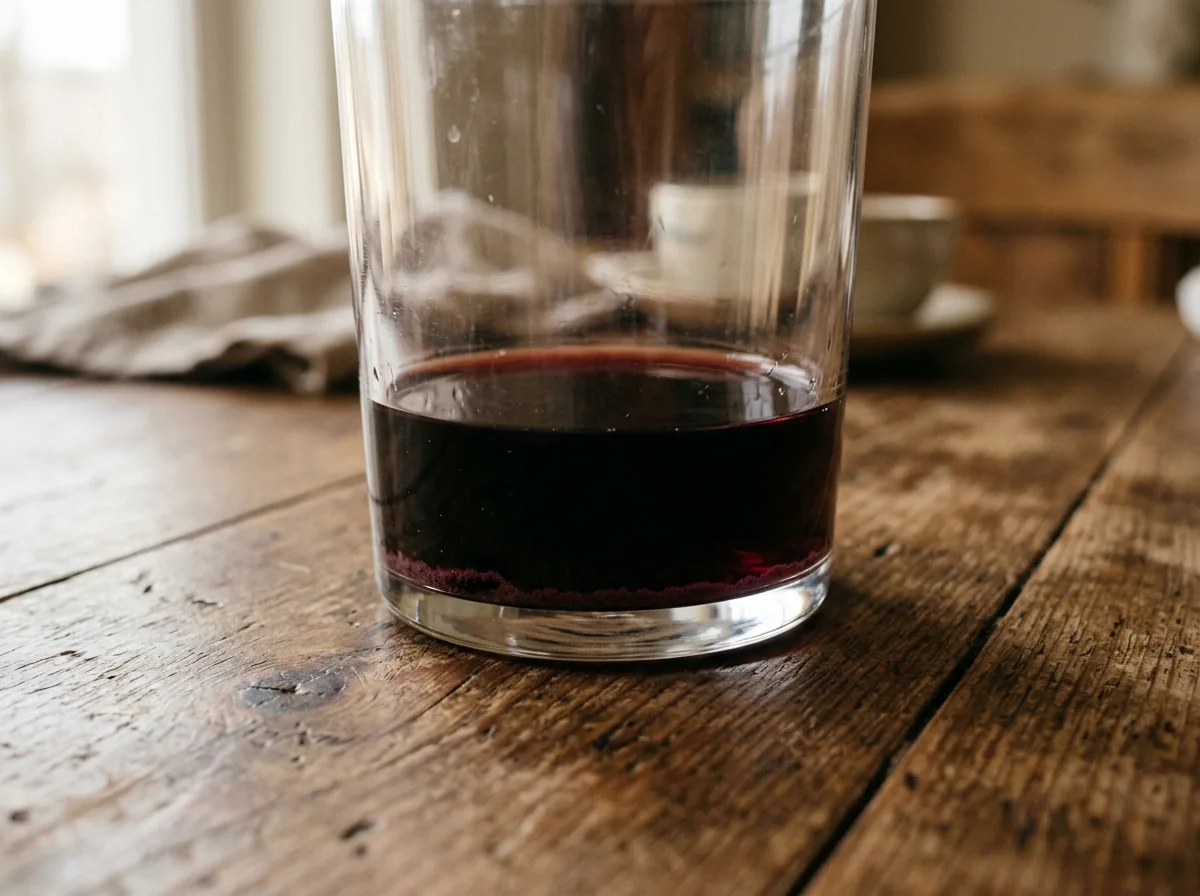
Understanding what wine sediment is made of and how cold stabilization limits in wine work is essential whenever barrel lots are racked, topped, or combined prior to bottling.
Blending wine after cold stabilising without re-checking stability with a reliable method—such as the brine test holding a filtered sample at −4°C for three days and then checking for any crystalline deposit—can cause potassium hydrogen tartrate (also known as potassium bitartrate or KHT) instability.
For barrel storage without wine, Purdue Extension specifies burning 1.7 to 3.4 g elemental sulfur in each barrel every three to four weeks for dry storage, or using 1,125 g citric acid /bbl (5 g/L) and 45 g potassium metabisulfite/bbl (200 mg/L) in cold, chlorine-free water for wet storage.
Australian Wine Research Institute guidance for wet barrel storage specifies filling barrels to a 10% volume with chlorine-free water acidified with citric or tartaric acid to ensure pH<3.0, generally 5 g/L, and an SO2 addition of 500 mg/L potassium metabisulfite, topped up every 4-6 weeks.
Spoilage Microbes, Volatile Acidity Limits, and Sulfur Dioxide Control
Spoilage microorganisms often grow at the wine/air interface, with increased risk in ullaged barrels or vessels with low sulfites, and microorganisms can also migrate up to 8 mm into the barrel wood as wine soaks into the wood.
The concentration of free SO2 will decline faster in barrel than in tank due to greater oxygen exposure and should be checked every 3 months.
It is advisable to add a larger addition of SO2 post MLF (80 mg/L) to ensure adequate levels of free SO2 are achieved from the outset during barrel ageing.
The AWRI recommends that winemakers should work at between 50 and 80 mg/L total sulfur dioxide (more for wines of high pH) for red wine production if they have any doubts about their cellar sanitation.
Winemakers who monitor how to tell if wine has gone bad from oxidation faults alongside chemical sulfur dioxide management before bottling can detect early aldehyde and volatile acid accumulation before a barrel lot crosses legal or sensory thresholds.
The sensory threshold for acetaldehyde ranges from 100-125 mg/L, whereas immediately after fermentation table wines generally have acetaldehyde levels below 75 mg/L, and ullaged tanks can lead to surface yeast infection.
Increased acetic acid in stored wines is usually caused by acetic acid bacteria (generally of the genus Acetobacter) that convert alcohol to acetic acid in the presence of oxygen, alongside small amounts formed from hydrolysis of acetyl groups in the wood hemicellulose.
Volatile acidity in wine is mainly comprised of acetic acid (>93%), with sound post-fermentation wine at 0.1 – 0.4 g/L, an aroma threshold in wine as low as 0.1 – 0.125 g/L, a level considered detrimental that is usually greater than 0.7 g/L, and a maximum legal volatile acidity in Australian wines of 1.5 g/L.
Under U.S. federal standard of identity 27 CFR § 4.21, the maximum volatile acidity (calculated as acetic acid and exclusive of sulfur dioxide at 20 degrees Celsius) is 0.14 gram per 100 mL for red wine and 0.12 gram per 100 mL for other grape wine, or 0.17 gram per 100 mL for red wine and 0.15 gram per 100 mL for white wine made from unameliorated juice of 28 or more degrees Brix.
Ethyl acetate—which carries an odour of nail polish remover and has a reported sensory threshold of 12 mg/L—ranges from about 30 – 60 mg/L in normal wines to about 150 – 200 mg/L in defective wines.
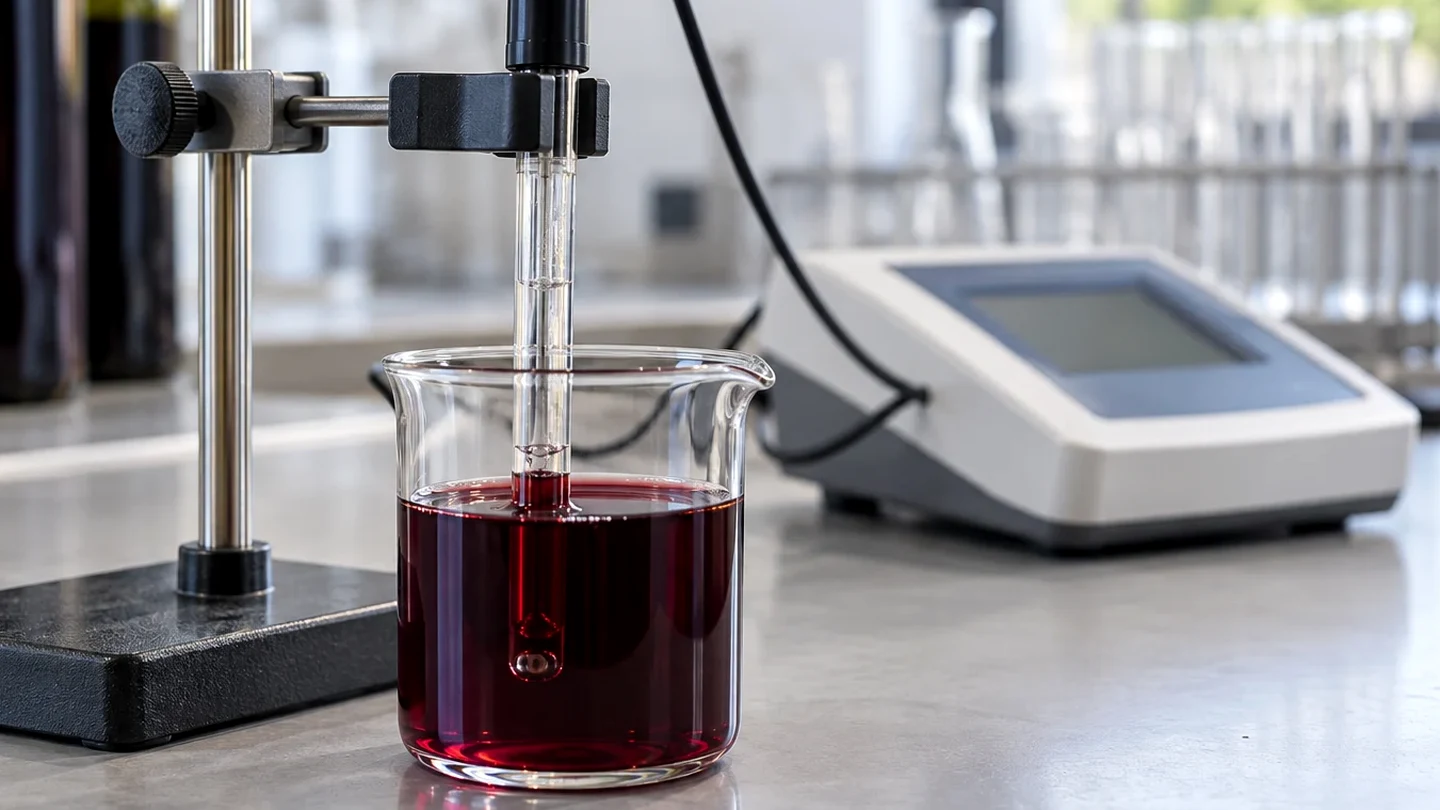
In the winery laboratory, volatile acidity can be tracked during barrel maturation by steam distillation (using a modified-Markham or Cash still) after oxidation with hydrogen peroxide, or by enzymatic conversion of acetic acid by specific enzymes measuring NADH absorbance at 340 nm.
Cellar Record Log for Barrel Maturation
Consistent barrel house documentation prevents unrecorded ullage growth and catches chemical drift across every lot in the cellar:
- Vessel Identifier & Cooperage Fill History: Record barrel serial code, wood origin, toast profile, and cumulative fill count so new oak lots and neutral vessels follow appropriate topping schedules.
- Cellar Room Climate Readings: Log ambient air temperature and hygrometer moisture readings weekly to confirm whether evaporation will concentrate or dilute alcohol strength.
- Pre-Topping Sensory & Visual Inspection: Note liquid depth below the bunghole, surface clarity, and headspace aroma before adding wine from any topping vessel.
- Topping Wine Lot & Volume Added: Document the source tank identifier, inert gas blanket check, and exact volume of wine added to restore a full bunghole level.
- Analytical Sulfite & Acid Tracking: Record periodic laboratory values for sulfur dioxide, wine acidity, and acetic acid alongside any corrective metabisulfite additions.
Sources
- Australian Wine Research Institute — Cleaning, storage and maintenance of barrels, Wine Flavours, Faults and Taints, Measurement of volatile acidity (VA) in wine, Cold Stabilisation, and Reducing ethanol levels in wine
- Purdue University Extension — Wine Barrel Maintenance (Commercial Winemaking Production Series / FS-57-W, Christian Butzke)
- Texas A&M AgriLife Extension and University of Minnesota — Practical Barrel Management and Maintenance (Drew Horton)
- U.S. Electronic Code of Federal Regulations — Title 27, Section 4.21: The Standards of Identity for Wine
- Journal of Agricultural and Food Chemistry (María del Álamo-Sanza and Ignacio Nevares) — Oxygen Transfer Rate in Oak Barrels
- Journal of Food Engineering (Roussey et al.) — In-Situ Monitoring of Wine Volume, Barrel Mass, Ullage Pressure and Dissolved Oxygen; OENO One (Pomar and Gonzalez-Mendoza) — Changes in Composition and Sensory Quality of Red Wine Aged in American and French Oak Barrels (Canary Islands)
- Foods (Flor-Montalvo et al.) — New System to Increase the Useful Life of Exhausted Barrels in Red Wine Aging (Bordeaux barrel geometry / insert-stave renewal); Molecules / PMC (Echave et al.) — Bottle Aging and Storage of Wines: A Review; IVES Conference Series, Macrowine (Mirabel & Renouf) — Ageing of sweet wines: oxygen evolution according to bung and barrel type