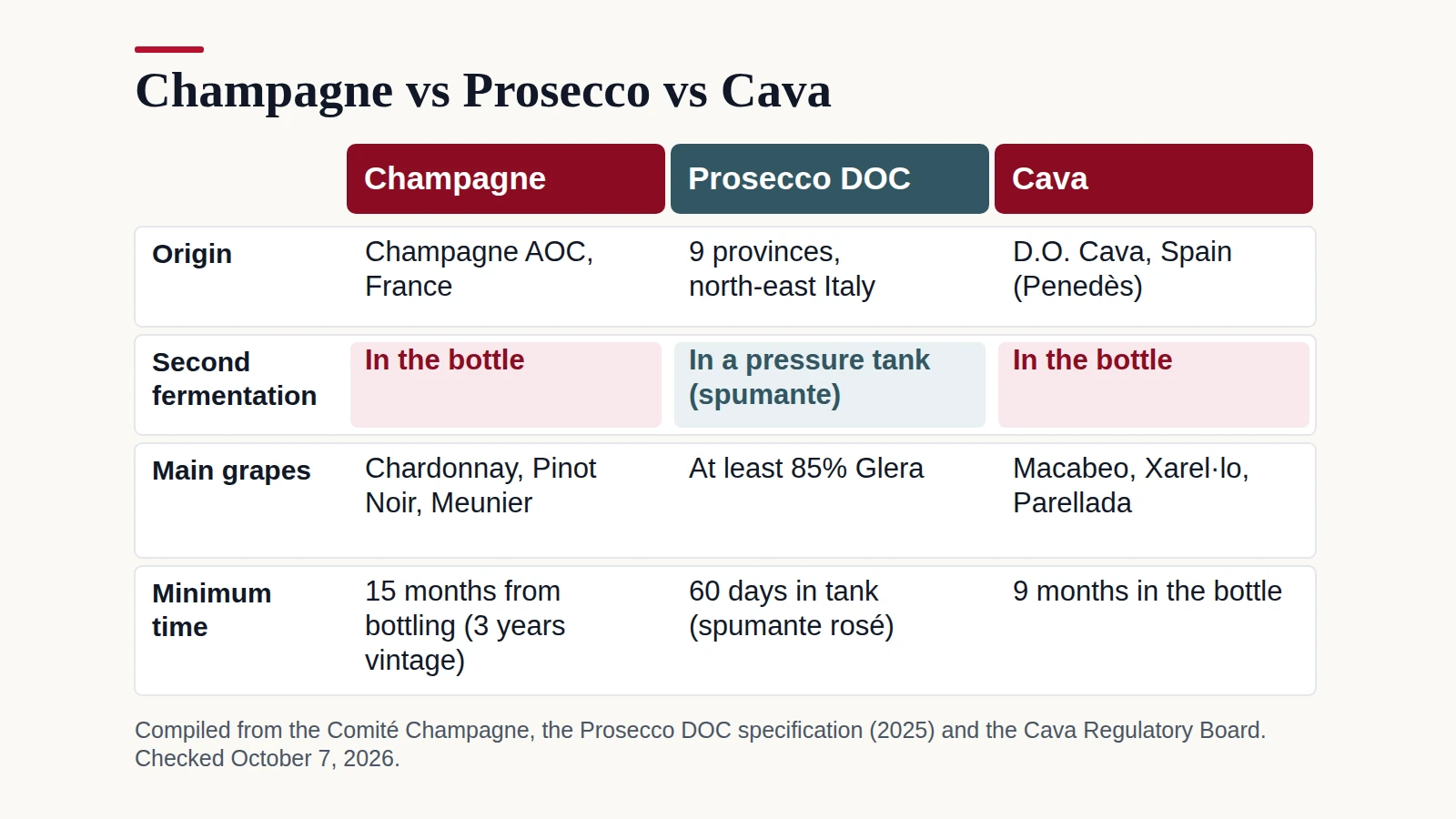
Reading “Brut” or “Champagne” as the name of a style is a quick way to pick up the wrong bottle. Champagne and Cava are protected place names for wines refermented in the bottle they are sold in; fully sparkling Prosecco DOC (spumante) is refermented in pressure tanks; and Brut is a sugar band all three can carry.
Champagne vs Prosecco comes down to origin, method and grapes. Champagne comes only from the Champagne appellation in France and must spend at least 15 months in the cellar after bottling (3 years for vintage), according to the Comité Champagne. Prosecco DOC comes from nine provinces in north-east Italy and is at least 85% Glera (Prosecco DOC specification, September 30, 2025). Cava is Spain’s bottle-fermented designation, with at least 9 months on the lees. For a US reader, two label points matter most: Brut and Extra Dry are EU sugar bands for sparkling wine, and “Champagne” on a wine from outside the EU survives only as a pre-2006 legacy term.
This page compiles the rules from the official bodies, EU law and US label regulations, all read on October 7, 2026; the EU texts are the versions as at January 31, 2020 (see the method note at the end). It is a reading guide to labels and bottles, not a tasting guide: it does not rank the wines, compare prices or suggest what to buy or mix.
Quick specs
| Item | Champagne / Prosecco DOC / Cava (source) | Why it matters |
|---|---|---|
| Where it comes from | Champagne AOC, France, about 34,200 ha / nine provinces of Veneto and Friuli Venezia Giulia, Italy / D.O. Cava, Spain, centred on Penedès (Comité Champagne; Prosecco specification Art. 3; Cava Regulatory Board) | The name on the label is a place with rules, not a style |
| Where the second fermentation happens | In the bottle / in a pressure tank for spumante, bottle or tank for frizzante / in the bottle (Comité Champagne; Prosecco specification Art. 5; Cava Regulatory Board) | Decides how long the wine sits on its yeast and how it is finished |
| Main grapes | Chardonnay, Pinot Noir, Meunier / at least 85% Glera / Macabeo, Xarel·lo, Parellada as the classic blend (Comité Champagne; Prosecco specification Art. 2; Cava Regulatory Board) | Explains why the same sugar term reads differently in each wine |
| Minimum time, and where it is counted | 15 months non-vintage, 3 years vintage, in the cellar from bottling / spumante at least 30 days in tank (consortium), 60 days for rosé (specification Art. 5) / 9 months in the bottle on the lees for Cava de Guarda (Comité Champagne; Prosecco consortium and specification; Cava Regulatory Board) | Each figure starts from a different point, so compare them within one wine, not across |
| Sugar terms | Brut nature to doux / brut nature to demisec for spumante, brut nature to extra dry for spumante rosé / brut nature to dulce (EU 2019/33 Annex III Part A; Prosecco specification Art. 5; Cava Regulatory Board) | The same EU bands for sparkling wine, in each country’s language |
| Pressure and closure | 5–6 bar, cork with wire cage / spumante: stopper at least 51% cork by weight, including the part touching the wine; frizzante: string-tied cork or screw cap, crown cap only with “rifermentazione in bottiglia” / cork and wire cage (Comité Champagne; Prosecco specification Art. 8; Cava Regulatory Board) | Pressure and each designation’s rules set the closure |
| US label use of “Champagne” | Listed as semi-generic; a wine from outside the EU can use it only if a label approval or exemption showing the name was held for that brand before March 10, 2006, with the true origin next to it (26 U.S.C. 5388) | “California Champagne” is a legacy label term, not the French wine |
How are Champagne, Prosecco and Cava made?
The sparkling versions of all three start as a still base wine and gain their bubbles from a second fermentation in a closed container. The difference is the container. Champagne and Cava referment in the bottle the wine is sold in; Prosecco DOC spumante referments in a large pressure tank, called an autoclave, and is bottled afterwards. Prosecco DOC frizzante can be refermented in either bottle or tank, and still Prosecco is bottled without a second fermentation.
| Step | Champagne | Prosecco DOC spumante (tank method) | Cava |
|---|---|---|---|
| First fermentation | In tanks, grape sugar turned into alcohol | About 18 °C for 15–20 days with selected yeasts (consortium) | Usually in stainless steel tanks, by grape variety |
| Second fermentation | In the bottle (“prise de mousse”) | Only in pressure tanks (specification Art. 5); frizzante can use bottle or tank | In the bottle, after tirage liqueur (yeast and sugar) is added |
| Minimum time | At least 15 months in the cellar from bottling; 3 years for vintage | At least 30 days in tank (consortium); 60 days for rosé (specification) | At least 9 months in the bottle on the lees |
| Removing the yeast | Riddling racks (pupitres) and disgorgement | No riddling or disgorgement in the tank method; the wine is certified and bottled after the tank stage (consortium) | Riddling, then disgorgement, usually after freezing the neck |
| Final adjustment | Dosage liqueur adds the sugar that sets the term; none for brut nature (Comité Champagne) | Sugar managed during the tank fermentation (consortium) | Expedition liqueur of wine and sugar; for brut nature, wine without added sugar (Cava Regulatory Board) |
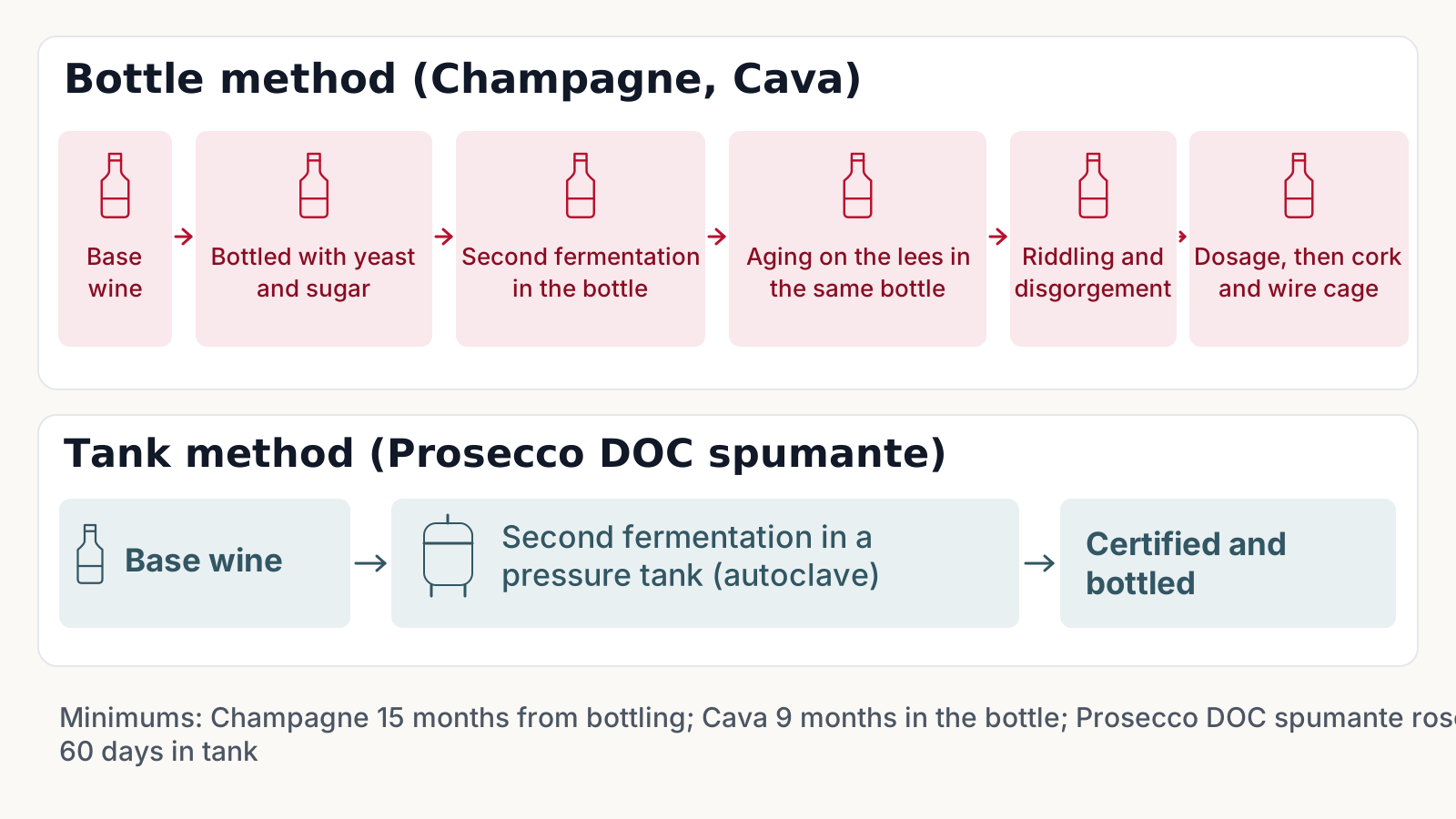
The bottle method keeps the wine in contact with dead yeast, the lees, until disgorgement. That contact is why Cava’s categories are defined by months in the bottle and why Champagne’s minimums are counted from bottling. For what time on the lees does to a wine, see our aging explainer. For Prosecco DOC spumante, the specification sets a 60-day tank minimum only for the rosé; the consortium gives at least 30 days for the others.
Takeaway: The words “second fermentation in the bottle” or “traditional method” point to the Champagne and Cava route; Prosecco DOC spumante is tank-fermented by rule.
What do the names Champagne, Prosecco and Cava protect?
Each name is a protected designation of origin. It guarantees a defined area, permitted grapes and a production method, checked by an inspection body. The name does not describe a taste, and a wine made outside the area or outside the rules is not entitled to it.
| Champagne AOC | Prosecco DOC | D.O. Cava | |
|---|---|---|---|
| Area | About 34,200 ha, about 150 km north-east of Paris; four main areas: Montagne de Reims, Vallée de la Marne, Côte des Blancs, Côte des Bar | Provinces of Belluno, Gorizia, Padova, Pordenone, Treviso, Trieste, Udine, Venezia and Vicenza | Origins around Sant Sadurní d’Anoia in Penedès; certain other towns and regions for historical reasons |
| Grapes | Chardonnay, Pinot Noir and Meunier; five more authorised (Arbane, Petit Meslier, Chardonnay Rose, Pinot Blanc, Pinot Gris), about 0.3% of plantings | At least 85% Glera; up to 15% from listed varieties including Chardonnay and the Pinots; rosé adds 10–15% Pinot Noir vinified red | Macabeo, Xarel·lo and Parellada as the classic blend; Chardonnay authorised since 1986; Garnacha widely used for rosé |
| Types | Non-vintage, vintage, rosé, blanc de blancs and others | Spumante, spumante rosé, frizzante, still (tranquillo) | Cava de Guarda; Cava de Guarda Superior (Reserva, Gran Reserva, Paraje Calificado); rosé |
| Who checks | Comité Champagne and an INAO-accredited body | Valoritalia certifies each batch; a State marking goes on the bottle collar | Cava Regulatory Board, which says it is ENAC-accredited |
| Label marks to look for | AOC “Champagne”, sugar term, producer registration code (NM, RM, CM and others) | “Prosecco DOC”, State marking with a Data Matrix code on the collar | Quality seal (marchamo): green for Guarda, silver and gold for Guarda Superior |
| Sources | Comité Champagne FAQ, grape varieties and designation pages | Prosecco specification Art. 2, 3 and 5; consortium types and recognition pages | Cava Regulatory Board pages on the designation, grape varieties, zones and labelling |
The Comité Champagne says the Champagne designation is recognised and protected in more than 130 countries. The Prosecco consortium adds two practical signs: Prosecco DOC is sold only in glass bottles, so a product on tap or in a can sold as Prosecco is not Prosecco DOC, and the State marking sits on the collar so that it cannot be reused once the bottle is opened. You can find more label and filling explainers in this section of the site.
Takeaway: Read the origin name first; it tells you which rulebook applies before you read anything else on the label.
Can a US wine be labeled Champagne?
Only in a narrow legacy case. Federal law lists Champagne as a “semi-generic” name. For a wine from outside the EU, the name can appear only if the user of that brand name, or its successor, held a Certificate of Label Approval or a Certificate of Exemption from Label Approval showing it before March 10, 2006; the label must also show the true origin next to it, and the wine must meet the US standard for the class.
| US rule | What it says | Source |
|---|---|---|
| Sparkling grape wine | Bubbles must come solely from fermentation inside a closed container, tank or bottle | 27 CFR 4.21(b)(1) |
| “Champagne” as a US class | Sparkling light wine whose bubbles come solely from a second fermentation in glass containers of not more than one gallon | 27 CFR 4.21(b)(2) |
| Tank-fermented wine using the word | Must also be labeled “sparkling wine” and carry a term such as “bulk process” or “fermented outside the bottle”; “charmat method” can be added | 27 CFR 4.21(b)(3) |
| Carbonated wine | Bubbles not solely from fermentation; must say “carbonated” | 27 CFR 4.21(c) |
| Semi-generic names | Champagne is listed; use requires a true appellation of origin in direct conjunction | 27 CFR 4.24(b) |
| 2006 cut-off | For wines other than EU wines, the user of the brand name, or its successor, must have held a label approval or exemption showing the name before March 10, 2006 | 26 U.S.C. 5388(c)(3) |
Common mistake: Treating “California Champagne” or “American Champagne” as the French wine. These are US label terms kept under the 2006 grandfather rule; the wine must show its US origin, and if it was not bottle-fermented the label also needs words such as “bulk process”.
Prosecco and Cava are not on the semi-generic list in these sections; on an imported EU wine the word refers to the designation.
Takeaway: On a US label, look for the origin next to “Champagne” and for “bulk process” wording; together they tell you where and how the wine was made.
What do Brut, Extra Dry and Demi-Sec mean?
They are legal sugar bands for sparkling wine, measured in grams of sugar per litre. EU Regulation 2019/33 sets seven bands for the sparkling wine categories (Annex III Part A), and Champagne, Prosecco DOC spumante and Cava all use them; lightly sparkling and still wines use a separate set of terms (Part B). The names are counter-intuitive: “Extra Dry” has more sugar than “Brut”.
| Term (EU, English or French) | Sugar content | Prosecco DOC spumante | Cava term |
|---|---|---|---|
| Brut nature (pas dosé, dosage zéro) | Less than 3 g/L, no sugar added after the second fermentation | Allowed | Brut Nature |
| Extra brut | 0–6 g/L | Allowed | Extra Brut |
| Brut | Less than 12 g/L | Allowed | Brut |
| Extra dry | 12–17 g/L | Allowed | Extra Seco |
| Sec, dry | 17–32 g/L | Allowed (“dry”) | Seco |
| Demi-sec, medium dry | 32–50 g/L | Allowed | Semi Seco |
| Doux, sweet | More than 50 g/L | Not listed for spumante | Dulce |
Sources: Commission Delegated Regulation (EU) 2019/33, Annex III Part A (EU version as at January 31, 2020); Comité Champagne FAQ; Prosecco DOC specification Art. 5; Cava Regulatory Board category list. Prosecco DOC spumante rosé is limited to brut nature through extra dry.
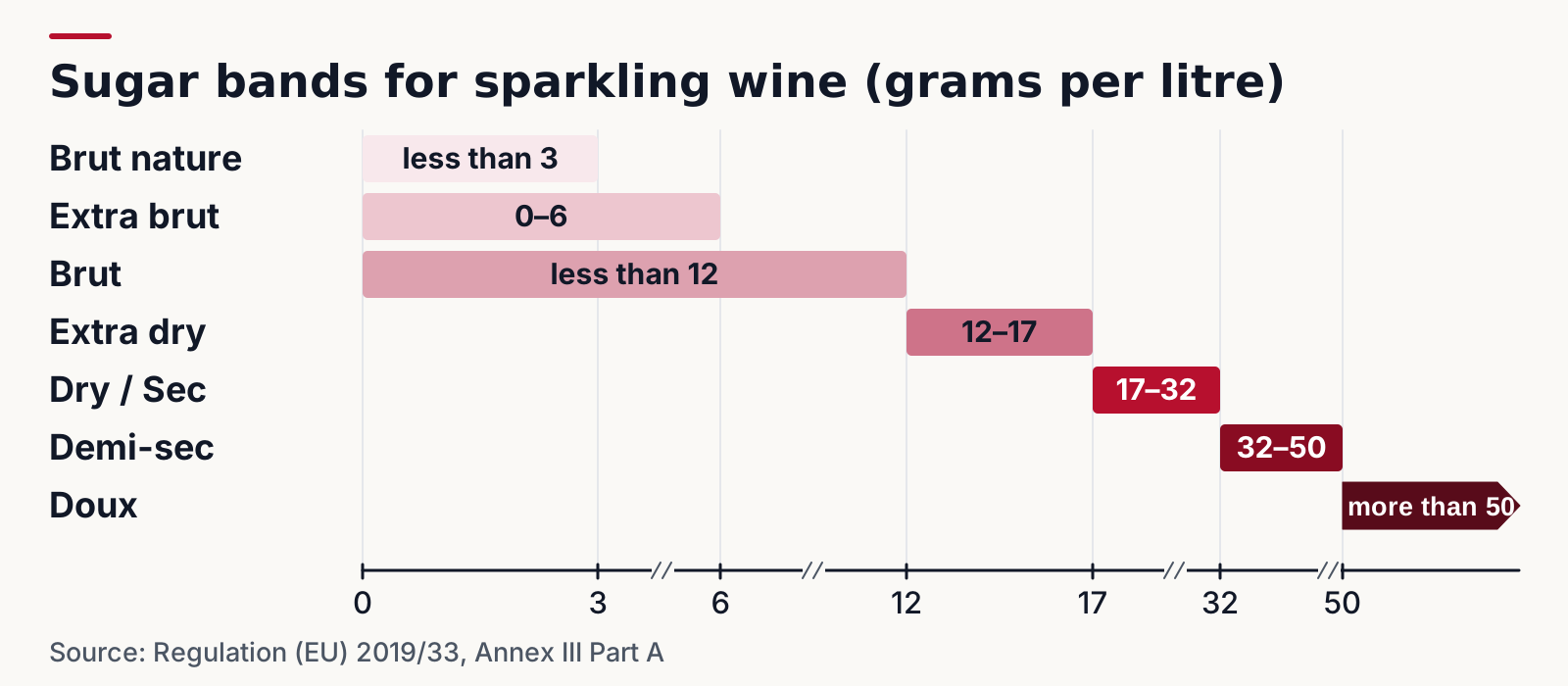
In Champagne and Cava the band is set at the end, after disgorgement: Champagne’s dosage liqueur and Cava’s expedition liqueur add the sugar, and brut nature gets no sugar added after the second fermentation. For Prosecco DOC the consortium explains that the winemaker manages the sugar during the tank fermentation.
Common mistake: Reading “Extra Dry” as drier than “Brut”. On a sparkling wine label it sits one band sweeter, at 12–17 g/L against under 12 g/L.
Takeaway: Use the sugar term to compare sweetness across all three wines; it is the one part of the label that follows the same scale.
Why are the closures different?
Pressure and each designation’s rules set the closure. EU rules define the categories by the excess pressure of carbon dioxide in a closed container at 20 °C: at least 3 bar for sparkling wine, at least 3.5 bar for quality sparkling wine, and 1 to 2.5 bar for semi-sparkling wine (Regulation 1308/2013, EU version as at January 31, 2020). Within those limits, the Prosecco DOC specification spells out which stoppers each type can use.
| Wine | Pressure (source) | Closure on the finished bottle (source) |
|---|---|---|
| Champagne | 5–6 bar inside the bottle (Comité Champagne); bottles designed to withstand 20 bar | Cork with a metal plate on top (plaque de muselet), held by a wire cage (muselet), wrapped in foil |
| Cava | No figure on the regulator’s pages; the regulator describes Cava as quality sparkling wine, for which the EU minimum is 3.5 bar | Final cork and wire cage, foil capsule (Cava Regulatory Board) |
| Prosecco DOC spumante | No figure in the specification; EU sparkling wine starts at 3 bar, quality sparkling wine at 3.5 bar | Stoppers with less than 51% cork by weight are not allowed, and the part touching the wine must also be at least 51% cork; bottles up to 0.200 L can use a screw cap, with or without a mushroom-shaped overcap or a plastic tear-off (specification Art. 8) |
| Prosecco DOC frizzante | Lighter, less persistent sparkle (consortium); the EU semi-sparkling range is 1–2.5 bar | Bottles up to 5 L with a flush cork or inert stopper or a screw cap; a cylindrical cork held by the traditional string tie is also allowed; crown cap allowed when the label says “rifermentazione in bottiglia” (specification Art. 8) |
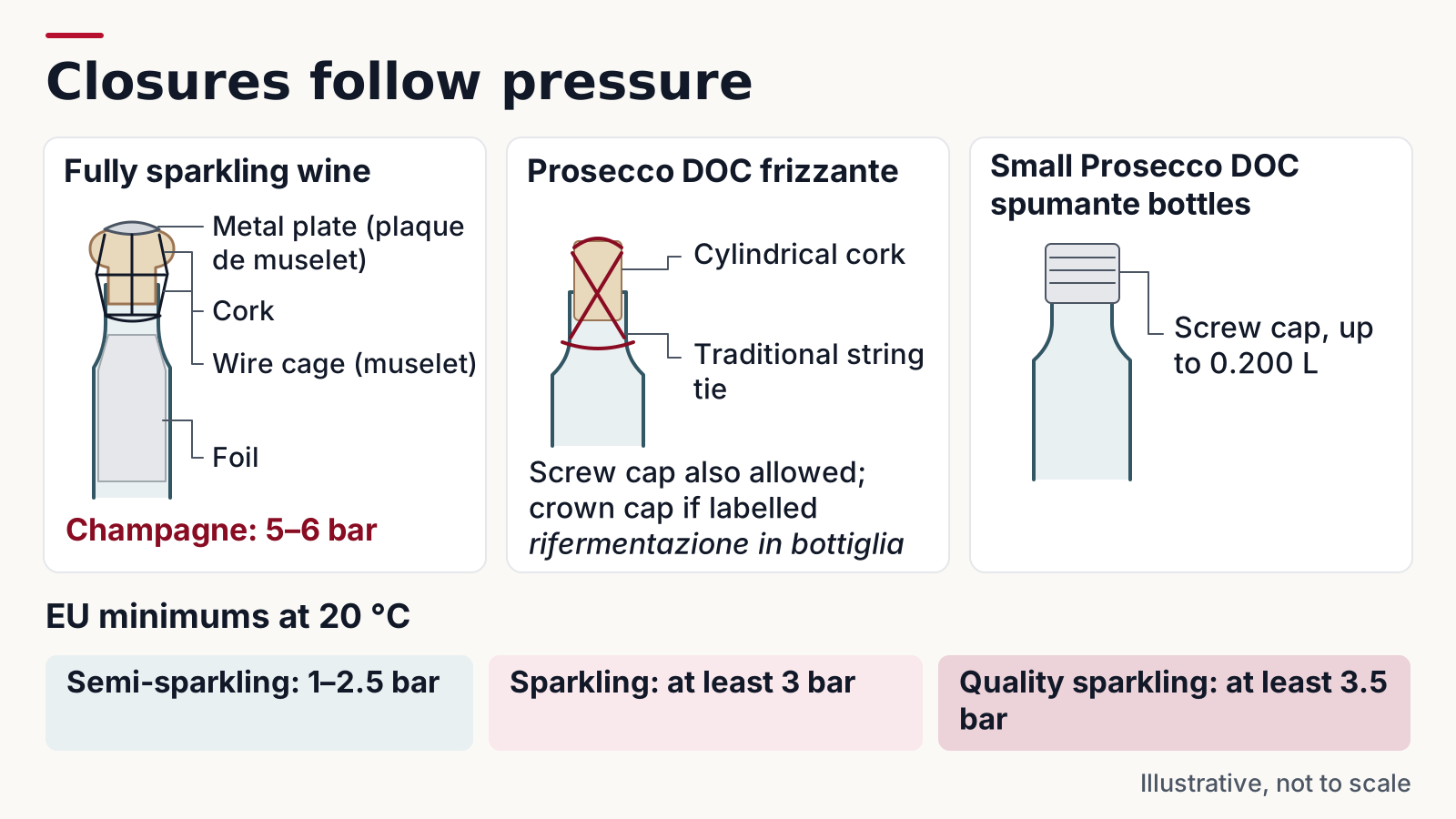
The Comité Champagne notes that a Champagne cork goes in as a cylinder and changes shape over the years, narrowing at the waist; it says the change has no adverse effect on the wine. For how cork and screw cap closures compare in storage, see our unopened-wine explainer, and our corks, wire cages and screw caps section covers the closures themselves.
Takeaway: A wire cage holds a cork against several bar of pressure, but the closure alone does not identify the wine; check “spumante” or “frizzante” and the bottle size on the label.
The 4-Step Sparkling Label Check
Four checks, in this order, place a bottle of Champagne, Prosecco or Cava from the label alone. Each check uses one of the rules above, so the result is something you can verify, not a taste impression.
| Step | What to find on the label | What it tells you |
|---|---|---|
| Step 1 — Origin name | “Champagne”, “Prosecco DOC” (or another Prosecco designation), “Cava” | Which rulebook applies: area, grapes, method |
| Step 2 — Method words | “Traditional method”, “second fermentation in the bottle”, “rifermentazione in bottiglia”; on US wines “bulk process” or “fermented outside the bottle”. If none appear, use the method set by the rules of the name found in Step 1 | Bottle or tank second fermentation |
| Step 3 — Sugar term | Brut nature, extra brut, brut, extra dry, dry or sec, demi-sec, doux or dulce | The sugar band in grams per litre |
| Step 4 — Category or year | A vintage year or “millesimato”; Cava Reserva, Gran Reserva, Paraje Calificado; “spumante” or “frizzante” | How much of the wine comes from one year, the minimum time in bottle, or how sparkling it is |
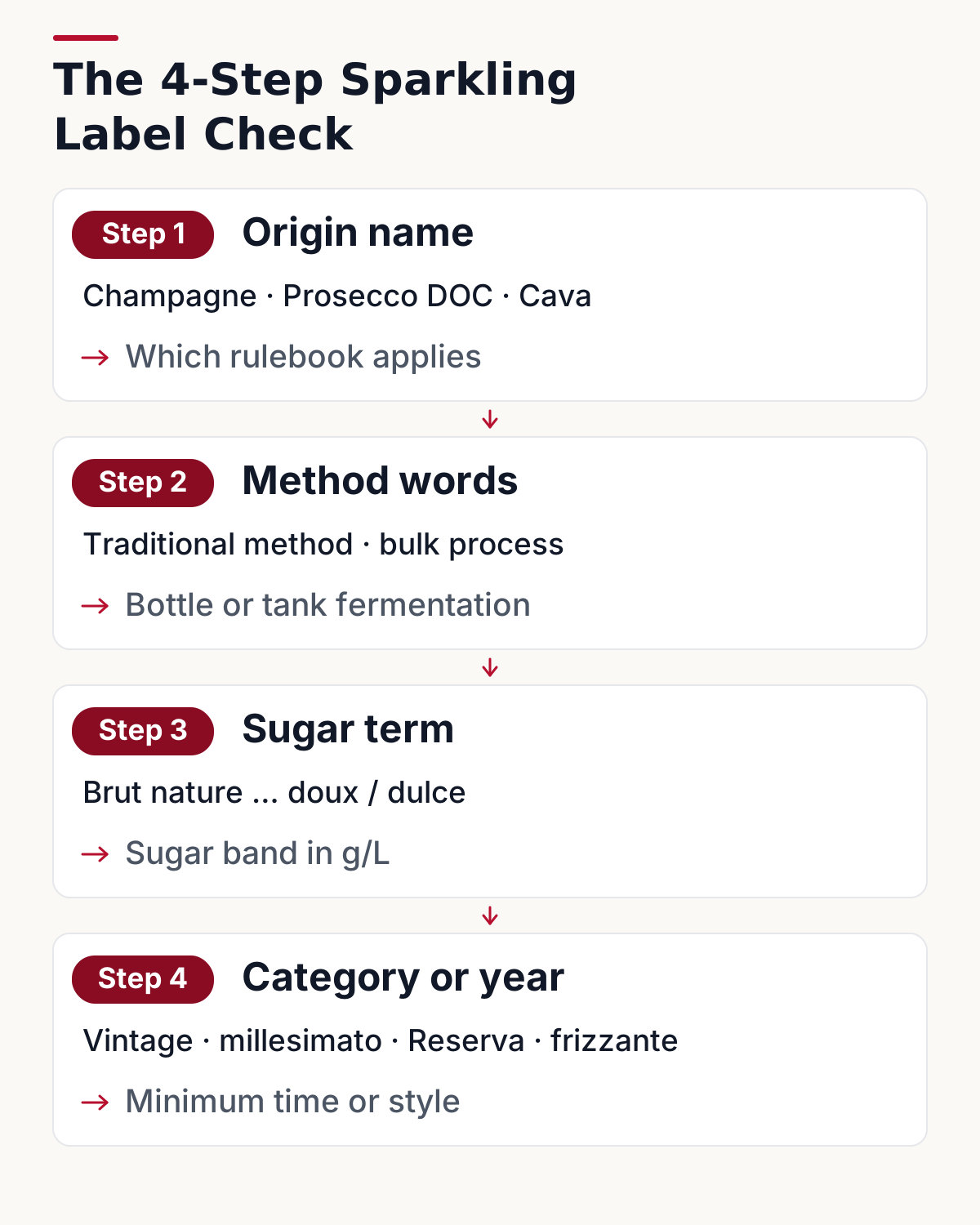
Step 4 words mean different things. A year on a Champagne label means the wine was made only from that year’s grapes (Comité Champagne). “Millesimato” on Prosecco DOC spumante means at least 85% of the wine comes from the stated year, which must be shown (specification Art. 7). On Cava, a vintage is required from Reserva upwards and means at least 85% of the grapes come from that year, and the category names set the minimum time in bottle: 18 months for Reserva, 30 for Gran Reserva and 36 for Paraje Calificado (Cava Regulatory Board). “Spumante” and “frizzante” tell you how sparkling a Prosecco is, not how old.
If Step 1 finds no protected name, the tables on this page do not apply. For EU sparkling wines the sugar terms still follow the Annex III Part A bands, and on US wines the method wording in Step 2 follows the TTB rules above; anything else needs its own rules. Other articles on wine basics explain the grape and aging terms you will meet on the same labels, and the sparkling wine tag collects every page on the topic.
Takeaway: Origin, method, sugar, category: read in that order, the label answers the Champagne vs Prosecco vs Cava question on its own.
When this does not apply
The tables above cover Champagne AOC, Prosecco DOC and D.O. Cava as set out in the sources read on October 7, 2026, in the versions named below. Several things fall outside them:
- Other Prosecco designations. Conegliano Valdobbiadene Prosecco DOCG and Asolo Prosecco DOCG have their own specifications, not covered here.
- Other sparkling wines. Crémant, Franciacorta, Asti, English sparkling wine and US sparkling wines follow their own rules; only the EU sugar bands and the US label rules above carry over.
- Rule changes. Production specifications are amended from time to time. The Prosecco figures come from the version published on September 30, 2025; the EU sugar bands and pressure categories come from the EU texts of Regulations 2019/33 and 1308/2013 as at January 31, 2020, and later amendments were not checked. Check the current text before relying on a figure.
- Lightly sparkling and still wines. Frizzante and still wines are not covered by the sparkling sugar bands; their terms follow Part B of Annex III.
- Taste. A sugar band is a legal range, not a taste rating. Acidity and the grapes change how the same band tastes.
- Storage and aging. How long a sealed bottle keeps is covered in how long unopened wine lasts, and what continues to happen in the bottle in how aging continues after bottling.
- Advice. This page does not recommend which wine to buy, serve or mix, for example in a mimosa, and it makes no health comparison. It is general information from an independent site; see the About page in the site menu for who runs it.
Takeaway: Use the tables only for the sparkling versions of the three named designations, and check any other wine against its own rules.
How this page was put together
We compiled this page from primary public sources: the Comité Champagne’s official website, the Prosecco DOC production specification published in Italy’s Gazzetta Ufficiale on September 30, 2025 and the consortium’s website, the D.O. Cava Regulatory Board’s website, EU Regulations 1308/2013 and 2019/33, and US federal rules in 27 CFR part 4 and 26 U.S.C. 5388. All were read on October 7, 2026; the list is in Sources and References below. Where the official bodies give a figure on their websites rather than in a legal text, the table names the body. Nothing here comes from tasting or testing, and no producer was consulted. The EU texts were read from the archived EU version on legislation.gov.uk because the EUR-Lex site could not be reached. The other explainers on this site are listed on the articles page.
Takeaway: Before relying on a figure here, check the designation, the wine type and the version of the rule it comes from.
Related reading:
- How long does wine last unopened? — Check how temperature, light and closure type affect a sealed bottle.
- How wine aging works — Understand lees contact, oxygen and what changes after bottling.