To read a wine label, start with the brand and wine type, then look for the appellation and alcohol statement. Turn the bottle to check the bottler wording, net contents, and declarations. Use the guide below to work through a bottle in that order.
This guide focuses on U.S. federal wine-label rules. FAA Act labeling requirements apply to wines containing 7 percent or more alcohol by volume introduced in interstate commerce.
For more reading, browse our wine guides.
Start with the brand label
The brand label carries the brand name in the usual distinctive design.
A brand name is the name under which a wine or line of wines is marketed.
Use this field guide as you turn the bottle.
| What to find | Requirement or location |
|---|---|
| Brand name | The brand name must be stated on the brand label. |
| Wine designation | The class, type, or other designation must be stated on the brand label. |
| Alcohol statement | The alcohol content statement may appear on any label of the container. |
| Bottler or importer details | The name and address statement may appear on any label of the container. |
| Net contents | Net contents may appear on the front, back, or side of the container. |
| Health warning | The health warning may appear on a front, back, or side label. |
A net contents statement for a fill other than an authorized metric standard must be on a label affixed to the bottle front.
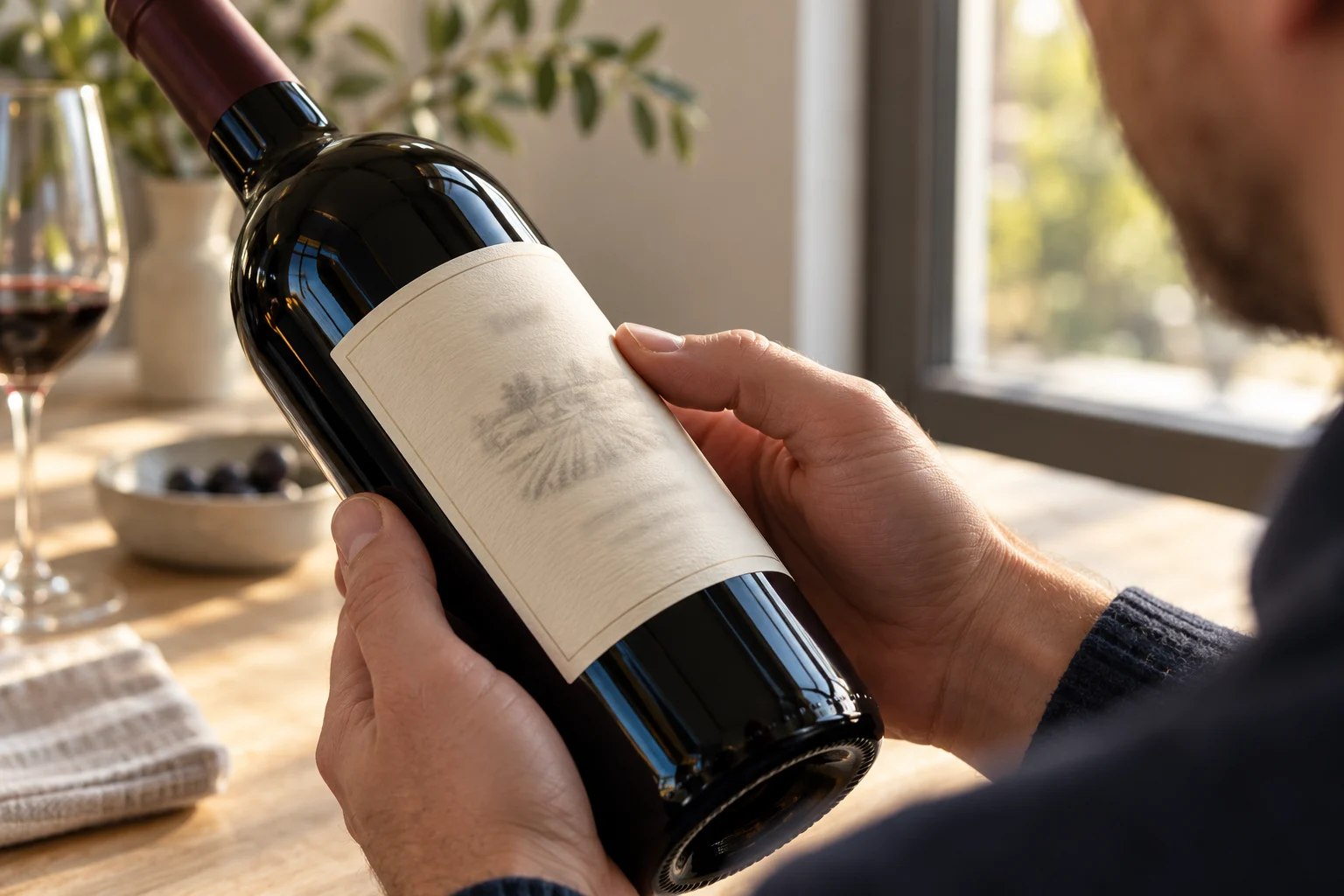
Check the appellation alongside the wine type
An appellation of origin is not required on all wine labels.
A grape varietal designation requires an appellation of origin on the brand label.
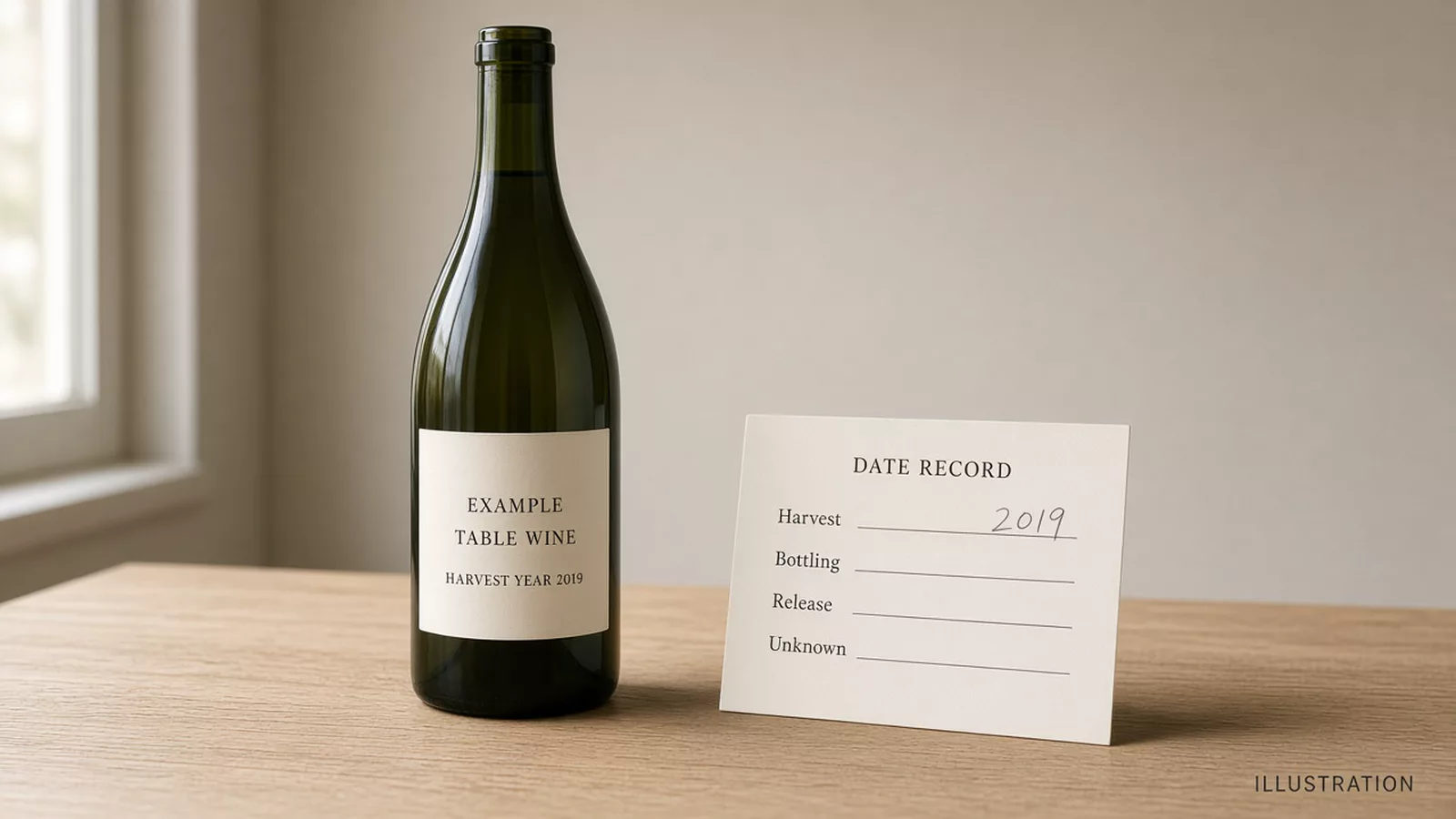
A vintage date triggers an appellation of origin on the brand label.
A required appellation must be in direct conjunction with, and substantially as conspicuous as, the class/type designation.
Continue with grape, appellation, and vintage percentage rules for the origin thresholds, or vintage date versus bottling date for the date terminology.
Read the alcohol statement and its tolerance
For wines over 14 percent alcohol by volume, a numerical alcohol content statement is mandatory.
For wines 7 to 14 percent alcohol by volume, a numerical alcohol content statement is optional if “table wine” or “light wine“ is the mandatory class/type designation on the brand label.
The abbreviation “ABV” is not allowed in the label alcohol-content statement.
A specific percentage versus a stated range
For a label showing a specific percentage, use the tolerance column. For a label showing a range, use the range column.
| Specific-percentage statement | Range statement |
|---|---|
| The tolerance is plus or minus 1.5 percentage points for wines containing 14% or less alcohol by volume. | The allowed stated range may not exceed 3 percentage points for wines containing 14% or less alcohol by volume. |
| The tolerance is plus or minus 1 percentage point for wines containing over 14% alcohol by volume. | The allowed stated range may not exceed 2 percentage points for wines containing over 14% alcohol by volume. |
No tolerances are permitted below the minimum or above the maximum of a stated range.
The alcohol content statement must correctly indicate the class, type, and taxable grade of the wine.
Example: still grape table wine
For the still grape table wine labeled “13.5% ALC. BY VOL.”, actual alcohol may not exceed 14% or fall below 12%.
Actual alcohol of 14.5% would make the table-wine example impermissible because it changes the type designation.
Keep the tax threshold separate
The maximum alcohol content for the lowest still wine tax rate rose from 14 percent to 16 percent alcohol by volume.
CBMA did not change the labeling tolerances.
Table wine may not contain more than 14 percent alcohol by volume.
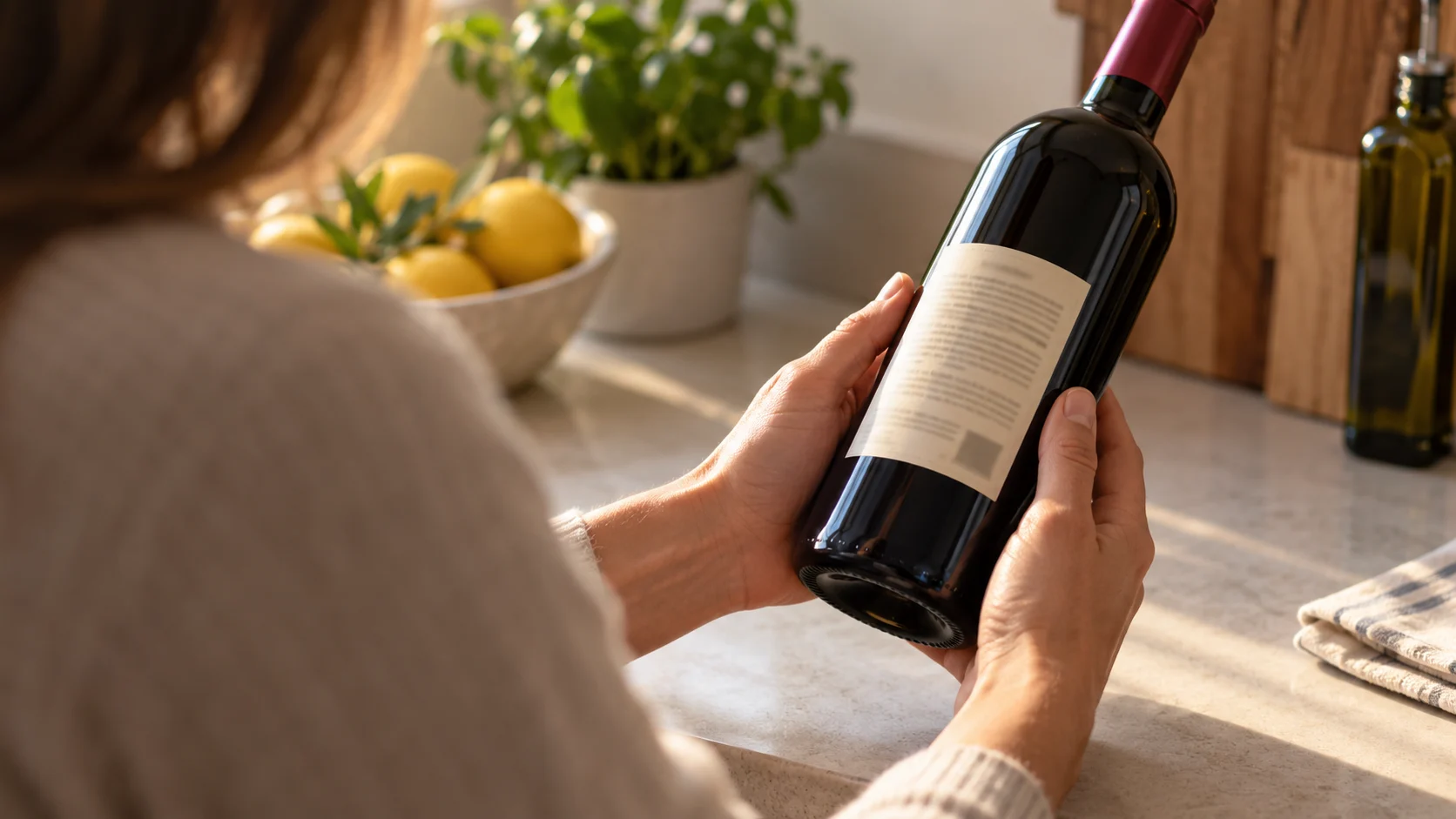
Read the words before the company name
American wine labels must show the bottler or packer name and address, preceded by “bottled by” or “packed by.”
The street address and zip code may be omitted; the city and state are required.
For imported wine bottled or packed in its country of origin, the “imported by” statement is sufficient for the name and address statement.
Produced or made
One qualifying route for “Produced” or “Made” is fermenting not less than 75% of the wine at the stated address.
Another qualifying route for “Produced” or “Made” is changing the class or type by adding alcohol, brandy, flavors, colors, or artificial carbonation at the stated address.
Another qualifying route for “Produced” or “Made” is producing sparkling wine by secondary fermentation at the stated address.
Blended, cellared, or vinted
“Blended” means mixing the wine with other wines of the same class and type at the stated address.
“Cellared,” “Vinted,” or “Prepared” means subjecting the wine to cellar treatment at the stated address.
More than one name is necessary if another person performed the defined operation.
More than one address is necessary if the defined operation was performed at a different address.
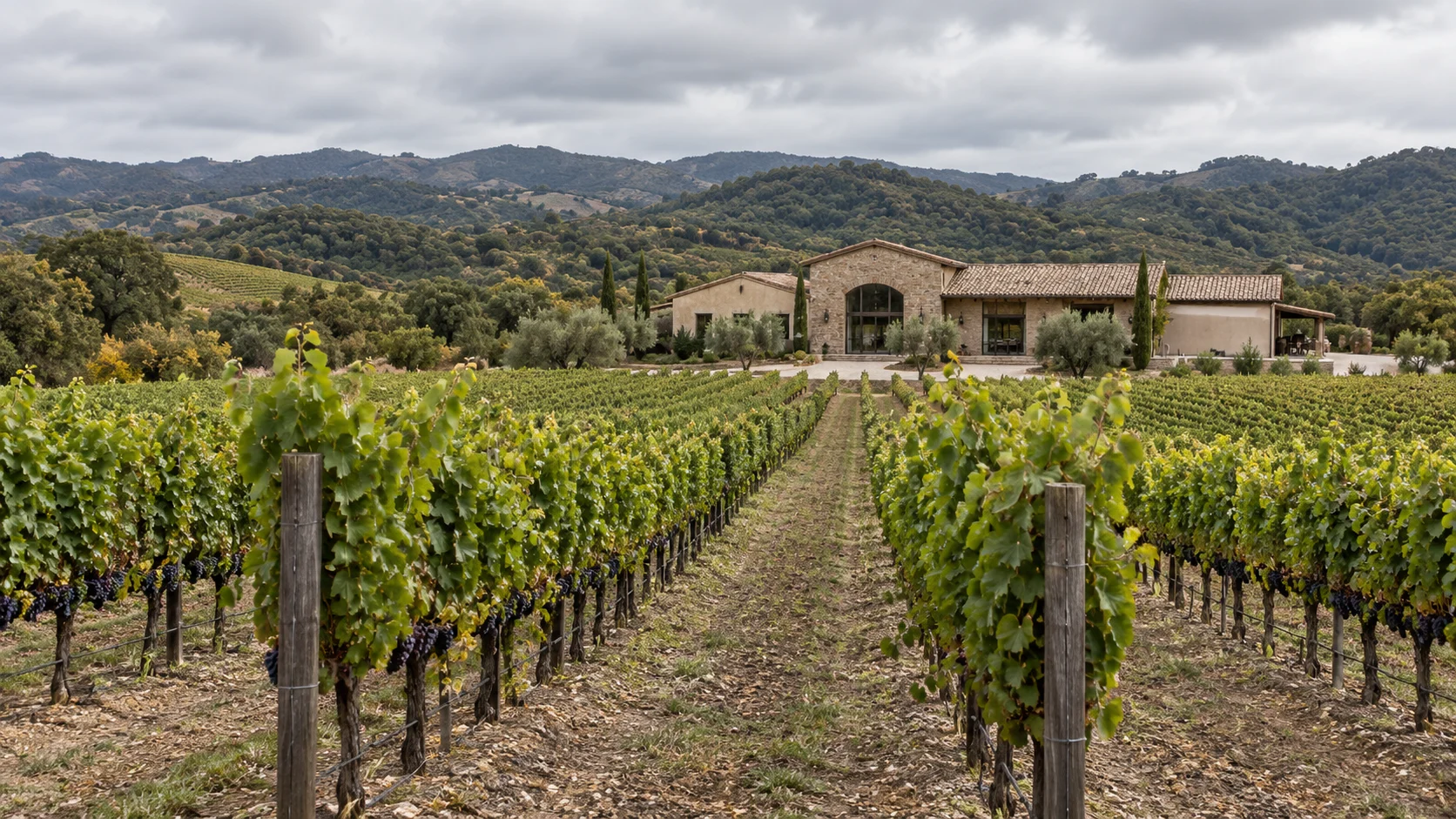
Estate bottled meaning: grapes, place, and premises
“Estate bottled” means 100 percent of the wine came from grapes grown on land owned or controlled by the winery.
Both winery and vineyard must be within the labeled viticultural area for “estate bottled.”
Estate-bottled wine must be crushed, fermented, finished, aged, processed, and bottled continuously on the winery premises.
Estate-bottled wine must be labeled with its qualifying viticultural area.
For the related label comparison, see estate bottled versus single vineyard.
Finish with net contents and declarations
Net contents
The net contents statement indicates how much wine is in the container.
The TTB example uses “750 mL” for net contents on the back label.
Sulfites
A sulfite declaration is required at 10 or more parts per million (ppm), measured as total sulfur dioxide.
Wines with less than 10 ppm of total sulfur dioxide do not require a sulfite declaration.
TTB does not permit “sulfite free,” “free of sulfites,” or “contains no sulfites.”
Government warning
The health warning applies to alcohol beverages for sale or distribution in the United States containing not less than 0.5 percent alcohol by volume.
The health warning must appear separate and apart from all other information.
“GOVERNMENT WARNING” must be capitalized and bold; the remainder may not be bold.
Other conditional disclosures
For American and foreign wine blends referencing foreign wine, the exact foreign-wine percentage by volume must be on the brand label.
A statement declaring FD&C Yellow No. 5 is required on the brand or back label when that coloring is used in a product bottled on or after October 6, 1984.
Used cochineal extract or carmine must be declared by its common or usual name on a front, back, strip, or neck label in a product removed on or after April 16, 2013.
How should you read optional names?
A fanciful name is not required for wine.
Optional fanciful names may not create a false or misleading impression about the wine.
Additional information may appear if it is truthful, accurate, specific, neither disparaging nor misleading.
Keep a label-reading checklist
When comparing wine bottle labels, transcribe the wording before interpreting it:
- Copy the brand name and class or type designation.
- Record the appellation wording and any vintage date.
- Copy the alcohol statement exactly, including whether it shows a percentage or a range.
- Record the full phrase before the company name, together with the address.
- Look for estate bottled wording, net contents, the sulfite declaration, and the government warning.
Keep front and back label photographs together with that transcription. Return to the relevant section above for each phrase you want to interpret.
Sources
- TTB — Overview of Labeling Requirements for Domestic Wines
- Office of the Federal Register / eCFR — Labeling and Advertising of Wine
- TTB — Wine Labeling: Brand Name
- TTB — Wine Labeling: Alcohol Content
- TTB — Wine Labeling: Name and Address
- TTB — Wine Labeling: Net Contents
- TTB — Wine Labeling: Health Warning Statement
- TTB — Wine Labeling: Appellation of Origin
- TTB — Anatomy of a Wine Label
- TTB — Tax Reform – Craft Beverage Modernization Act (CBMA)
- TTB — Wine Labeling: Declaration of Sulfites