Treating 75, 85 and 95 as one percentage for the grape, the place and the year is the wrong reading of a US wine label. That reading fails when one bottle names a state and the next names an American viticultural area, because the vintage floor changes with the kind of place.
This page uses TTB’s 2025 Wine Boot Camp labeling slides and two TTB web pages, the label anatomy and the appellation of origin page, all read on October 11, 2026. It separates the tests. It does not approve a label, score a bottle or suggest what to buy. More label explainers are in Labels and Filling. Grape and aging terms that show up beside these percentages are in Wine Explained.
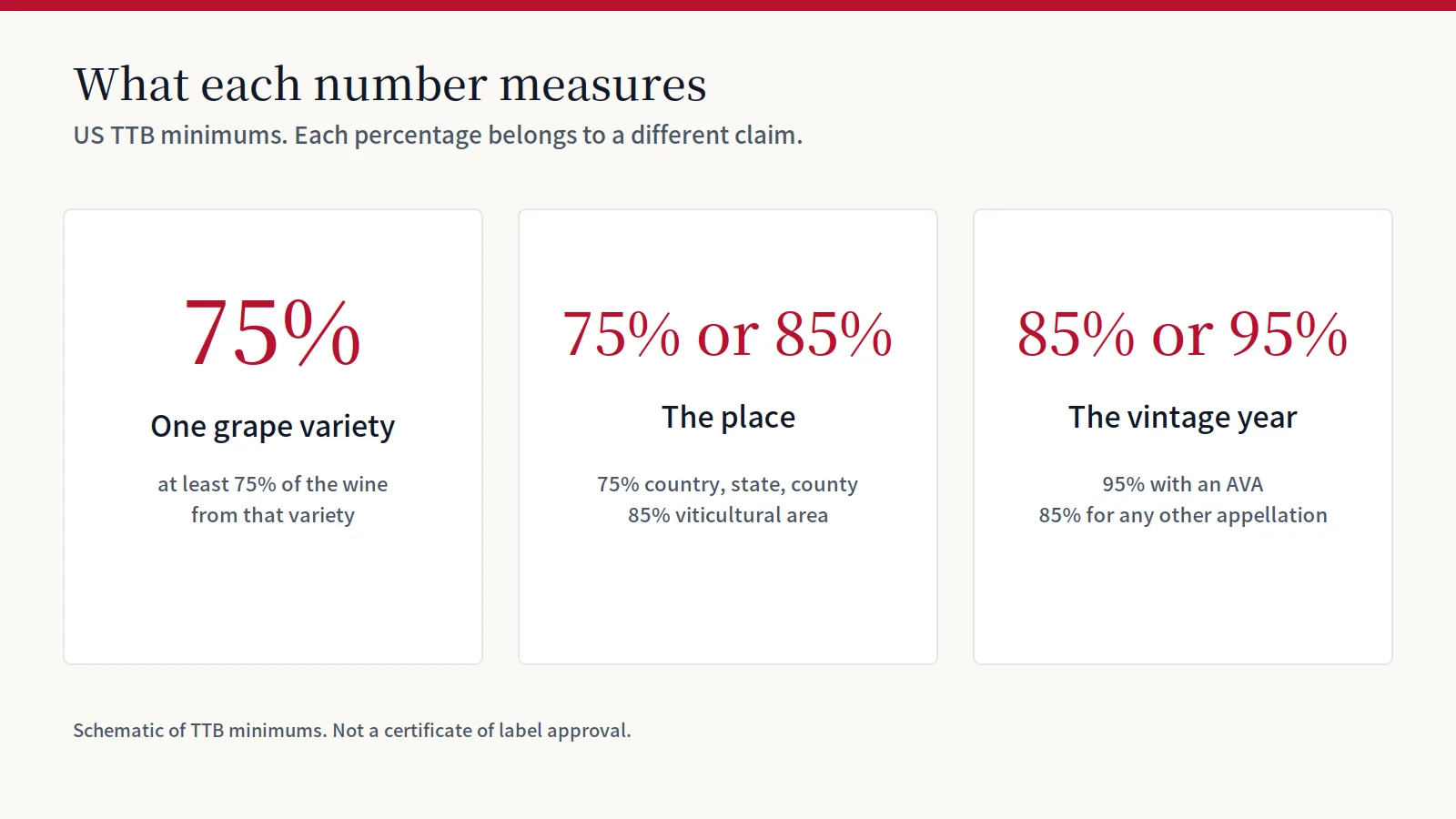
On a US wine label, 75, 85 and 95 are minimum shares, and each share measures a different line. TTB’s 2025 labeling training says that when one grape variety is the type, at least 75% of the wine must come from that variety and the stated appellation. The same training says a vintage date needs at least 95% from grapes grown in that harvest year when the appellation is an American viticultural area or a foreign equivalent, and at least 85% for any other appellation. TTB’s appellation page, last updated November 20, 2020, sets the place apart from the year: not less than 75% of the fruit from a country, state or county, and not less than 85% of the wine from grapes grown in a named viticultural area.
Key points:
- A single variety named as the type needs at least 75% of the wine from that variety and the stated appellation, and the brand label needs an appellation of origin.
- A country, state or county name needs at least 75% of the fruit from that place. An American viticultural area needs at least 85% from grapes grown there.
- A vintage year needs at least 95% from that harvest when the appellation is an AVA or a foreign equivalent, and at least 85% for any other appellation.
- On one bottle, check the variety floor, the place floor and the year floor as three separate tests.
What does each number measure?
Read the line of text first, then the percentage that belongs to that line. The table is the whole shorthand, split by claim. The diagram under it is the pairing people miss: the kind of place you are looking at selects both the place percentage and the vintage percentage.
| Claim on the label | Minimum | What that share measures | Source read on October 11, 2026 |
|---|---|---|---|
| One grape variety used as the type | 75% | The wine from that variety and the stated appellation | TTB 2025 training, p. 33; 27 CFR 4.23 |
| United States, American, a state, or a county | 75% | Fruit or other agricultural products grown in the named area | TTB appellation page, updated November 20, 2020 |
| An American viticultural area, or an approved foreign viticultural area | 85% | Grapes grown in the named viticultural area | TTB appellation page |
| Vintage date, appellation is an AVA or a foreign equivalent | 95% | The wine from grapes grown in the stated harvest year | TTB 2025 training, p. 34; 27 CFR 4.27 |
| Vintage date, any other appellation | 85% | The wine from grapes grown in the stated harvest year | TTB 2025 training, p. 34; 27 CFR 4.27 |
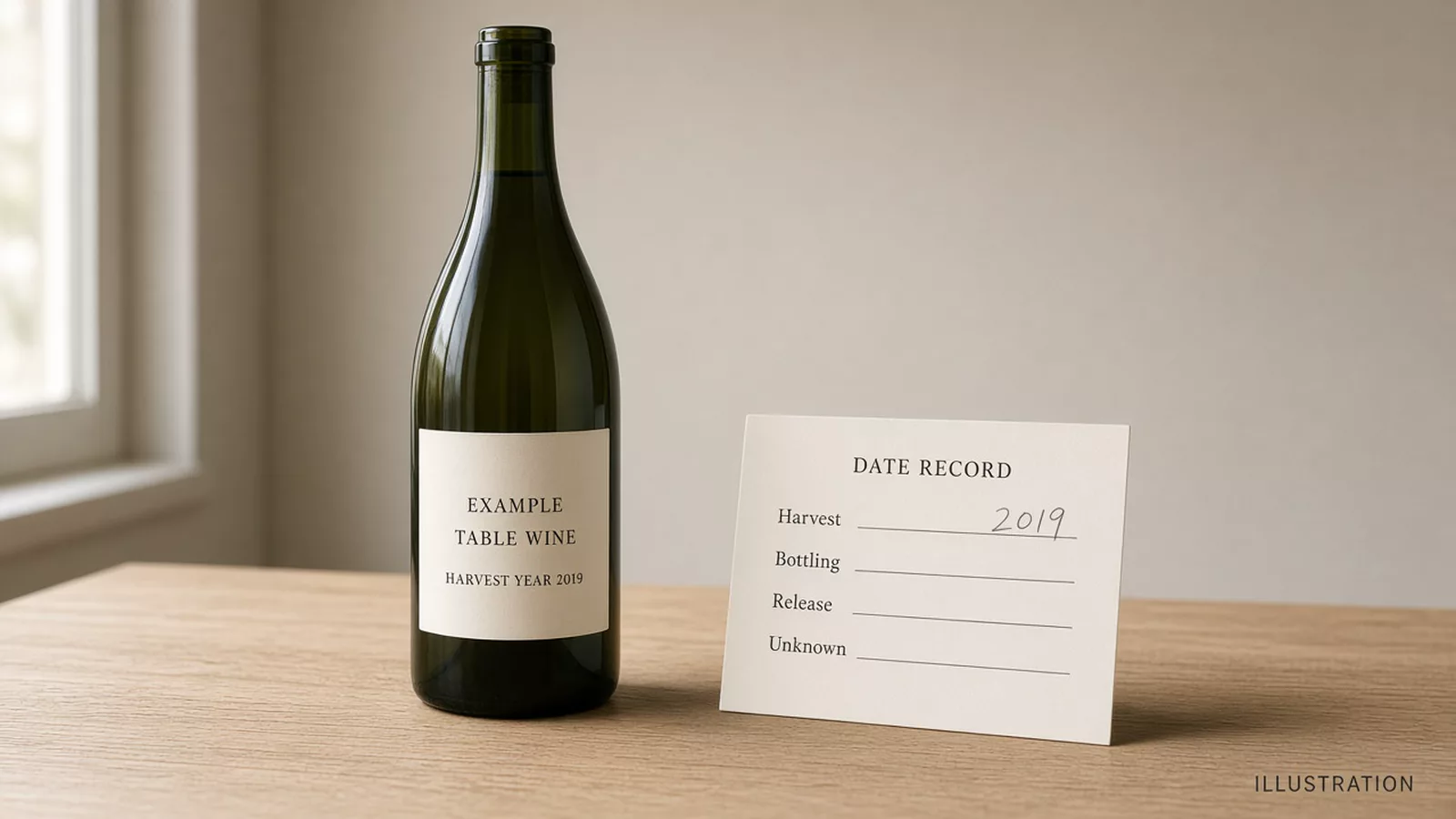
A vintage date means the year the grapes were harvested. TTB’s anatomy page limits it to grape wine and requires an appellation of origin on the brand label whenever a vintage date appears. The harvest year is a label fact. What happens to the wine in barrel or bottle after that harvest is the subject of how wine aging works.
When an appellation is required, TTB’s appellation page puts it on the brand label, in direct conjunction with the class or type, in type at least 2 mm on containers over 187 ml and at least 1 mm on containers of 187 ml or less. An appellation is required with a varietal designation, a vintage date, a semi-generic name, or an “estate bottled” claim, among the cases that page lists.
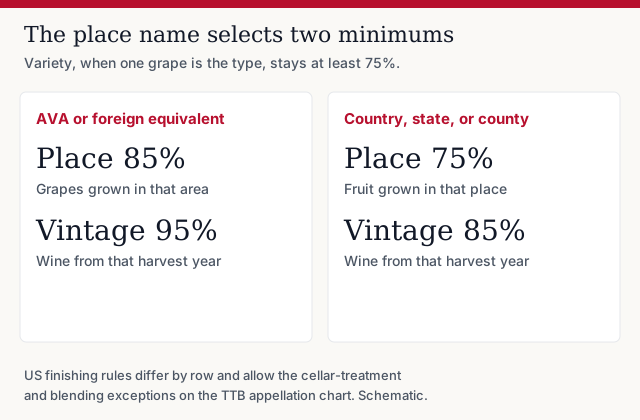
The place rows also say where the wine has to be finished. On the US rows, “fully finished” leaves room for cellar treatment under 27 CFR 4.22(c) and blending that does not change class or type under 27 CFR 4.22(b). That exception is printed on the TTB appellation chart.
| Appellation | Share from that place | Fully finished |
|---|---|---|
| United States or American | Not less than 75% | In the United States |
| One state | Not less than 75% | In that state or an adjacent state |
| One county | Not less than 75% | In the state that contains the county. The word “county” appears in the same size of type as the county name. |
| American viticultural area | Not less than 85% of the wine from grapes grown there | In the state, or one of the states, where the AVA is located |
| A foreign country | Not less than 75% | The wine conforms to that country’s rules for composition, production and designation of wines available for consumption there |
| An approved foreign viticultural area | Not less than 85% from grapes grown there | The wine conforms to the producing country’s rules for wines available for consumption there |
Each US row also says the wine must conform to the laws and regulations of the named appellation area. This page does not restate any state’s stricter statute. Use the area’s own text for that.
Takeaway: Match 75, 85 and 95 to the line they measure: one variety, the kind of place, or the harvest year given that place.
How do two hypothetical labels use the three tests?
TTB already publishes one worked case on the appellation page. The label says “American Merlot.” TTB reads “American” as the appellation and “Merlot” as the varietal, and says at least 75 percent of the wine is derived from Merlot grapes grown in the United States. The appellation is required because the varietal is there. That example has no vintage year, so it demonstrates the variety-and-country test only.
The next two labels are made up for this page. Sample Valley and Sample State are placeholders for an approved AVA and a US state. They are not bottles for sale, and the names are not a claim that any real place uses them.
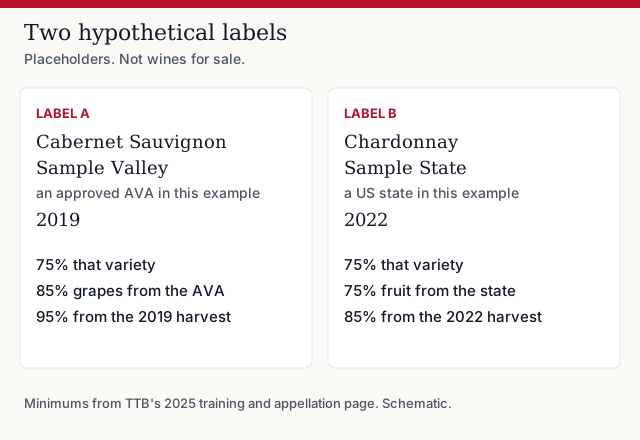
Label A, hypothetical. The brand label reads Cabernet Sauvignon, Sample Valley, 2019. Sample Valley is an approved AVA in this example.
- Variety: at least 75% of the wine from Cabernet Sauvignon and the stated appellation (2025 training, p. 33).
- Place: not less than 85% of the wine from grapes grown in that AVA, fully finished in the state where the AVA is located, with the cellar-treatment and blending exceptions above.
- Year: at least 95% of the wine from grapes grown in 2019, because the appellation is an AVA (2025 training, p. 34).
Label B, hypothetical. The brand label reads Chardonnay, Sample State, 2022. Sample State is a US state in this example, and it is not an AVA.
- Variety: at least 75% of the wine from Chardonnay and the stated appellation.
- Place: not less than 75% of the fruit grown in that state, fully finished in that state or an adjacent state, with the same exceptions, and in conformity with that state’s wine laws.
- Year: at least 85% of the wine from grapes grown in 2022, because a state is covered by the training’s “any other appellation” vintage test.
The three shares count different things, so a bottle can sit above one floor and still have to meet the others. Label A can be 75% Cabernet Sauvignon and still need 85% of its grapes from the AVA and 95% of the wine from the 2019 harvest. Those are the minimums the sources state. They are silent on how the wine tastes.
Takeaway: On an AVA label the vintage floor is 95%, and on a state label it is 85%. The variety floor stays 75% in both examples when one variety is the type.
Which label claims sit outside that shorthand?
Several legal lines use a share, or a full listing, that the three-number nickname does not capture. They come from the same TTB pages.
| Claim | What the source requires | Source |
|---|---|---|
| Two or more varieties as the type on the brand label | Show the percentage of each. The percentages add up to 100%. | TTB label anatomy; 27 CFR 4.23 |
| Several varieties named on the back label | The 2025 training says to list them in order of predominance if the percentages are not stated | TTB 2025 training, p. 33 |
| Two or three contiguous states | All of the fruit grown in the named states. The percentage from each state is on the label, with a tolerance of plus or minus 2 percent. Finished in one of those states, with the usual cellar-treatment and blending exceptions. | TTB appellation page |
| Two or three counties in one state | All of the fruit grown in the named counties, with each county’s percentage on the label, plus or minus 2 percent | TTB appellation page |
| Vineyard, orchard, farm or ranch name inside the brand | At least 95% of the wine from primary winemaking material grown on that named property, or the brand matches the company or trade name in the mandatory name and address statement | TTB 2025 training, p. 36; 27 CFR 4.33(b) and 4.39(i) |
| Estate bottled | 100% of the wine from grapes grown on land owned or controlled by the winery, and both the winery and the vineyard are inside the labeled viticultural area | TTB appellation page |
The brand-name 95% test applies when a vineyard, orchard, farm or ranch name with geographical or viticultural significance is part of the brand. A phrase somewhere else on the label, including the words “single vineyard” used outside that brand-name rule, needs its own reading. This page keeps the training’s brand-name test in its own row.
Estate bottled is a separate claim from the vintage 95% and from the brand-name 95%. The appellation page also sets process conditions for estate bottled, including that the wine stay on the winery’s premises through bottling. Those process conditions are a different article’s job. The number to remember here is the 100% grape source, tied to land the winery owns or controls, inside the labeled AVA.
A semi-generic name such as Champagne on a US label is another rule entirely, tied to a 2006 grandfather cutoff and a true place name beside it. That case is covered in Can a US wine be labeled Champagne?. Closure type, cork or screw cap, sits outside these percentages too. See Bottling and Closures.
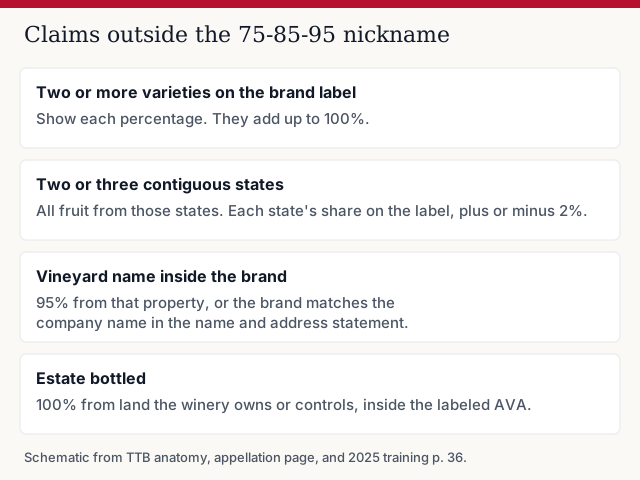
Takeaway: A listed blend, a multistate appellation, a vineyard name in the brand, and estate bottled each follow their own share. Keep them out of the three-number nickname.
What did the 2004 shorthand combine?
A Sunset magazine article dated August 26, 2004 states the nickname in one sentence: under United States law a wine must be at least 75 percent of the grape named, 85 percent of the grapes must come from the region named, and 95 percent of the wine must be from the vintage named, and states can choose stricter laws.
The TTB pages read for this article on October 11, 2026 assign those numbers more narrowly.
- 75% is the floor for one variety used as the type, and it is also the floor for fruit from the United States, a state or a county.
- 85% is the floor for grapes from an AVA or a foreign viticultural area. It is also the vintage floor for any appellation other than an AVA or a foreign equivalent.
- 95% is the vintage floor when the appellation is an AVA or a foreign equivalent. A second 95% test belongs to a vineyard, orchard, farm or ranch name used in the brand.
- The named area’s own wine laws still apply, because the appellation chart requires conformity with them. The 2004 sentence’s remark about stricter state laws points at that kind of local text. This page does not supply a state code.
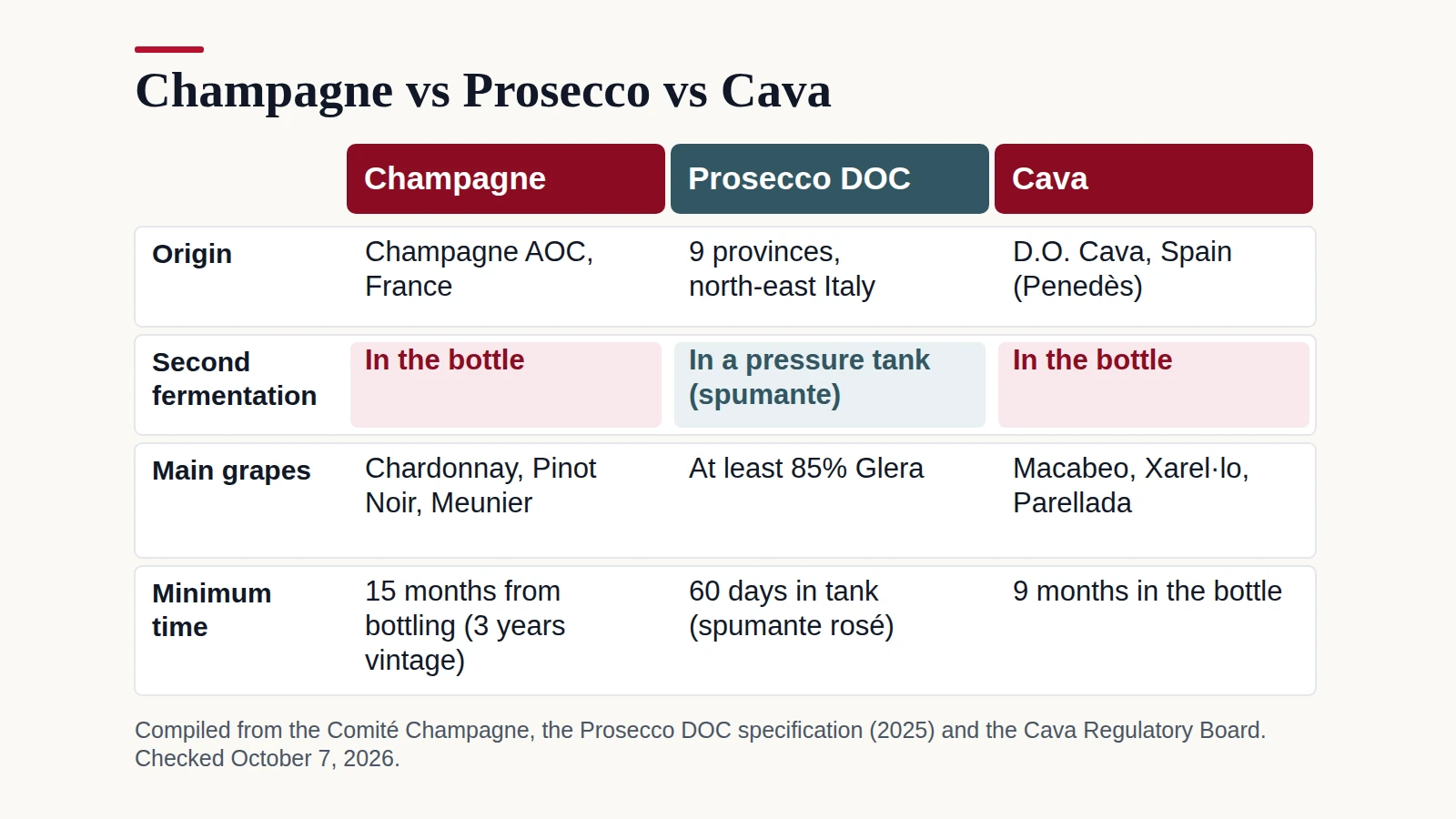
Champagne, Prosecco and Cava publish their own vintage shares, which are easy to lay on top of the US nickname by mistake. Those shares are summarized in the sparkling label check and on the Champagne, Prosecco and Cava page.
Takeaway: Use the 2004 sentence as a memory of the nickname, then read the current TTB row for the line in front of you. The region is 85% only when it is a viticultural area, and the vintage is 95% only for an AVA or a foreign equivalent.
What this page leaves unresolved
The tables are federal labeling minimums from the TTB pages named above, in the versions read on October 11, 2026. Several decisions sit outside them.
- A specific label. Nothing here is a Certificate of Label Approval, an exemption, or a judgment that a bottle you own meets a claim.
- A state’s own statute. Where the TTB chart requires conformity with the named area’s laws, the area’s text controls. It was not copied into these tables.
- Bottling date. A vintage date is the harvest year. Logging the bottling date, or deciding how long a sealed bottle keeps, is a storage question covered in how long unopened wine lasts.
- Imported containers over 5 liters. TTB’s anatomy page says a vintage date is not permitted on wine imported in containers over 5 liters.
- Estate process steps. The 100% grape-source sentence is included so it stays distinct from 95%. The crush-to-bottle control conditions are left on the TTB page.
- Health, taste and shopping. These percentages are conditions for wording. They say nothing about a drinking amount, a health effect, a score or which bottle to buy. Koeppel on Wine is an independent information site; the About page states who operates it.
Takeaway: Apply a percentage only to the claim it measures, only inside the TTB conditions cited for that row, and stop before a label-approval or a drinking decision.
How this page was put together
We compiled the percentages from TTB’s label anatomy page, TTB’s appellation of origin page (last updated November 20, 2020) and the 2025 Wine Boot Camp slides titled Part 1.5 Labeling, including the variety, vintage, estate and vineyard-name slides on pages 33-36. The 2004 Sunset article is cited only as the one-line nickname readers still meet in search, not as the current rule. All four were read on October 11, 2026. The full legal text of the Code of Federal Regulations was not the source; the citations such as 27 CFR 4.23 and 4.27 are the ones printed on those TTB pages. Nothing here comes from tasting, and no producer was asked to confirm a bottle. Other explainers on this site are listed on the articles page.
Takeaway: Before you use a figure, match it to the claim, the appellation type and the TTB page it came from.