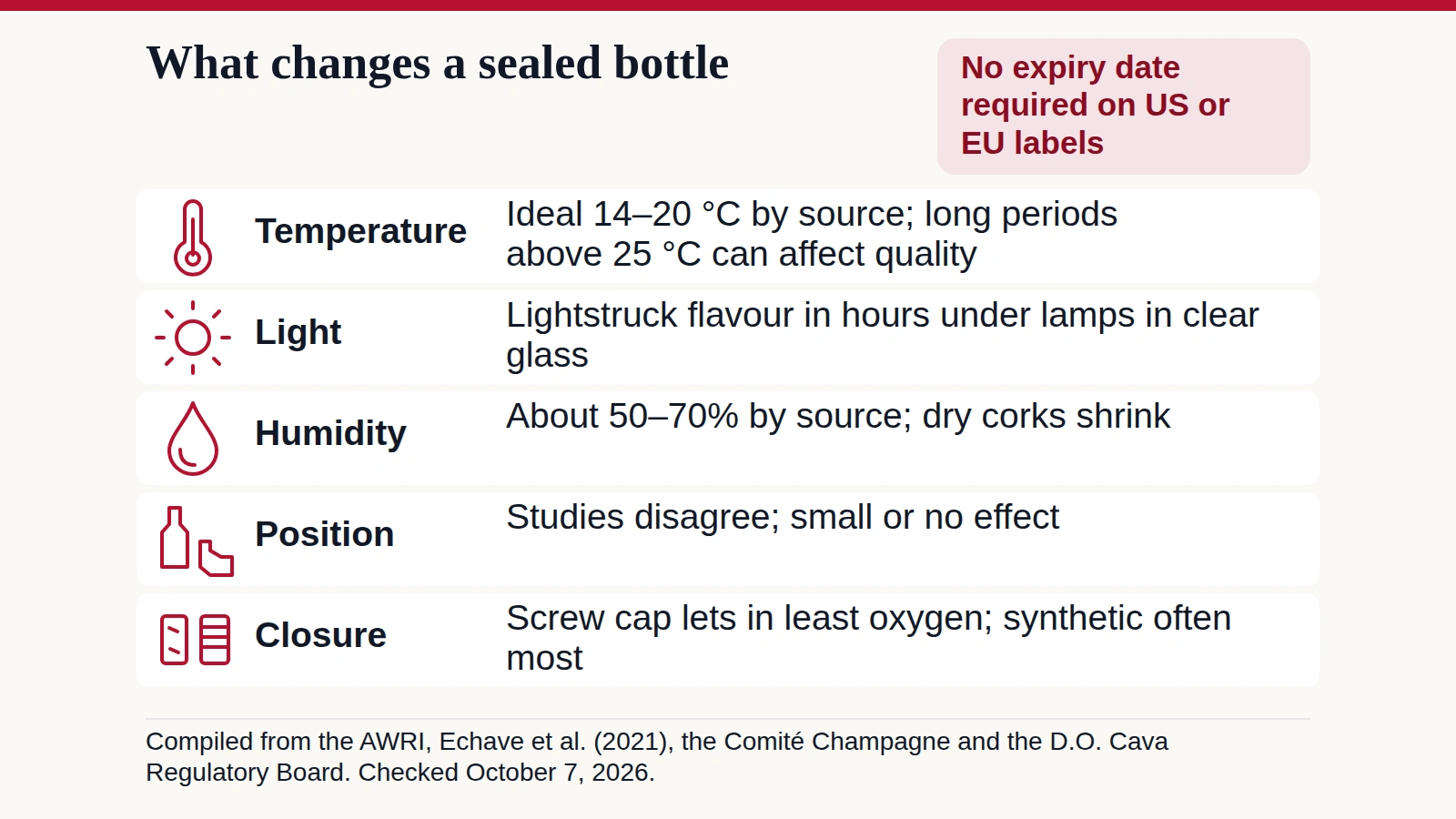
A warm shelf or a sunny window can damage a sealed bottle faster than any date on a label would suggest. Unopened wine has no legal expiry date in the US or the EU; how long it keeps depends on the wine, its closure and, above all, cool, steady, dark storage.
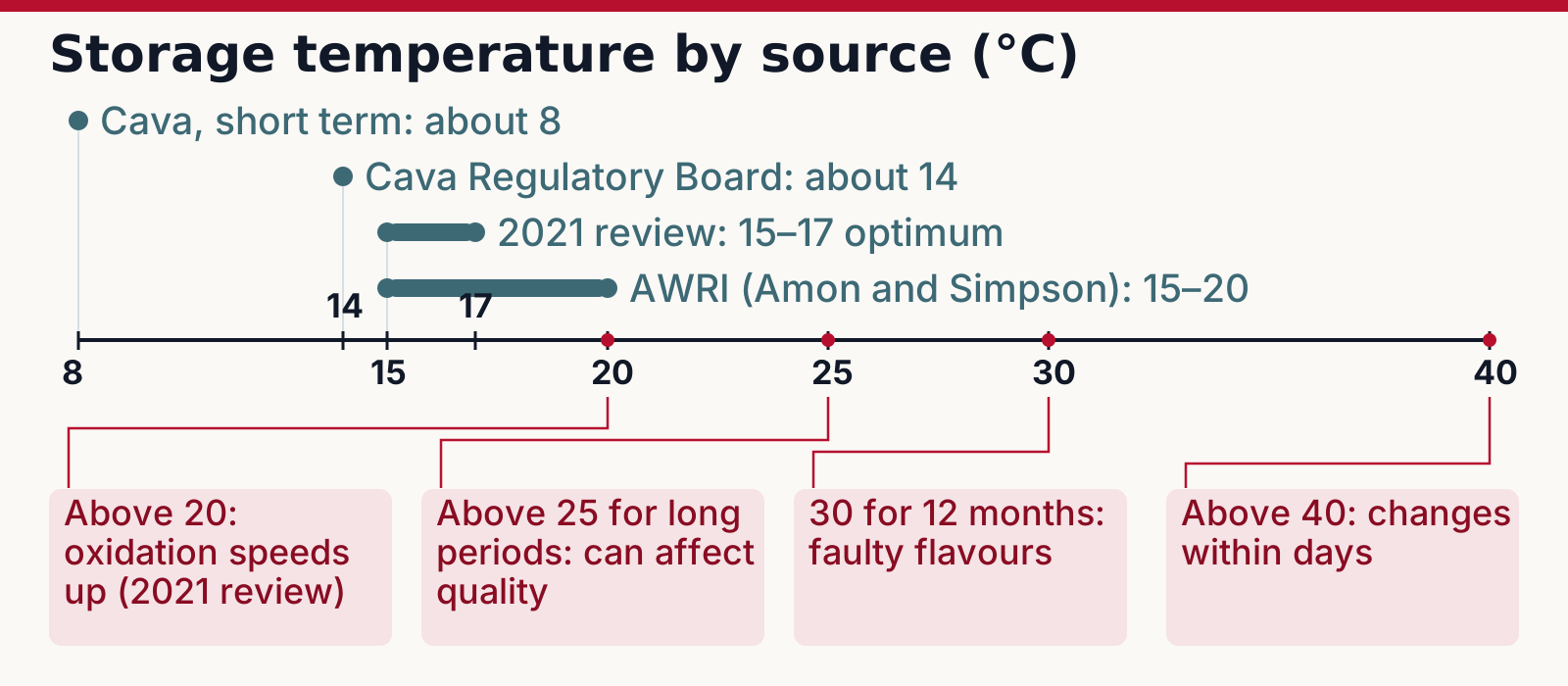
How long wine lasts unopened is not set by a date but by conditions. US label rules (27 CFR 4.32) do not require an expiry or best-before date on wine, and EU food labelling rules exempt wine from one, yet a sealed bottle keeps changing and can deteriorate. A 2021 scientific review puts the optimum storage temperature at 15–17 °C and says oxidation speeds up above 20 °C; the Australian Wine Research Institute (AWRI) reports faulty flavours after 12 months at 30 °C and visible changes within days above 40 °C. Light, dry air and the closure type also change how fast a sealed bottle develops.
This page compiles what research bodies, a peer-reviewed review and the official Champagne and Cava bodies say about keeping unopened wine, checked on October 7, 2026. It does not give a number of years for any wine, because none of these sources does, and it does not judge whether a particular bottle is safe or good to drink.
Key points:
- The year is not a deadline. The date on most bottles is the vintage, the harvest year, not a use-by date.
- Temperature first. Sources agree on cool and steady, roughly 14–20 °C depending on the source; long spells above 25 °C and large swings are the documented risks.
- Light and air. Light, especially sunlight, causes “lightstruck” flavours; dry air can shrink natural corks.
- Closure matters. Screw caps let in far less oxygen than most corks or synthetic stoppers, which slows oxidation but can favour “reductive” aromas, the rotten-egg or cabbage smells of sulfur compounds.
Does unopened wine expire?
Not on a fixed date, but it can deteriorate. The label rules below do not require an expiry date, yet the wine keeps changing after it is sealed. A 2021 review in the journal Molecules notes that, unlike many foods, wine often develops in the bottle over time, but also that poor storage, a faulty stopper or excessive storage time can produce unwanted compounds and, in some cases, make it unfit to drink.
| Rule or finding | What it says | Source |
|---|---|---|
| US mandatory label items (wine under TTB rules) | Brand name, class or type, name and address, net contents, alcohol content, certain colour and sulfite statements; no expiry date among them | 27 CFR 4.32 (eCFR, current) |
| EU food labelling | Wines, liqueur wines and sparkling wines do not need a date of minimum durability | Regulation (EU) No 1169/2011, Annex X, point 1(d), EU version as at January 31, 2020 |
| Bottle development | Oxygen passing into the wine drives slow chemical change; colour darkens, astringency softens | Echave et al., Molecules, 2021 |
| Limits of keeping | Poor storage, stopper faults or excessive storage time produce unwanted compounds | Echave et al., Molecules, 2021 |
The date on a bottle is usually the vintage, the harvest year. It tells you how old the wine is, not when it stops being good. For sparkling wine, the legal minimum time before release is a separate matter, explained in our comparison of Champagne, Prosecco and Cava.
Takeaway: Treat “how long does it last” as a storage question: the label will not answer it, but the conditions you keep it in will.
Which wines keep longest unopened?
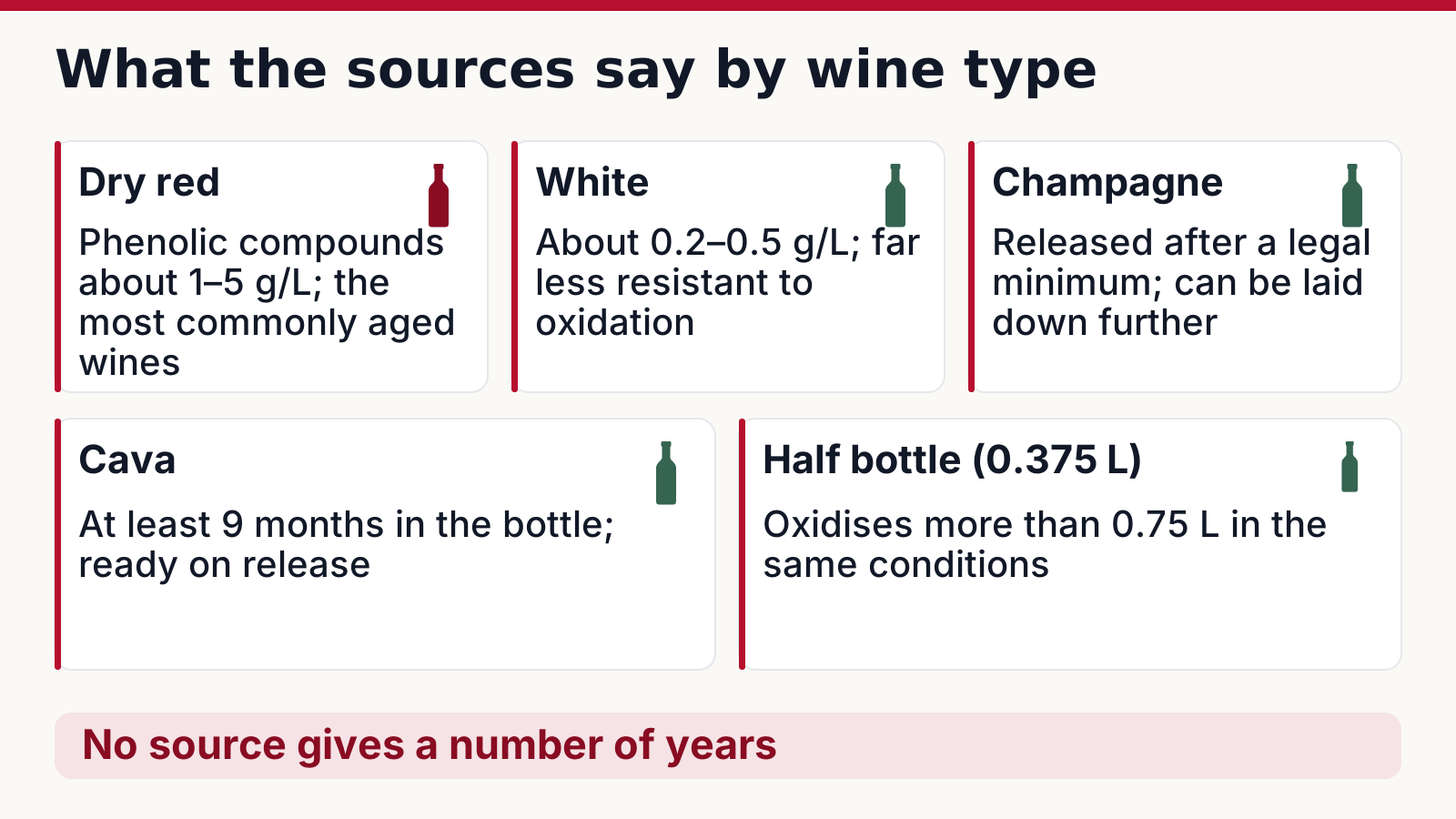
The sources describe this through composition, not grape names or years. Dry red wines are the wines most commonly aged, because they contain more phenolic compounds, natural grape compounds, including tannins and colour pigments, that act as antioxidants; most white wines are less resistant and are generally made to be drunk sooner after bottling.
| Wine | What the sources say | Source |
|---|---|---|
| Dry red | Total phenolic compounds around 1–5 g/L; the most commonly aged wines | Echave et al., 2021 |
| White | Around 0.2–0.5 g/L of phenolic compounds; far less resistant to oxidation; long bottle storage can become a quality issue | Echave et al., 2021 |
| Champagne | Released after a legal minimum aging period; can be laid down further depending on taste and the year’s aging capacity, as judged by the producer | Comité Champagne |
| Cava | Already aged at least 9 months in the bottle and ready to open on release; longer keeping needs steady temperature and humidity | D.O. Cava Regulatory Board |
| Bottle-fermented sparkling wine | Yeast breaking down during the second fermentation in the bottle can raise its sensitivity to light-induced off-flavours | AWRI TN09 |
| Half bottles (0.375 L) | Oxidise more than 0.75 L bottles under the same conditions and time | Echave et al., 2021 |
The producer of a given bottle is the only source that can speak to that wine’s keeping potential. Our explainer on how wine aging works covers why phenolic compounds and oxygen matter.
Takeaway: Expect a dry red to tolerate storage better than most whites, and keep half bottles for shorter periods than full ones.
What storage conditions matter most?
Temperature matters most, then light, humidity and, least clearly, bottle position. The sources give slightly different figures, shown side by side below; they agree on the direction: cool, steady, dark and not too dry.
| Condition | What the sources say | Source |
|---|---|---|
| Temperature, ideal | 15–17 °C “acknowledged as optimum”; lower slows aging, above 20 °C accelerates oxidation | Echave et al., 2021 |
| Temperature, ideal | Cool, 15–20 °C, dry location, cork in contact with the wine (Amon and Simpson, 1986) | AWRI TN09 |
| Temperature, ideal for Cava | About 14 °C, kept constant | D.O. Cava Regulatory Board |
| Heat damage | Faulty flavours after 12 months at 30 °C (Marais, 1986); visible and sensory changes within days above 40 °C (Ough, 1986); places above 25 °C for long periods or 40 °C for short periods can affect quality (Ough, 1992) | AWRI TN09 |
| Temperature swings | Avoid large day–night cycles; heat expansion can push corks or cause leaks | AWRI transport and storage page |
| Light | Causes “lightstruck” flavours from sulfur compounds; darker glass reduces it | AWRI TN09; Echave et al., 2021 |
| Humidity | About 70% relative humidity accepted as optimal; dry corks shrink and let in more oxygen | Echave et al., 2021 |
| Humidity for Cava | About 50%, to keep the cork hydrated | D.O. Cava Regulatory Board |
| Position | Studies disagree; lying down slightly reduces oxidation in some, makes little difference in others | Echave et al., 2021; AWRI |
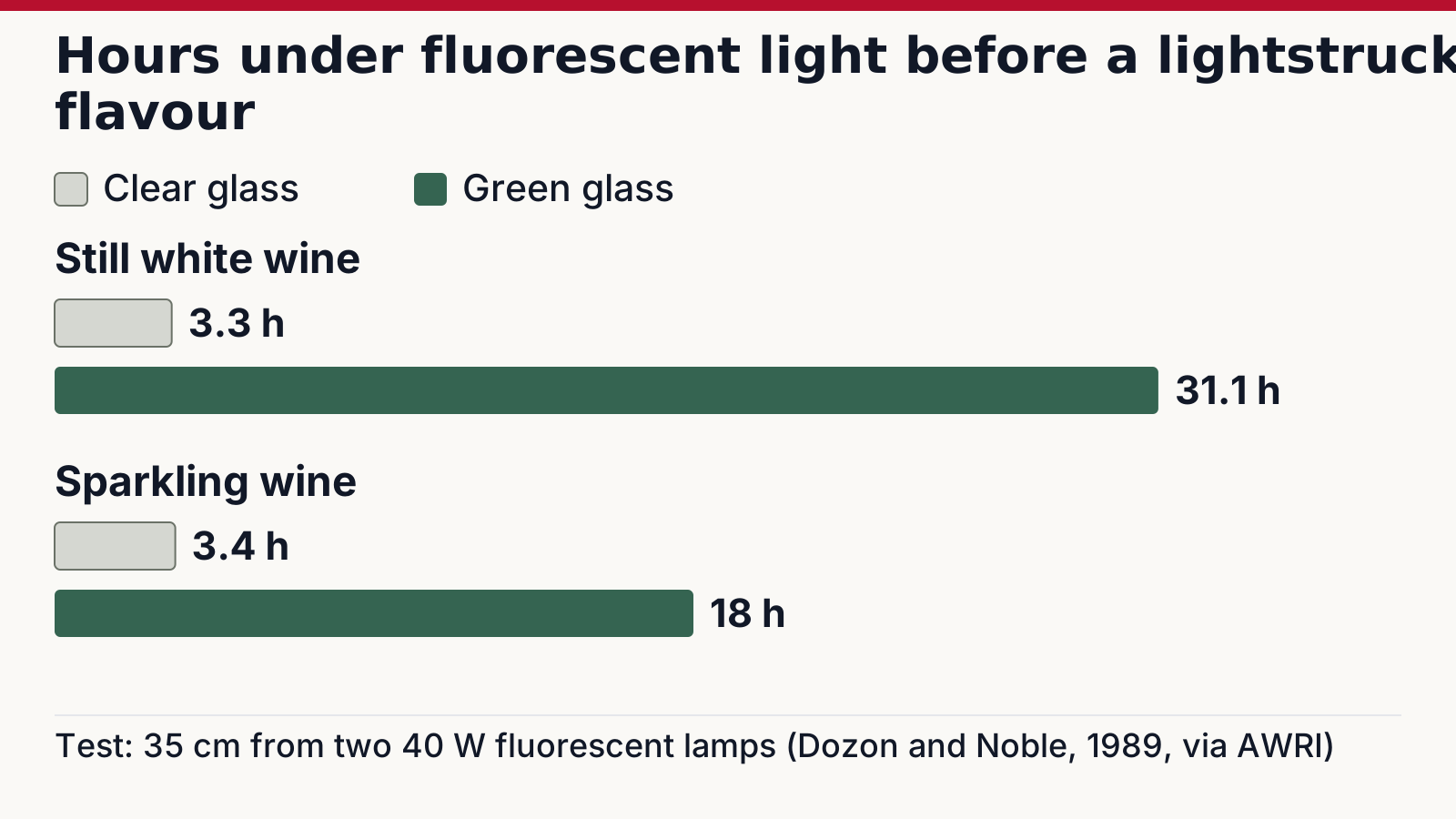
Light needs a closer look because the effect can be quick. In a study the AWRI summarises (Dozon and Noble, 1989), white still and sparkling wines placed 35 cm from two 40-watt fluorescent lamps developed a significant lightstruck off-flavour after 3.3 and 3.4 hours in clear glass, against 31.1 and 18 hours in green glass. Shelves are usually further from lamps, but the AWRI adds that direct sunlight carries far more UV-A than fluorescent light. A study cited in the 2021 review kept wine under “supermarket” conditions, 25 °C and 2,500 lumens for 12 hours a day, and found browning increased markedly over 10 months.
On position, the Comité Champagne says that in a damp cellar it makes no difference whether Champagne is stored upright or on its side, and the AWRI summarises a five-year study in which orientation had little effect on two white wines. The Cava Regulatory Board suggests keeping bottles you will open soon upright at about 8 °C.
Common mistake: Assuming an upright bottle is ruined within weeks. The studies cited by the AWRI and the 2021 review found small or no differences from position; temperature and light have far larger documented effects.
Takeaway: Pick the coolest dark place with a steady temperature first; worry about humidity and position only after that.
Does the closure change how long wine keeps?
Yes. Glass is airtight, so oxygen reaches sealed wine only through or around the closure, and closures differ widely in how much they let in. Screw caps let in the least, synthetic stoppers often the most, and natural cork varies from one stopper to the next.
| Closure | Oxygen transfer, mg per year (range of the averages listed in the review) | What the review says |
|---|---|---|
| Natural cork | 2.03–14.25 | Wide variation between stoppers; the usual choice for wines meant to age |
| Agglomerated cork | 0.78–2.68 | More uniform than natural cork |
| Technical stopper (micro-agglomerated) | 0.38–2.03 | Narrower range again |
| Molded synthetic | 6.5–22.25 | Often too permeable for long-aging wine; hardens over time |
| Extruded synthetic | 3.28–13.65 | More permeable than natural or technical cork |
| Screw cap | 0.23–2.52 | Nearly airtight; limits oxidation but can lead to “reductive” aromas |
Figures from Table 1 of Echave et al. (2021). The table mixes measurements on closures alone, chemical measurements in wine and data supplied by producers, with some values converted to mg per year, and stopper sizes differ; compare orders of magnitude, not single values.
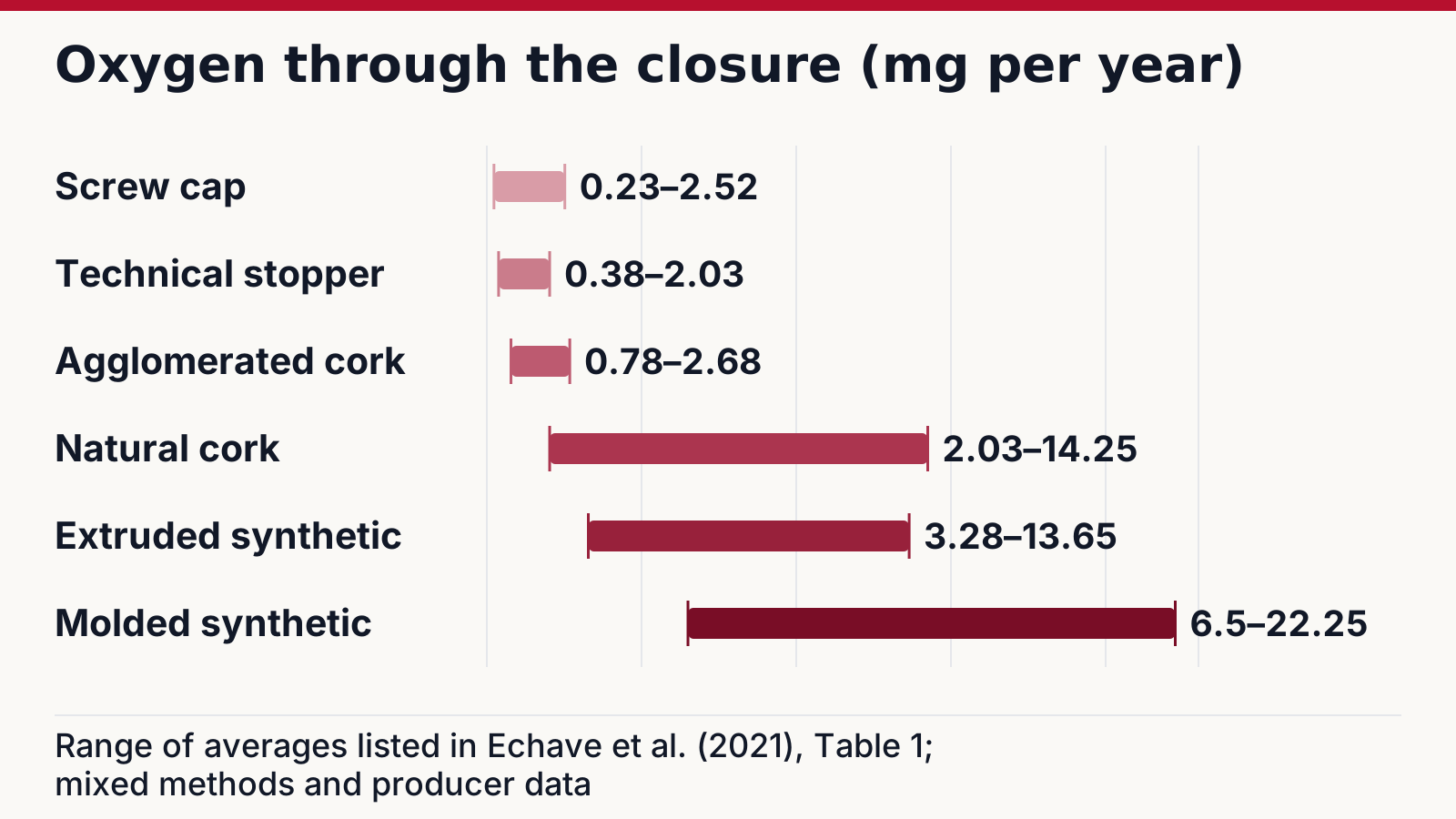
The review adds three practical points. A metal or plastic capsule over the stopper lowers gas exchange and helps keep out the moulds and chemicals behind “cork taint” (TCA), which can spoil wine at around 2 ng/L. Natural corks need humidity to stay tight. And screw caps can protect wine better than corks when storage is not ideal, because they limit the oxygen that heat would otherwise help react with the wine. Sparkling wine closures follow their own rules, set by bottle pressure; see why sparkling wine closures differ. Our corks and screw caps section covers closures in more detail, and the aging explainer on oxygen explains what that oxygen does once it is inside.
Takeaway: Note the closure when you store a bottle: a screw cap lets in less oxygen than most corks, and only natural corks need the humidity discussed above.
How can you tell if a stored bottle was damaged?
Look at the bottle before you open it. The AWRI uses visible signs when it investigates heat-exposed wine: leakage, a damaged or raised closure, wine marks on the cork, a lower fill level, and label damage. Inside, heat-damaged wines tend to lose fresh fruit character and, at extremes, show oxidised or “cooked” notes.
| Sign | Where to look | What it can point to (AWRI) |
|---|---|---|
| Leakage | Neck and capsule | Heat expansion of the wine or a failed seal |
| Raised or pushed cork | Top of the cork under the capsule | Movement of the cork, which heat expansion can cause |
| Wine marks along the cork | Side of the cork, visible through the neck | Wine has seeped up the cork |
| Lower fill level (ullage) | Gap between cork and wine, compared with the level when you stored it | Liquid lost through or around the closure |
| Darker colour in a white wine | Through the glass, against light | Browning, a sign of oxidation (Echave et al., 2021) |
Common mistake: Reading a pushed-up cork as proof that the wine is spoiled. The AWRI says such physical damage does not necessarily mean the wine’s quality has been affected; it can point to heat exposure, which the AWRI confirms only by comparing with bottles kept in known conditions.
These signs tell you how a bottle was treated, not whether a particular wine is good or safe; this page does not make that judgement.
Takeaway: Check the capsule, cork and fill level when a bottle arrives and again before opening, and write down what you see.
Keep a storage record
A short record turns “how long has this been here?” into something you can answer. Write the same six facts for every bottle you keep; they are the factors the sources above link to how wine changes.
| Record | Why it matters | Example entry |
|---|---|---|
| Date stored and vintage | Separates time in your care from the wine’s age | Stored 2026-10; vintage 2022 |
| Where it is kept | Ties the bottle to a temperature and light level | Hall closet, lowest shelf |
| Temperature range seen | Heat is the main documented risk | 16–19 °C on a min–max thermometer |
| Light exposure | Clear and green glass react within hours under lamps | Dark; clear glass |
| Closure type | Sets oxygen exposure and humidity needs | Natural cork with capsule |
| Bottle condition | Records leaks, raised corks or low fill on arrival | Fill level normal, capsule clean |
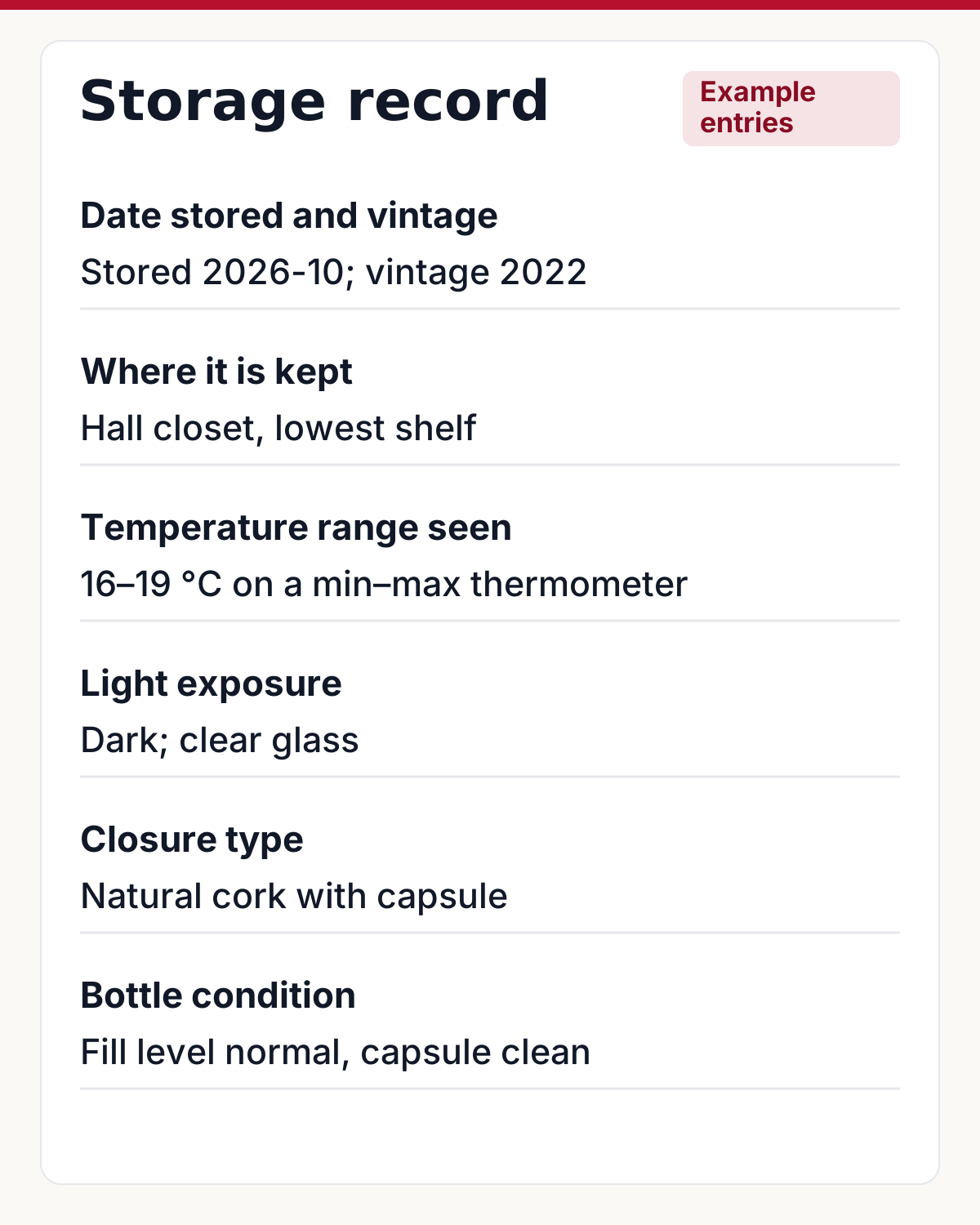
The AWRI recommends the same habit to wineries: keep comparison samples and log temperatures with small data loggers, so changes can be traced to conditions. At home, a min–max thermometer next to the bottles gives a simple range; to see how long a hot spell lasted, use a logger that records at set intervals. Other wine basics explain the label terms you will copy into the record, and our labels section shows where to find the vintage and closure details.
Takeaway: Record temperature, light and closure for each bottle; those three explain most of the differences the sources describe.
When this does not apply
The figures above are for sealed bottles of still and sparkling wine under ordinary storage. They do not cover:
- Opened bottles. Once the closure is removed, oxygen exposure is of a different order; this page does not cover it.
- Fortified wines, boxed wine and cans. Bag-in-box and other packaging behave differently from glass and are outside the studies cited here.
- Individual bottles. No source here can say how a particular wine will taste after a given number of years; ask the producer.
- Safety and health. This page does not judge whether a bottle is safe to drink and gives no health or drinking advice.
- Changing evidence. The AWRI note on heat and light dates from 2005 and cites studies from the 1980s and 1990s; newer research can refine the numbers.
This is general information from an independent site; see the About page in the site menu for who runs it, browse all articles, or follow the wine storage tag for related pages.
Takeaway: Use these conditions as a guide for sealed bottles in normal storage; for anything opened, unusual or valuable, ask the producer.
How this page was put together
We compiled this page from public sources read on October 7, 2026: a peer-reviewed review of bottle aging and storage (Echave and colleagues, Molecules, 2021), the Australian Wine Research Institute’s technical note on heat and light and its transport and storage guidance, the official websites of the Comité Champagne and the D.O. Cava Regulatory Board, and label rules in 27 CFR 4.32 and EU Regulation 1169/2011. Where sources disagree on a figure, both are shown. The oxygen figures come from a table that mixes measurement methods and producer data. Nothing here comes from our own tasting or testing. The EU text was read from the archived EU version on legislation.gov.uk because EUR-Lex could not be reached.
Takeaway: Use the closure and temperature figures to compare storage choices, not to predict how long a particular bottle will last.
Related reading:
- Champagne vs Prosecco vs Cava — Read sparkling wine labels and see why their closures differ.
- How wine aging works — Understand what oxygen, barrels and lees do before and after bottling.