Bottling and Closures
How to Tell If Wine Is Heat Damaged: Cork & Aroma Signs
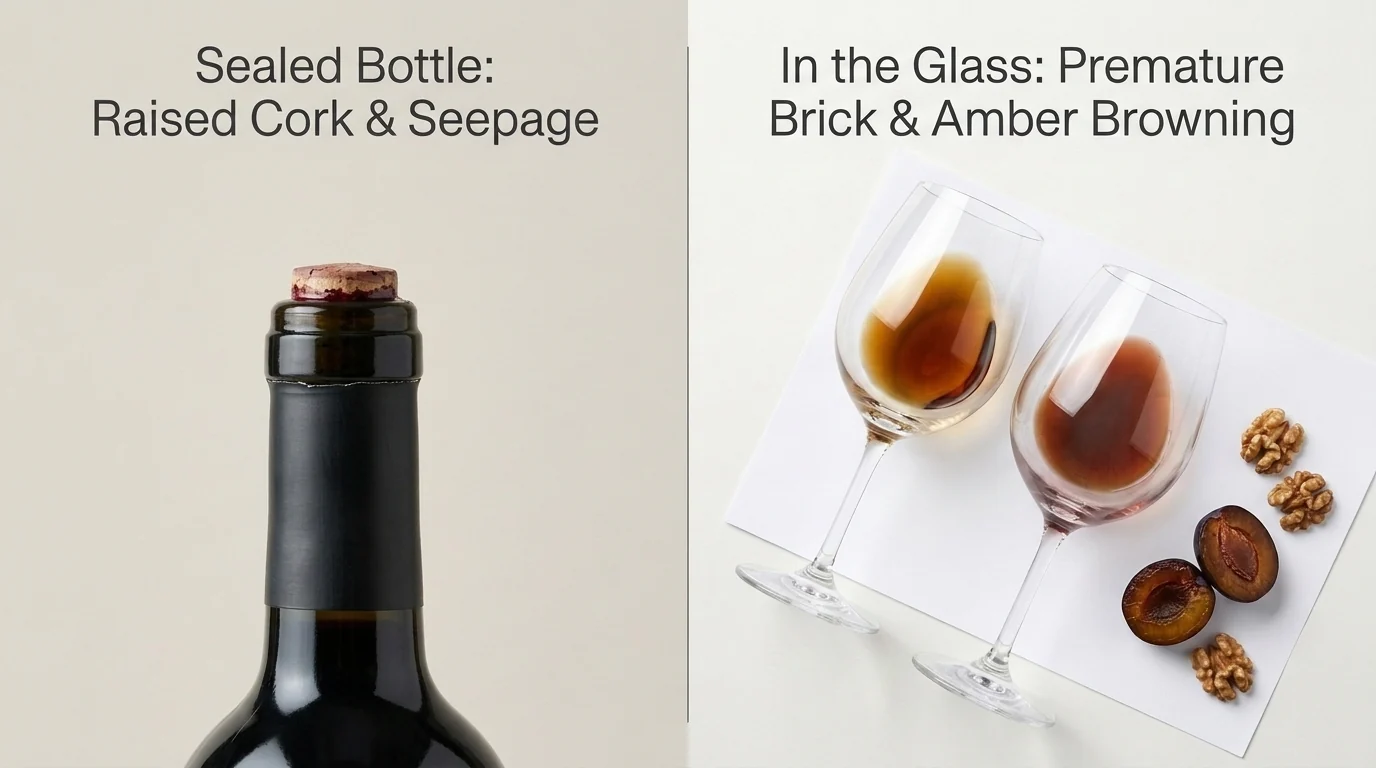
Heat-damaged wine shows a pushed-out or stained cork and seepage before opening, plus cooked-fruit and walnut aromas with premature browning once poured.
All articles and explainers tagged under #closures.
Heat-damaged wine shows a pushed-out or stained cork and seepage before opening, plus cooked-fruit and walnut aromas with premature browning once poured.
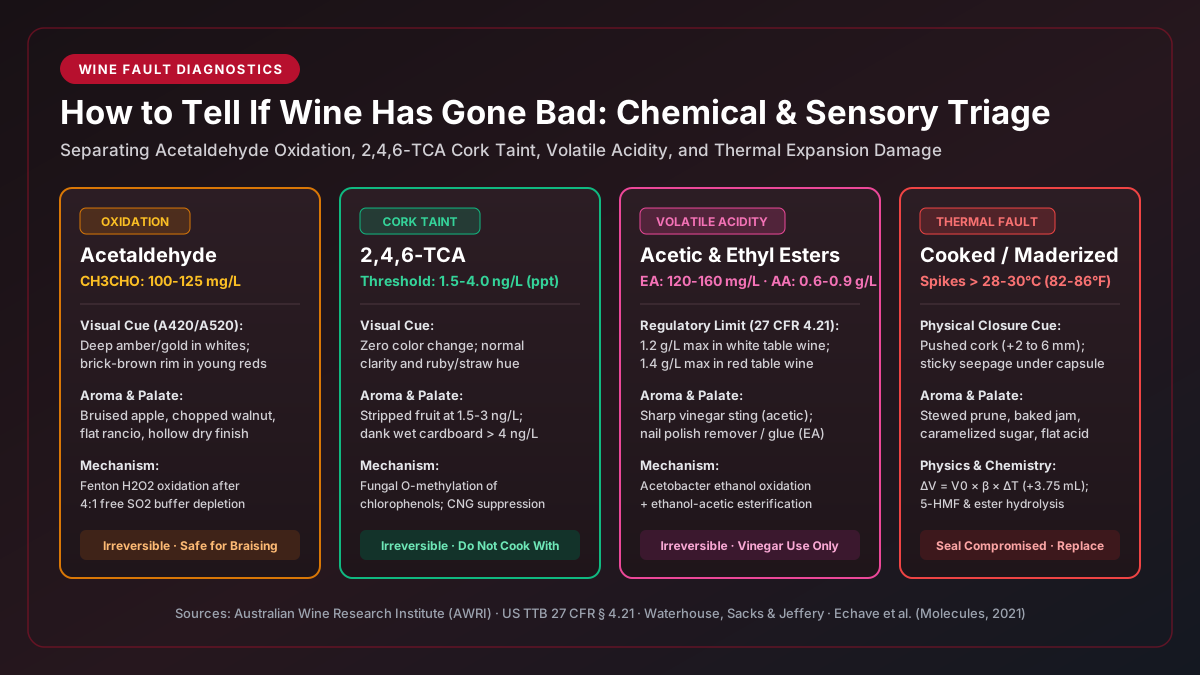
Identify spoiled wine through closure inspection, A420/A520 browning ratios, and chemical aroma thresholds for acetaldehyde, 2,4,6-TCA cork taint, and volatile acidity.
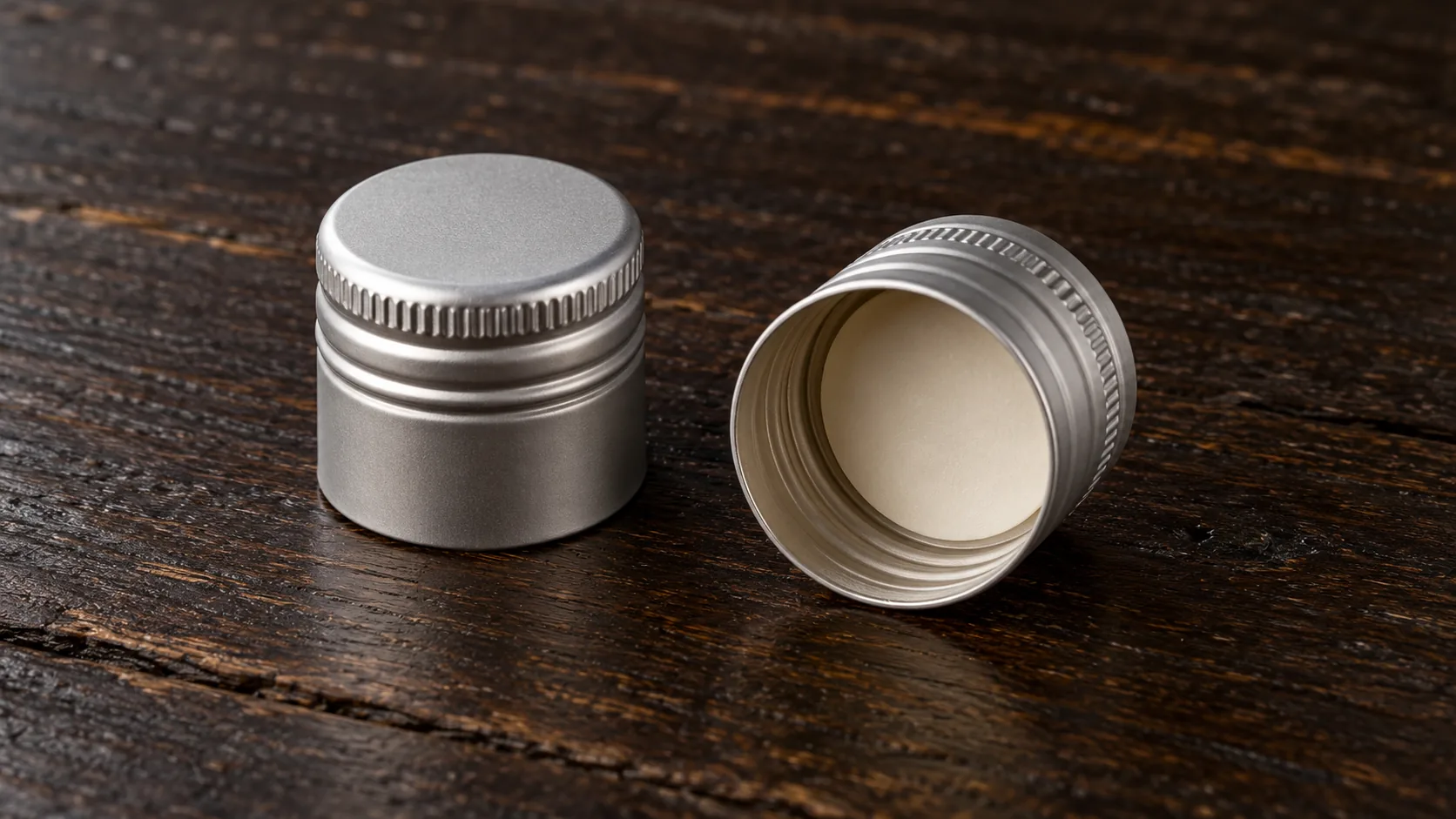
AWRI prints overlapping oxygen ranges for Saran Tin and Saranex. The endpoint ratio of those ranges is 2, so one liner is not ten times the other on every cap.
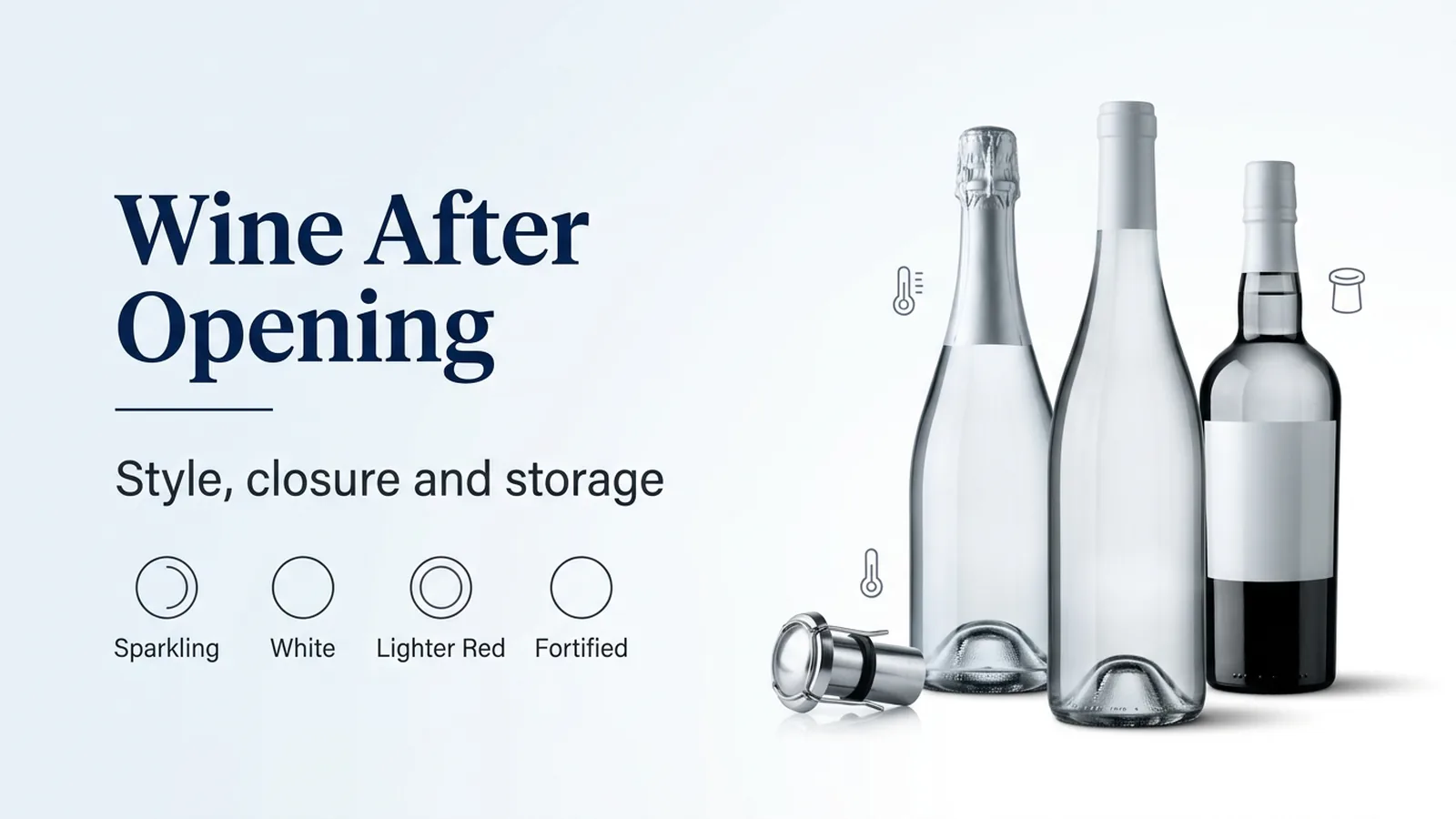
Opened wine lasts up to three days for sparkling, five days for white or rosé, seven days for red, and up to 4 weeks for fortified or bag-in-box wine.
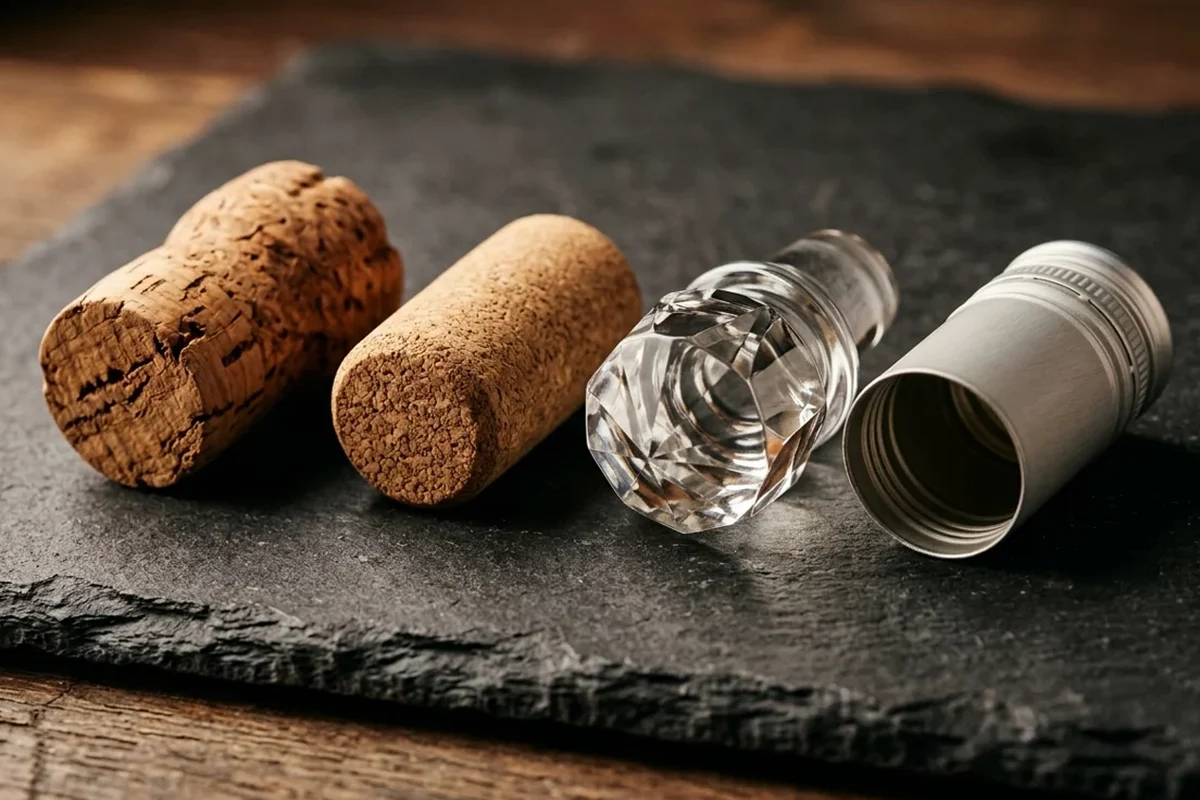
Yes, screw-cap wine can smell corked. Learn how TCA and TBA enter wine via oak barrels, chlorine sanitizers, water, or additives—and how to tell taint from reduction.
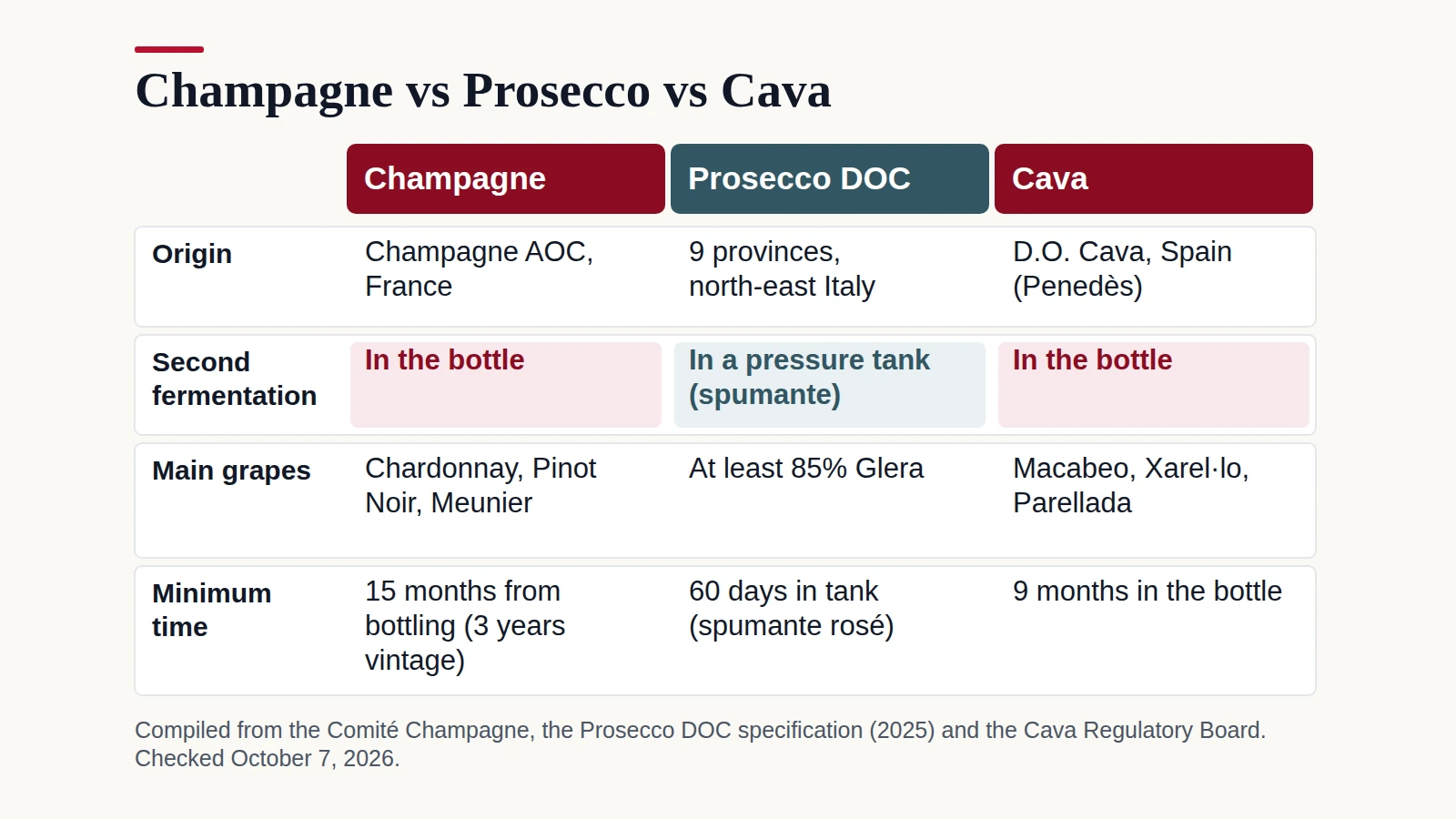
How Champagne, Prosecco and Cava differ in where they come from, how the bubbles are made, what Brut or Extra Dry means in grams per litre, and why the bottles are sealed differently.
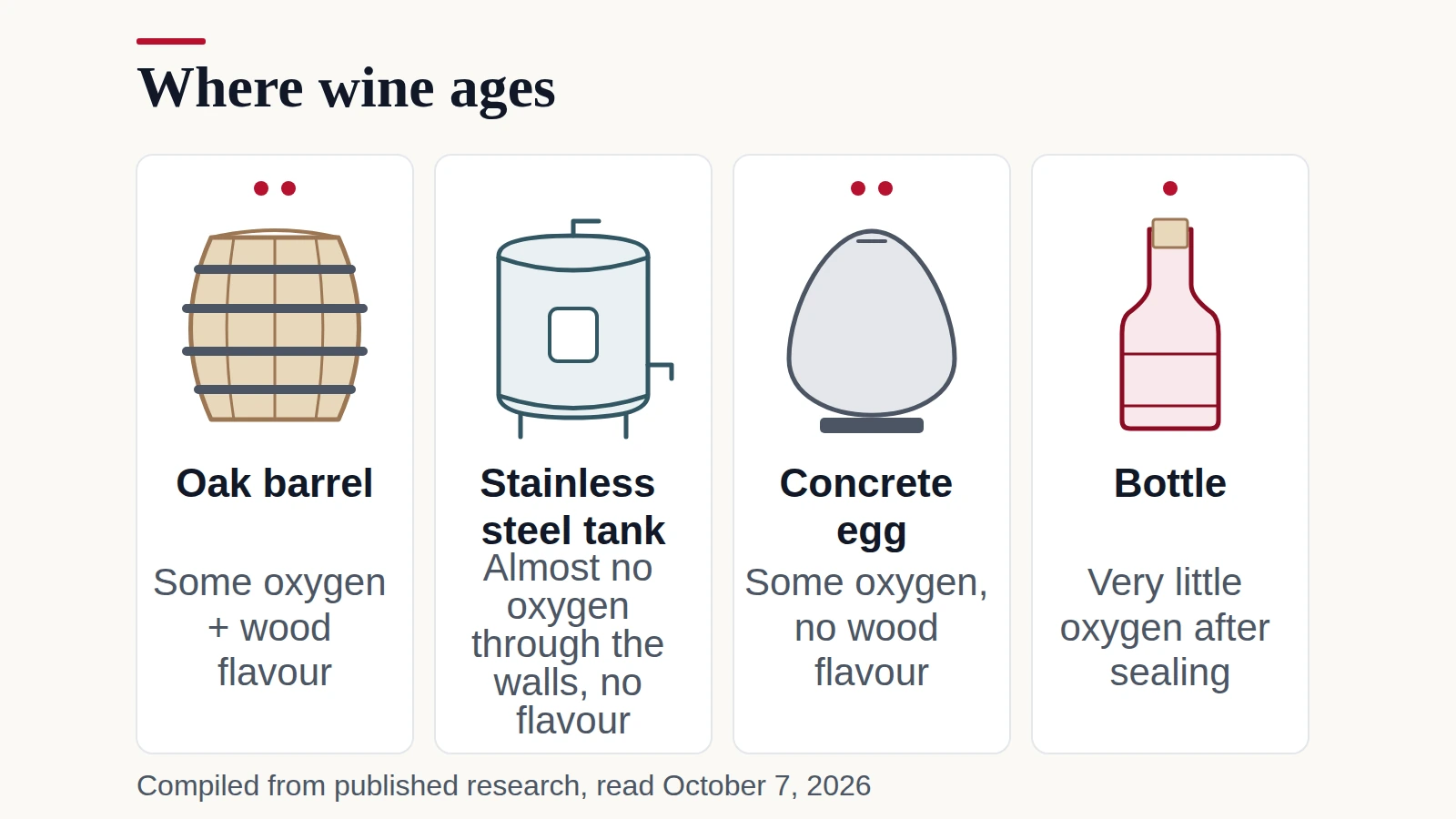
How wine aging works: what oxygen does, how oak barrels, steel tanks, concrete eggs and the bottle compare, what lees aging means, and what aging words on a label tell you.
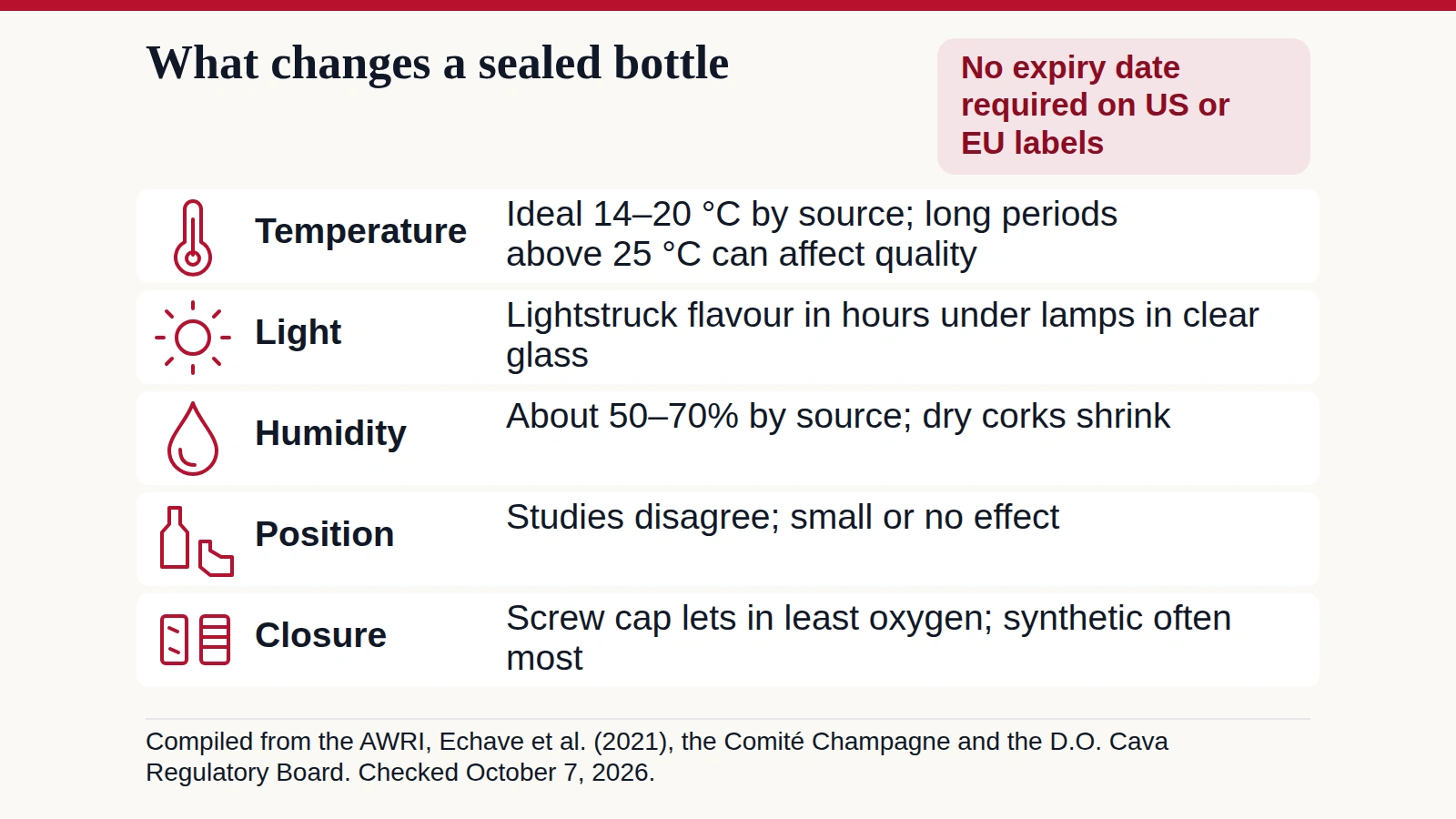
Wine labels carry no required expiry date, but sealed wine still changes. What research says about temperature, light, humidity, position and closures, plus a simple storage record.