Yes—a wine sealed under an aluminum screw cap can still be “corked.” When tasters call a bottle corked, they are describing contamination by 2,4,6-trichloroanisole (TCA) or a closely related haloanisole such as 2,4,6-tribromoanisole (TBA), which can cause consumer rejection at just 3.1 ng/L even when no cork bark ever touched the wine. While a modern roll-on tamper-evident (ROTE) screw cap removes natural bark from the bottle neck, TCA and TBA can form in oak barrels, wooden cellar beams, shipping containers, chlorinated wash water, transfer hoses, or fining agents and enter the wine batch long before bottling day.
At the same time, not every muted, dank, or flat-smelling bottle under a screw cap is contaminated with TCA. Low-oxygen screw cap liners can preserve volatile sulfur compounds—known as reductive faults—whose cabbagy, burnt-rubber, or struck-match notes frequently dampen varietal fruit, and oxidized wines share the same “wet cardboard” descriptor that many drinkers associate exclusively with cork taint. Separating closure engineering from upstream cellar chemistry explains both how haloanisole taint reaches a screw-cap bottle and why smell alone cannot always name the exact compound in the glass.
Why “Corked” Describes a Molecule, Not Just a Stopper
In winemaking sensory analysis, the Australian Wine Research Institute (AWRI) draws a strict line between a fault and a taint. A fault develops from precursors or conditions inside the winemaking process itself—such as oxidation from excess oxygen exposure or volatile acidity from acetic acid bacteria. A taint comes from an external source outside the wine and is absorbed either through direct liquid contact or through the cellar atmosphere.
“Cork taint” acquired its name because punched natural cork bark was historically the single largest vector bringing haloanisoles into bottled wine. Yet the primary culprit, 2,4,6-trichloroanisole (TCA), is a metabolic byproduct of filamentous fungi rather than a native component of tree bark. Wherever three conditions coincide, moulds can synthesize TCA:
- A chlorophenol precursor, most commonly
2,4,6-trichlorophenol (TCP), which can originate from legacy wood preservatives, agrochemicals, or a chemical reaction between chlorine and natural plant or resin phenols. - Filamentous fungi (moulds) capable of O-methylating toxic chlorophenols into less toxic, highly volatile chloroanisoles as a biological defense mechanism.
- Ambient moisture and humidity sufficient to sustain fungal metabolism on porous surfaces.
A parallel pathway produces 2,4,6-tribromoanisole (TBA) when moulds methylate 2,4,6-tribromophenol (TBP), a brominated compound used as a flame retardant and wood preservative. Because both molecules volatilize into humid cellar air and dissolve readily in ethanolic solutions and lipid-rich materials, any wine exposed to contaminated oak, equipment, or atmosphere will carry that taint into the bottle regardless of how the bottle is eventually sealed.
Why the Screw Cap Itself Rarely Causes Haloanisole Taint
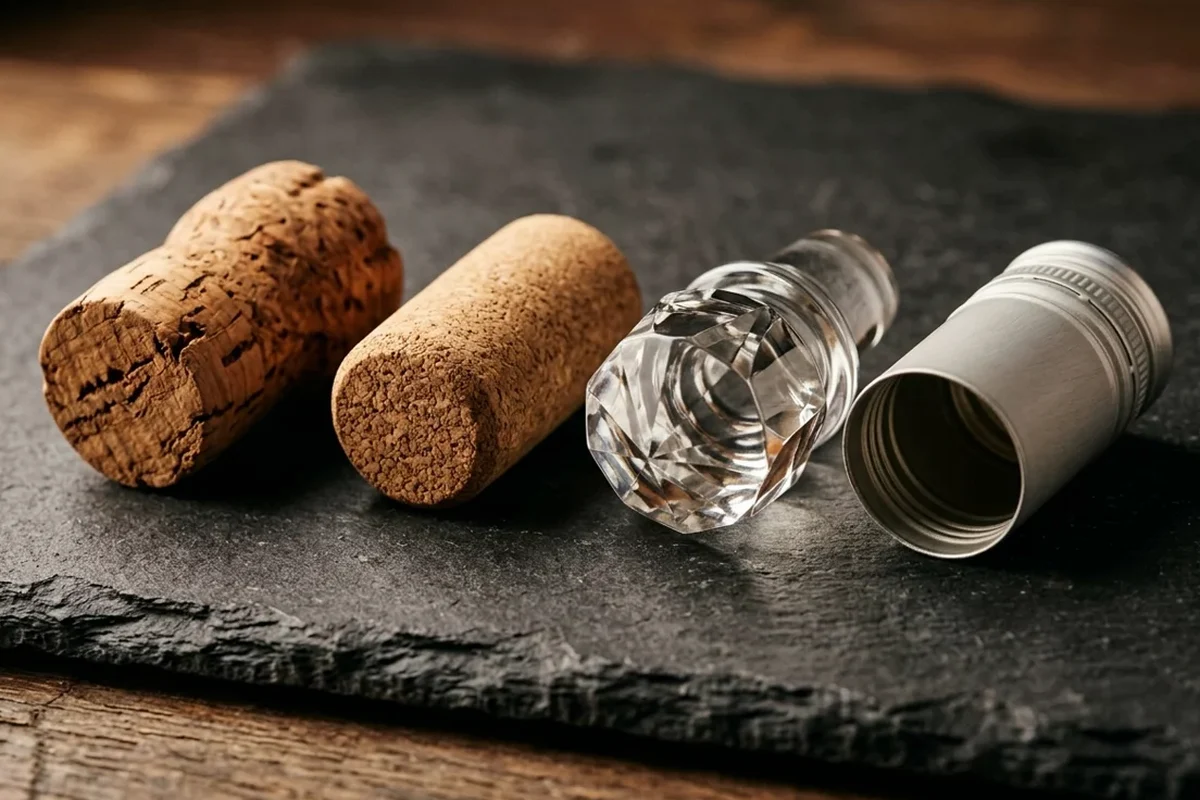
To see why a screw cap changes the contamination pattern without making a wine immune to TCA, it helps to look at how the closure seals the bottle. Unlike a cylindrical stopper forced inside the internal bore of the glass neck, a roll-on tamper-evident screw cap consists of an aluminum shell pressed over the outside of a threaded glass finish while an internal wadding liner is compressed tightly against the top rim of the glass. As AWRI packaging guidance notes, the seal relies entirely on compression against the top surface of the bottle rim rather than friction along the inside of the neck.
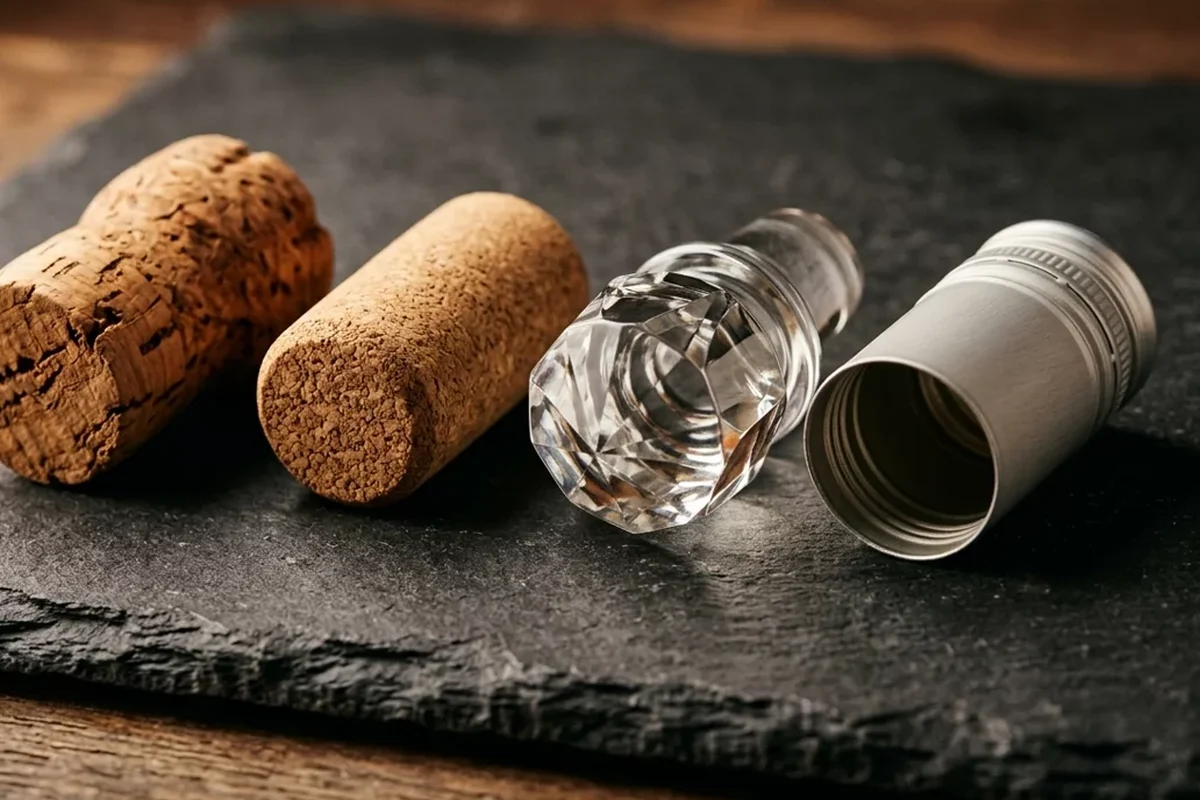
The liquid-contact surface of standard wine screw cap liners is made of polyvinylidene chloride (PVDC), commercially known as Saran. In winery packaging specifications documented by the AWRI, PVDC is chemically inert, food-grade, and impervious to mould and bacteria. Two multi-layer liner constructions dominate commercial bottling within wine bottling and closures:
- Saran Tin liners: Built from layers of kraft paper, tin foil, polyethylene, and a thin PVDC facing in contact with the wine. The tin foil layer acts as the primary gas barrier, yielding an extremely low oxygen transmission rate (OTR) of
0.00005 to 0.0005 cc of oxygen per day. - Saranex liners: Constructed from foamed polyethylene sandwiched between two layers of PVDC film without a metal foil layer, allowing a slightly higher oxygen transmission rate of
0.0001 to 0.001 cc of oxygen per day.
Because the PVDC contact layer does not harbor filamentous fungi or absorb chlorophenols the way natural cork lenticels can, AWRI technical guidance states that wines sealed with screw caps are “much less likely to be affected by haloanisole taint.” Notice the phrasing: much less likely, not impossible. Removing cork bark from the closure eliminates random bottle-to-bottle closure taint, unless the liner wadding itself was stored in a heavily contaminated warehouse before bottling. Instead, when TCA or TBA appears under a screw cap, the closure is almost always sealing in a systemic taint that entered the wine batch upstream.
| Contamination Pathway | Primary Haloanisole or Precursor | Point of Contact With Wine | Typical Incidence Pattern |
|---|---|---|---|
| Natural or technical cork stopper | 2,4,6-TCA (plus trace TeCA, PCA, or MDMP) |
Direct liquid and vapor contact inside the bottle neck after sealing | Sporadic bottle-to-bottle variation within the same case |
| Screw cap liner (PVDC / Saran facing) | None intrinsic; rare aerial absorption if caps are stored near chlorophenols | Compressed against top glass rim; chemically inert PVDC barrier | Extremely rare; if packaging cartons or liners were exposed to warehouse fumes, affects an entire bottling run |
| Oak barrels, staves, or oak chips | 2,4,6-TCA, 2,4,6-TBA, TeCA, PCA, and 2,4,6-TCP |
Extraction during barrel maturation or fermentation on oak adjuncts | Uniformly affects every bottle drawn from the tainted barrel or blended tank lot |
| Cellar chlorine sanitation & building timber | Hypochlorite reacting with phenols to form TCP, 2,6-DCP, and 6CC; TBP in treated roof timber |
Aerial absorption into open vessels, hoses, or barrel exteriors; direct contact from rinsed surfaces | Chronic cellar-wide or lot-wide background taint across multiple wines |
| Winery water, fining agents, or hoses | TCA, TBA, geosmin, or 2-MIB carried in water or absorbed by dry additives and rubber hoses |
Dissolved directly during tank washing, fining additions, or wine transfers | Uniformly affects the specific tank batch treated or pumped with the tainted material |
Four Winery Pathways That Put TCA and TBA Into Screw-Cap Wine
When a wine under a screw cap tests positive for haloanisoles in a laboratory, forensic tracing in the winery almost always leads back to one of four pre-bottling sources documented by the AWRI.
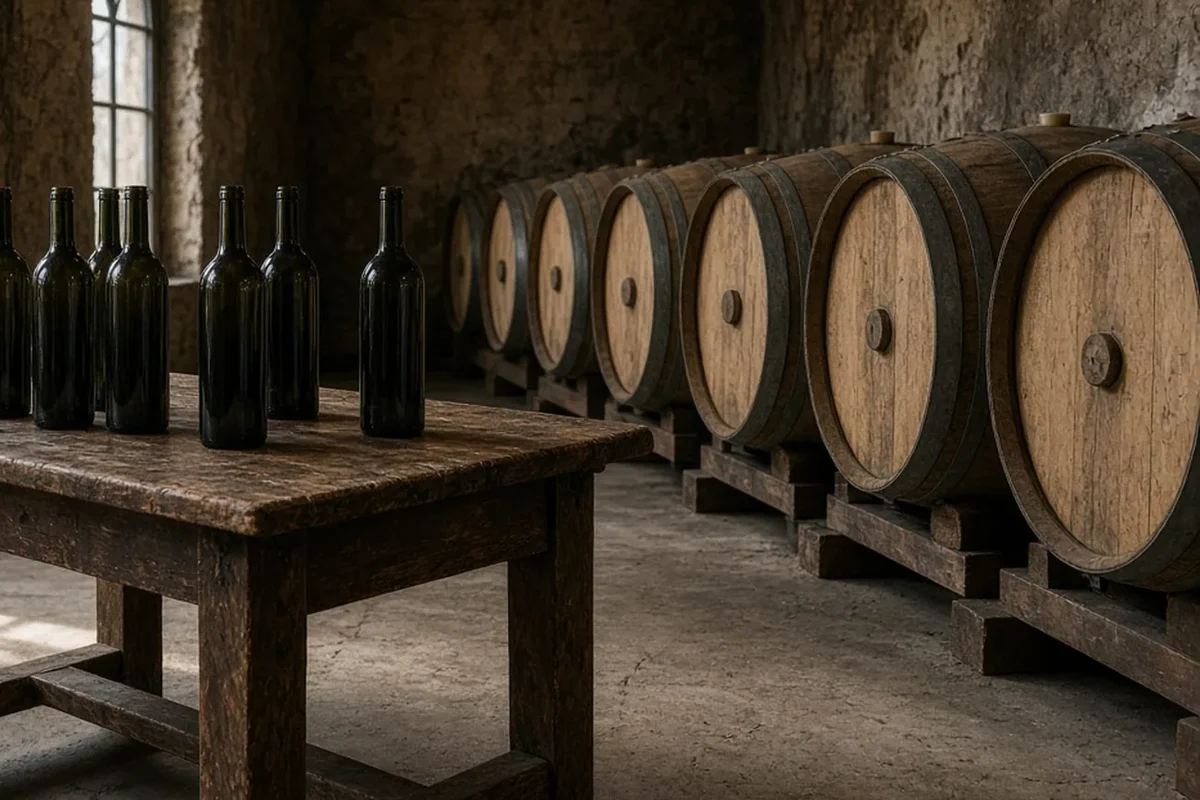
1. Contaminated Oak Barrels, Staves, and Chips
Oak can carry TCA into wine without a single piece of cork touching the batch. The AWRI first confirmed oak-derived TCA in a 1987 investigation (Amon et al.) after a winemaker submitted a musty-smelling wine that had never contacted cork; trace analysis isolated a single new oak barrel containing 2,4,6-trichloroanisole (TCA), geosmin, 2-methylisoborneol (2-MIB), 2,3,4,6-tetrachloroanisole (TeCA), pentachloroanisole (PCA), and 2,4,6-trichlorophenol (TCP).
As AWRI senior oenologist Adrian Coulter documented in a 2023 technical review of oak taints, oak timber and oak adjuncts (shavings, chips, cubes, and staves) can pick up haloanisoles or their chlorophenol precursors at several stages:
- Forestry and seasoning: Raw oak staves seasoned outdoors for 18 to 36 months can absorb environmental chlorophenols or bromophenols from treated timber structures, pesticides, or industrial drift, which surface moulds then methylate into TCA or TBA during humid weather.
- Ocean shipping containers and wooden pallets: Oak barrels and bagged oak adjuncts shipped internationally in enclosed sea containers can absorb aerial TCA, TeCA, or TBA volatilizing from chemically treated wooden container floors or cargo pallets.
- Older cellar barrels: Used barrels stored empty in humid cellars or washed with chlorinated water can develop mould growth inside the wood grain or around the bunghole, turning residual chlorophenols into TCA that leaches into the next fill of wine.
2. Chlorine Sanitizers and Brominated Building Materials
For decades, sodium hypochlorite (bleach) and chlorinated cleaning solutions were routine sanitizers in wineries. When free chlorine contacts natural phenolic compounds in oak, cardboard cartons, wooden pallets, two-part epoxy floor coatings, resinous tank linings, or rubber gaskets, it chlorinates those phenols directly inside the winery.
Those reactions generate chlorophenols—which themselves impart medicinal, disinfectant, or band-aid off-odors (2,6-dichlorophenol has a sensory threshold of 32 ng/L in wine, while 6-chloro-o-cresol is detectable at 70 ng/L)—along with 2,4,6-trichlorophenol (TCP). Resident cellar moulds growing on damp walls, drains, wooden rafters, or silicone bungs then convert TCP into volatile TCA. Even more insidious is 2,4,6-tribromoanisole (TBA), which forms when moulds methylate 2,4,6-tribromophenol (TBP) used as a fire retardant or wood preservative in winery roof beams, insulation, plastic fittings, or wooden crates. Once volatilized into the cellar air, TCA and TBA settle onto equipment and dissolve into wine during open racking, tank filling, or barrel topping.
3. Tainted Winery Water Supplies
Water touches almost every surface in a winery prior to bottling. AWRI fault assessments note that bore water, dam water, or municipal water supplies can carry dissolved TCA, geosmin, or 2-MIB produced by aquatic actinomycetes (such as Streptomyces), cyanobacteria, or fungi in reservoirs and distribution pipes—or formed when chlorinated tap water sits in hoses and pipework containing phenolic resins.
Even if water is never added to the wine, rinsing stainless-steel tanks, filtration housings, bottling lines, or barrels with tainted water leaves a microscopic film of haloanisoles or earthy terpenoids on internal surfaces. When wine is pumped into the vessel, ethanol extracts those compounds off the steel or wood walls.
4. Fining Agents, Processing Aids, and Transfer Hoses
Dry winemaking additives and cellar hoses have high surface areas that readily adsorb airborne volatiles. In a 2017 AWRI review of winery taint vectors, oenologist Mark Holdstock identified a wide range of processing aids capable of introducing taint if stored in contaminated warehouses or left unsealed in the cellar:
- Clarification and fining agents: Bentonite clay, activated carbon, polyvinylpolypyrrolidone (PVPP), and gelatine—the same materials examined in our guide to unfined vs. unfiltered wine—can act like molecular sponges if exposed to aerial TCA or TBA before hydration.
- Acidulants and fermentation aids: L-tartaric acid, L-ascorbic acid, citric acid, and yeast hulls have all been traced in winery investigations as carriers of musty or chlorophenol taints.
- Rubber and plastic transfer hoses: Must or wine pumped through food-grade plastic or rubber hoses that were rinsed with chlorinated water or hung in an atmosphere containing TCP or TBA can strip those compounds directly from the inner polymer wall during a single transfer.
Because these pathways contaminate an entire tank or barrel lot prior to packaging, a screw cap applied on the bottling line simply locks the tainted wine inside a uniform, low-oxygen seal. Unlike natural cork taint—where one bottle in a case smells musty and the next tastes clean—pre-bottling TCA or TBA typically affects every bottle from that lot to a similar degree.
When a “Corked” Screw-Cap Wine Is Actually Another Fault
Before concluding that a screw-cap bottle suffered a rare cellar haloanisole event, it helps to rule out several chemical lookalikes. In consumer and trade tastings alike, “corked” is frequently used as a catch-all label for any bottle that smells muted, papery, or unpleasant on opening.
Low-Level TCA Fruit Stripping vs. Classic Mustiness
Human perception of haloanisoles depends heavily on concentration. According to AWRI sensory data, 2,4,6-trichloroanisole has an aroma detection threshold as low as 1.4 ng/L (parts per trillion) in Pinot Noir (Duerr 1985), with consumer detection and rejection thresholds measured at 2.1 ng/L and 3.1 ng/L respectively (Prescott et al. 2005), while 2,4,6-tribromoanisole is perceptible at around 4 ng/L (Chatonnet et al. 2004). Some trained AWRI panelists detect TCA below 1 ng/L.
At concentrations near 1 to 2 ng/L, TCA rarely smells like a flooded basement or wet dog. Instead, it acts as an olfactory suppressor that masks fruity esters and leaves the wine seeming hollow, short, and stripped of varietal character—an effect demonstrated in AWRI sensory trials where 1 ng/L of TCA measurably reduced fruit intensity in Semillon without triggering unanimous “musty” descriptors. Because several other faults also flatten fruit aroma, low-level TCA is easy to confuse with non-haloanisole conditions.
Reductive Sulfur Compounds Under Low-Oxygen Liners
The most frequent off-odor mistaken for taint under a screw cap is reduction, caused by volatile sulfur compounds (VSCs). As detailed in our overview of how wine aging works, closures with very low oxygen ingress keep dissolved oxygen near zero after bottling. AWRI closure guidance notes that many European producers specifically choose Saranex liners (0.0001–0.001 cc O2/day) over foil-based Saran Tin liners (0.00005–0.0005 cc O2/day) because the ultra-low oxygen permeability of tin liners can promote or preserve reductive characters in susceptible wines.
Depending on which sulfur molecules are present, reduction can smell remarkably dank or earthy:
- Hydrogen sulfide (
H2S): Aroma threshold of1 to 2 µg/Lin wine; smells of rotten eggs or stagnant water at higher levels, but at barely above-threshold levels it merely dulls fruit aroma. - Methyl mercaptan (
MeSH) and ethyl mercaptan (EtSH): Thresholds of0.02 to 2.0 µg/Land1.1 µg/Lrespectively; described as struck flint, wet rubber, onion, cooked cabbage, or decaying vegetation. - Dimethyl disulfide (
DMDS) and diethyl disulfide (DEDS): Thresholds of29 µg/Land4.3 µg/L; produce burnt rubber, garlic, and earthy, closed-in aromas. - Dimethyl sulfide (
DMS): Threshold of30 to 60 µg/L; contributes cooked corn, asparagus, or vegetal notes that can make a young white wine seem flat and murky.
Unlike TCA, which is chemically stable in the glass and often grows more obvious as the wine warms up, light hydrogen sulfide is highly volatile (boiling point -60 °C) and frequently blows off or shifts after 10 to 15 minutes of swirling in a wide glass. Mercaptans and disulfides are less volatile and may persist even with aeration.
Oxidation and Shared “Wet Cardboard” Descriptors
Oxidation is the chemical opposite of reduction, yet it shares a confusing vocabulary overlap with cork taint. In AWRI fault classifications, oxidized wines—driven by elevated acetaldehyde (sensory threshold 100 to 125 mg/L) and quinones formed when phenolic compounds react with oxygen—are routinely described by tasting panels as “cardboard,” “straw,” “hay-like,” “stale,” and “dulling of fruit.”
Because everyday wine guides often summarize TCA as “wet cardboard,” a drinker who opens a heat-stressed or oxidized screw-cap white wine and smells papery, cardboard-like notes alongside flattened fruit may call the bottle corked. Checking visual cues and unopened wine storage conditions helps separate the two: oxidation typically brings premature deep gold, amber, or browning color shifts and bruised-apple or sherry-like aldehyde notes, whereas TCA never alters the color of the wine.
Non-Haloanisole Fungal and Earthy Taints
Several mould and soil metabolites produce genuine musty aromas in wine without any chlorine or bromine chemistry:
- 2-Methoxy-3,5-dimethylpyrazine (
MDMP): Described by AWRI panels as “fungal must,” dusty, and mouldy, with an aroma threshold of2.1 ng/Lin wine—nearly identical in potency to TCA. - Geosmin: An earthy, muddy, beetroot-like compound produced by Streptomyces bacteria and Penicillium moulds in damp grapes or barrels, detectable at
25 ng/L. - 2-Methylisoborneol (
2-MIB): An earthy, camphor-like compound with a sensory threshold of30 ng/L, associated with bunch rot or contaminated water and barrels. - 1-Octen-3-one and 1-octen-3-ol: Mushroom and metallic-smelling compounds (
20 µg/Lthreshold) derived from Botrytis cinerea or secondary fungal growth on damaged grapes.
| Condition in Screw-Cap Wine | Primary Compound(s) & Wine Threshold | Characteristic Sensory Descriptors | Behavior With Air & Visual Clues | Typical Bottle Pattern |
|---|---|---|---|---|
| Haloanisole Taint (TCA / TBA) | 2,4,6-TCA (1.4–2.1 ng/L); 2,4,6-TBA (4 ng/L) |
Damp basement, wet newspaper, mouldy bark; at ~1 ng/L, stripped fruit without obvious mustiness |
Persists or worsens with swirling as wine warms; no color change | Lot-wide or barrel-lot uniform when under screw cap |
| Chlorophenol Taint | 2,6-DCP (32 ng/L); 6CC (70 ng/L); 2,4-DCP (>896 ng/L) |
Medicinal, antiseptic, disinfectant, plastic, or band-aid aroma | Does not blow off with swirling; no color change | Lot-wide from chlorinated water, epoxy coatings, or hoses |
| Reductive Sulfur Faults (VSCs) | H2S (1–2 µg/L); MeSH (0.02–2.0 µg/L); EtSH (1.1 µg/L) |
Struck match, rotten egg, cooked cabbage, burnt rubber, onion, muted fruit | Light H2S often dissipates after 10–15 minutes of swirling; mercaptans persist; pale, bright color |
Consistent across bottles sealed with the same low-OTR liner |
| Oxidation | Acetaldehyde (100–125 mg/L) and oxidized phenolics |
Papery cardboard, dry straw, bruised apple, nutty or sherry-like, flat palate | Does not recover with air; accompanied by premature deep yellow, gold, or brown color | Either lot-wide (bottling oxygen pickup) or single bottle (damaged cap threads/liner) |
| Non-Haloanisole Earthy Taints | MDMP (2.1 ng/L); Geosmin (25 ng/L); 2-MIB (30 ng/L); 1-Octen-3-ol (20 µg/L) |
Fungal must, wet soil, beetroot, camphor, fresh mushroom | Stable in the glass; no color change attributable to the taint | Uniform across the affected harvest parcel or barrel batch |
Why Smell Alone Cannot Prove TCA—and How Wineries Confirm It
Even experienced sommeliers and winemakers run into hard physiological limits when diagnosing a suspect screw-cap bottle by nose alone.
First, individual sensitivity to haloanisoles and chlorophenols varies by orders of magnitude across the population. AWRI sensory documentation notes that roughly 15% of people are anosmic (unable to smell) chlorophenol taints in wine, and detection thresholds for TCA among regular wine drinkers span from less than 1 ng/L to well over 10 ng/L. Two people tasting the same screw-cap bottle at the same table can genuinely experience two different wines: one person smells only a slightly quiet white wine, while a high-sensitivity taster perceives unmistakable damp cardboard.
Second, olfactory adaptation—often called palate or nose fatigue—sets in rapidly upon exposure to TCA. After two or three sniffs of a TCA-tainted glass, human olfactory receptors temporarily desensitize to the molecule, making subsequent sniffs seem cleaner than the first impression.
Because sensory impressions overlap across low-level TCA, TBA, MDMP, geosmin, and reductive sulfur compounds, commercial wineries do not rely on a casual glass sniff to diagnose a taint event. Instead, AWRI quality-control protocols combine structured retention sampling with laboratory analysis:
- Pre-use retention samples: Cellar teams store dry reference samples of every batch of fining agent, acidulant, and oak adjunct in sealed glass jars—along with a
30 cmoffcut of every new transfer hose—before those materials touch wine. - Controlled 24-hour soak trials: Suspect oak shavings (
1 gper100 mLof neutral base wine) or processing aids are steeped in clean white wine inside a screw-top jar at room temperature for 24 hours alongside a blank control jar of the same wine, then evaluated blind by a screened sensory panel. - Gas chromatography–mass spectrometry (
GC-MS): Confirming whether an off-aroma in a screw-cap bottle is2,4,6-TCA,2,4,6-TBA,MDMP, or a volatile sulfur compound requires trace analytical testing capable of quantifying haloanisoles down to0.5–1.0 ng/L.
For the reader opening a screw-cap bottle at home or in a restaurant, the practical takeaway is straightforward: an aluminum screw cap virtually eliminates the stopper itself as a source of cork taint, but it cannot erase TCA or TBA that entered the wine in the cellar. If a screw-cap wine smells of wet cardboard or muted fruit, giving the glass 10 to 15 minutes of air—and checking the color against premature browning—will often reveal whether the culprit is a passing reductive sulfur note, oxidation from a dented cap seal, or a genuine cellar taint locked inside the bottle.