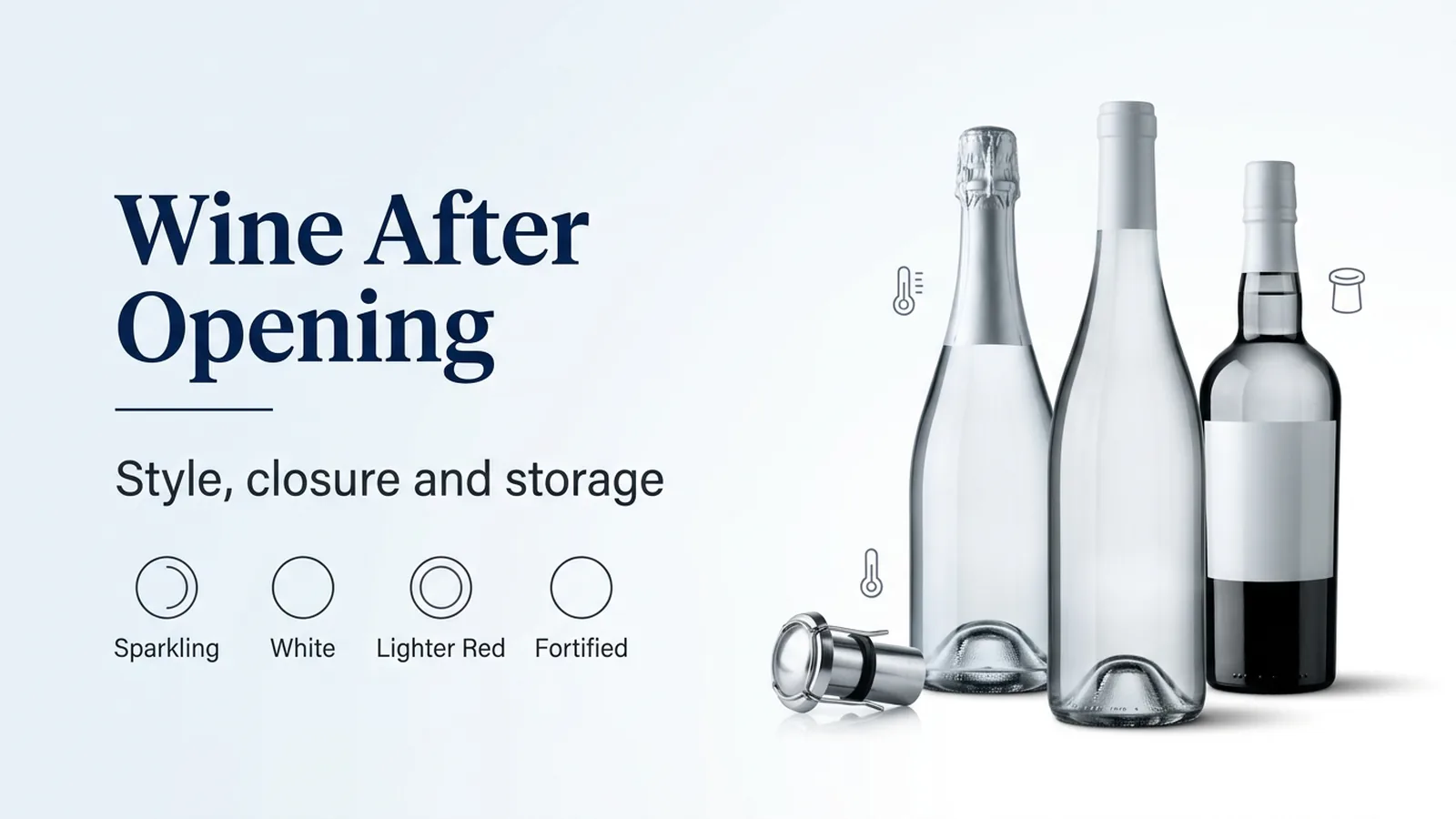
How long wine lasts after opening depends on the style, the replacement closure and the storage conditions. Sparkling wine needs a seal that retains its gas; still wine needs control of oxygen exposure. Fortified wine needs a more specific identification than “Port” or “sherry” before a useful storage window can be assigned.
How long does each wine style last after opening?
The comparison below keeps each published window attached to its conditions. These are quality guidelines, rather than guaranteed periods of unchanged flavour. All linked sources were retrieved on October 19, 2026; where a source leaves a storage condition unspecified, the table says so.
| Wine style | Published window and conditions | Dominant failure mode & prevention |
|---|---|---|
| Sparkling: Champagne | One or two days, provided the bottle is immediately closed with a special airtight stopper, according to the Comité Champagne FAQ, retrieved 2026-10-19; its opened-bottle instructions specify a cool place. Neither gives a numerical opened-storage temperature. | Loss of bubbles: fit a sparkling-wine stopper promptly and keep cool. This Champagne window does not establish a duration for every sparkling style. |
| Still white or rosé | Up to five days under Iowa State’s guidance, retrieved 2026-10-19, which calls for refrigeration and air removal with a pump or replacement with inert gas. | Oxidative changes, including browning and bruised-apple aromas: limit air exposure and refrigerate. |
| Lighter red | No separate lighter-red window is established by the retrieved university guidance. Iowa State, retrieved 2026-10-19, gives reds generally up to seven days, with air control and cool-room storage; it does not define a numerical room temperature. | Oxidative aroma change: limit air exposure and keep cool. The broad red-wine figure cannot guarantee a lighter red’s freshness. |
| Fortified: Quinta do Tedo Ruby | Two weeks, for this producer’s Ruby when recorked and refrigerated, according to Quinta do Tedo, retrieved 2026-10-19. | Oxidation remains possible: restore the closure and maintain the stated refrigerated conditions. |
| Fortified: Quinta do Tedo Fine Tawny | One to two months, for this producer’s Fine Tawny when recorked and refrigerated, according to Quinta do Tedo, retrieved 2026-10-19. | Further oxidative change: prior wood aging does not remove the need for closure and storage control. |
| Fortified: Taylor’s Vintage Port | One to two days is the producer’s after-opening quality recommendation on its Classic Vintage page, retrieved 2026-10-19. That recommendation does not specify an opened-storage temperature. | General Port context: Quinta do Tedo identifies oxidation as an opened-Port risk and conditions its own storage windows on recorking and refrigeration. Taylor’s retrieved page specifies neither a dominant opened-bottle failure mechanism nor a preservation protocol. Quinta do Tedo’s conditions are not established conditions for Taylor’s one-to-two-day quality recommendation. |
A bottle left uncapped in a warm room does not match these conditions. Changing the storage method also means the published duration cannot simply be carried across.
What changes when the closure comes off?
Opening and pouring expose wine to air. Replacing the cap closes the opening, but it does not remove all oxygen already in the wine or in the space above it. Iowa State links excess oxygen with browning and nutty or bruised-apple smells in opened wine.
Research also distinguishes headspace oxygen, in the gas above the liquid, from dissolved oxygen, within the liquid. In Stephanie Grau’s University of Missouri resealing study, retrieved October 19, 2026, vacuum treatments reduced both compared with other tested closures, but aroma-compound responses differed between red and white wines stored at room temperature. Lower oxygen readings therefore do not, by themselves, establish how many extra days a particular bottle retains its original character.
Slow maturation before opening is a different question; the wine-aging explainer covers that earlier process.
What does a sparkling stopper need to do?
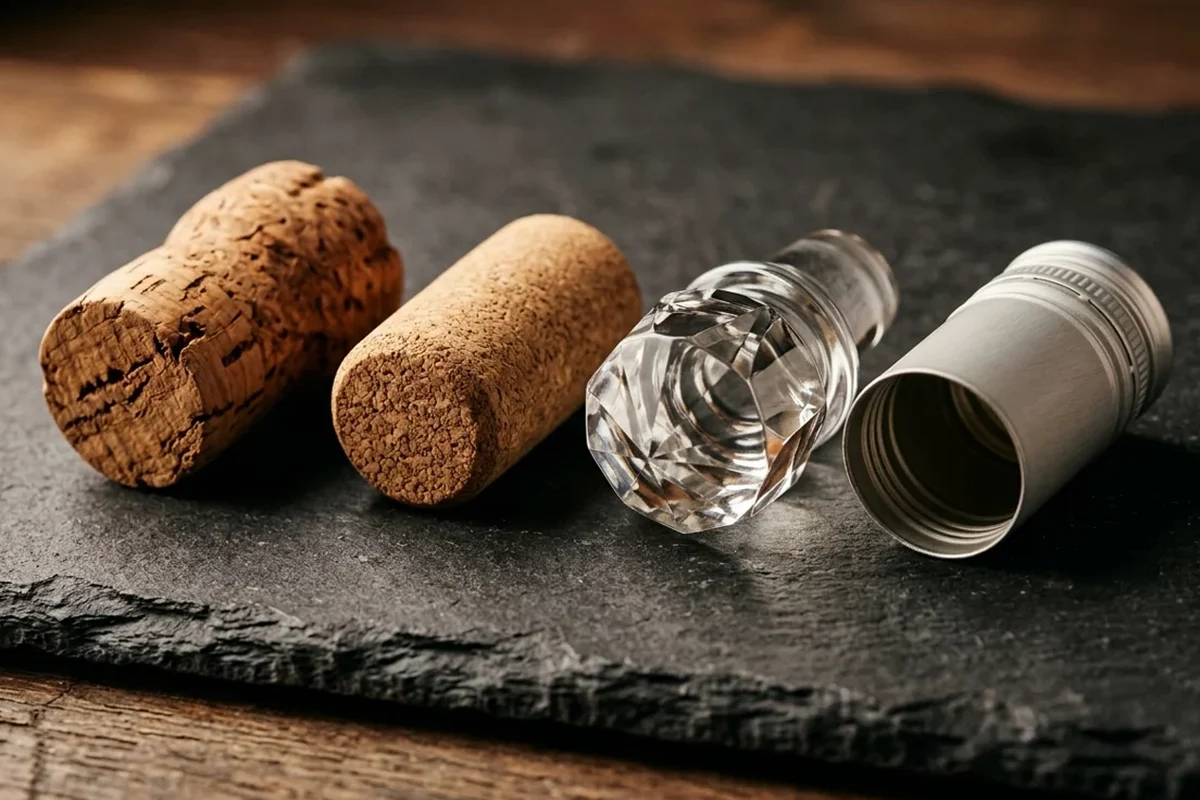
It must seal the mouth and remain attached to the neck. Comité Champagne describes a metal cap with a rubber sealing ring and latches that grip beneath the bottle’s lip. Its opened-bottle instructions pair a dedicated sparkling stopper with cool storage.
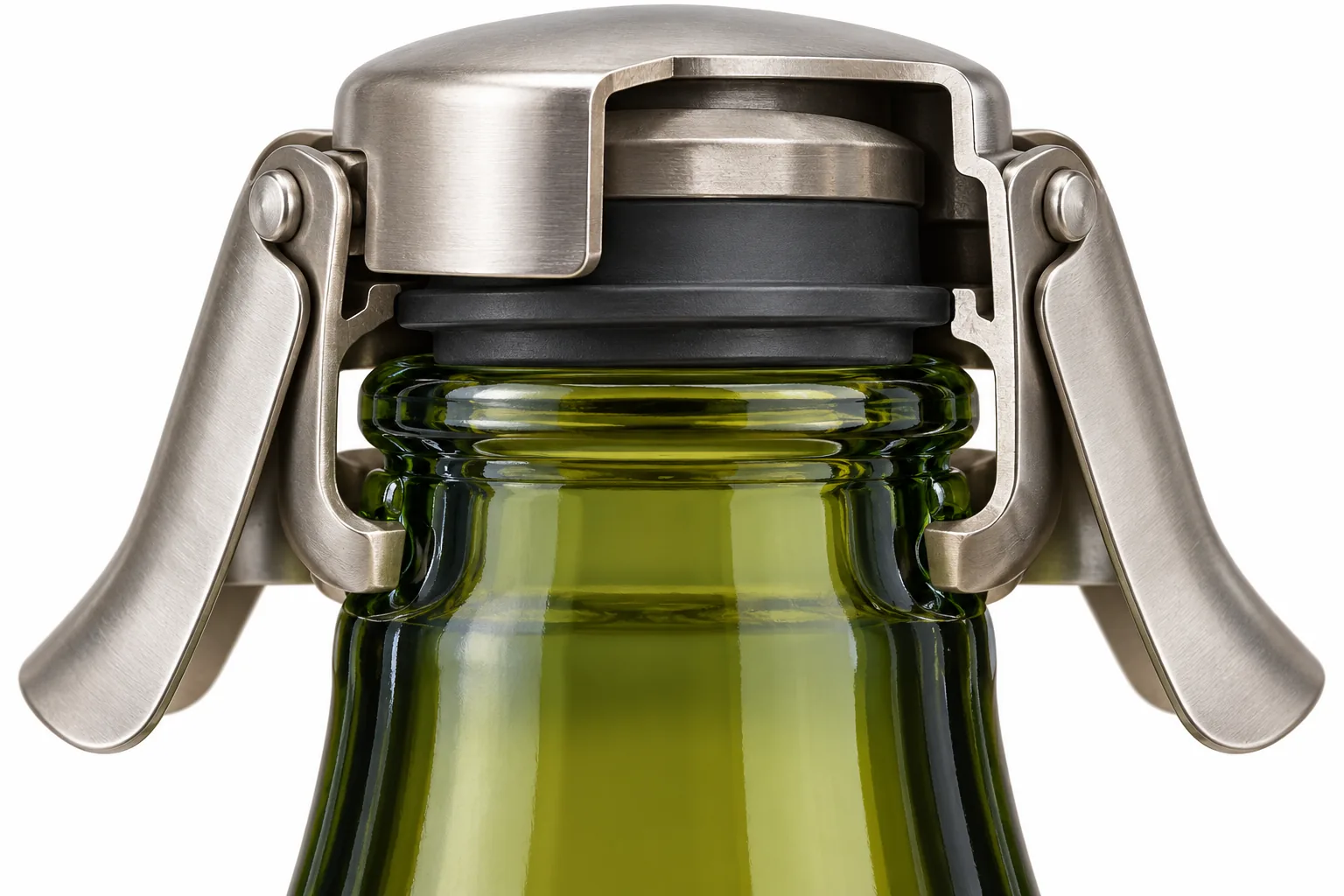
The same official instructions reject the spoon-in-the-neck method. A spoon does not provide the closure shown here. An air-removal method intended for still wine should not be treated as a substitute for a stopper designed to retain sparkling wine’s bubbles.
Why is there no separate lighter-red countdown here?
Because the retrieved university source groups red wines together. It does not establish a lighter-red subgroup or give a formula that converts body, grape variety or tannin into a storage duration.
For a lighter red, the useful starting point is therefore the actual bottle’s producer instructions and a record of how it was stored. A general-red maximum is insufficient evidence for a subtype-specific promise. Likewise, Iowa State’s cool-room condition cannot be silently replaced with an unknown kitchen temperature.
How much empty space is left in the bottle?
Headspace is a useful variable to record, even though its size alone cannot predict shelf life. A simple geometric calculation is:
Headspace volume = effective container volume − remaining wine volume.
For an illustrative scenario, assume effective container volumes of 750 mL and 375 mL, each holding 300 mL of wine, and ignore stopper displacement:
750 − 300 = 450 mL; 375 − 300 = 75 mL; 450 ÷ 75 = 6.
The larger container has six times the empty volume in this scenario. Those inputs are assumptions, not measurements from a preservation trial. The result gives neither an oxygen dose nor a multiplier for storage time: oxygen concentration, dissolved oxygen, pouring and the seal also matter.
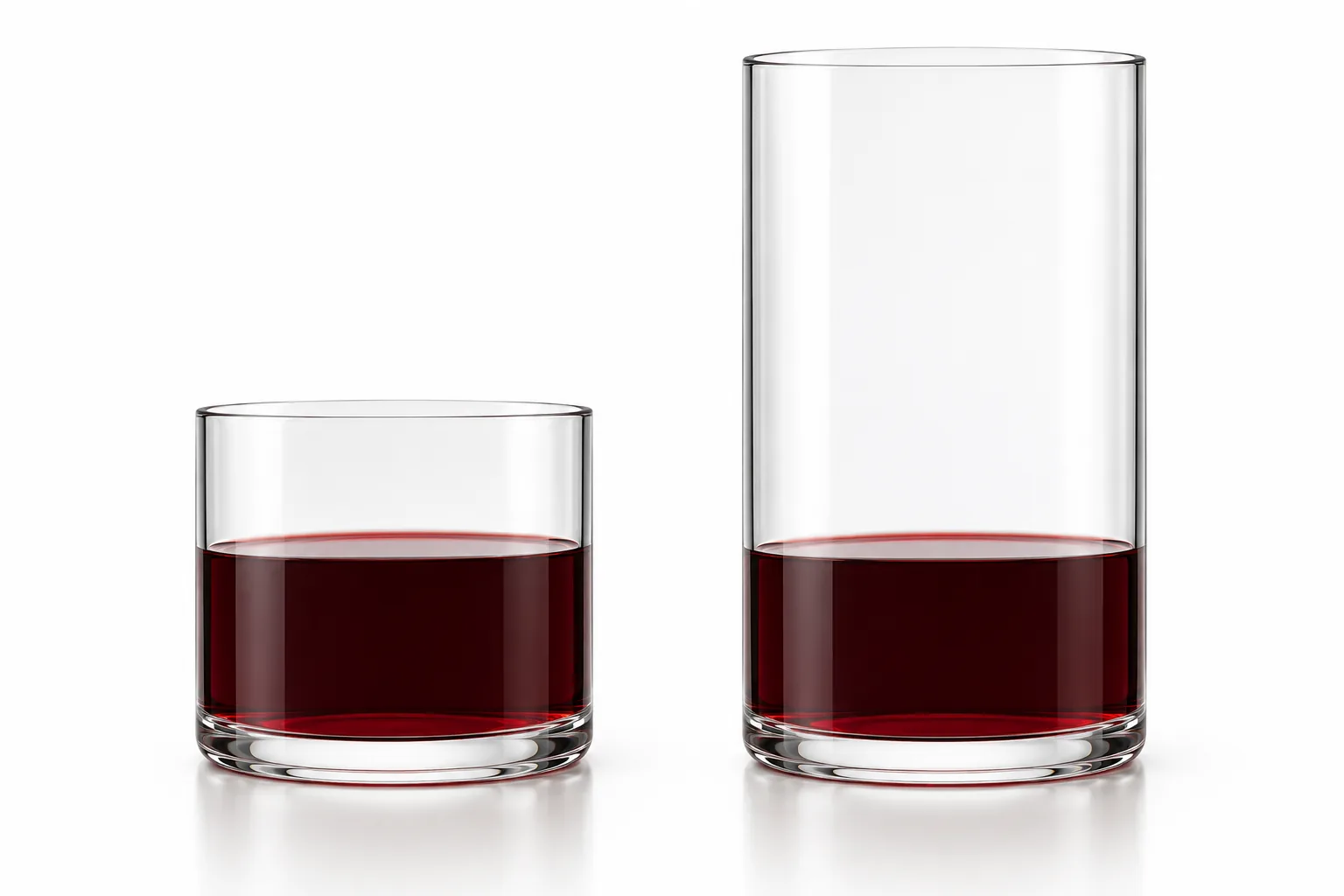
This calculation explains why remaining volume belongs in a storage record. It is not an instruction to transfer pressurised sparkling wine between containers.
Why can fortified wines have such different windows?
“Fortified” does not describe the wine’s entire maturation history. Quinta do Tedo explains that its tawny wines develop through extended wood aging with oxygen exposure, unlike styles intended to retain a different fruit profile or develop in bottle. Its opened-bottle recommendations distinguish those styles and require recorking and refrigeration.
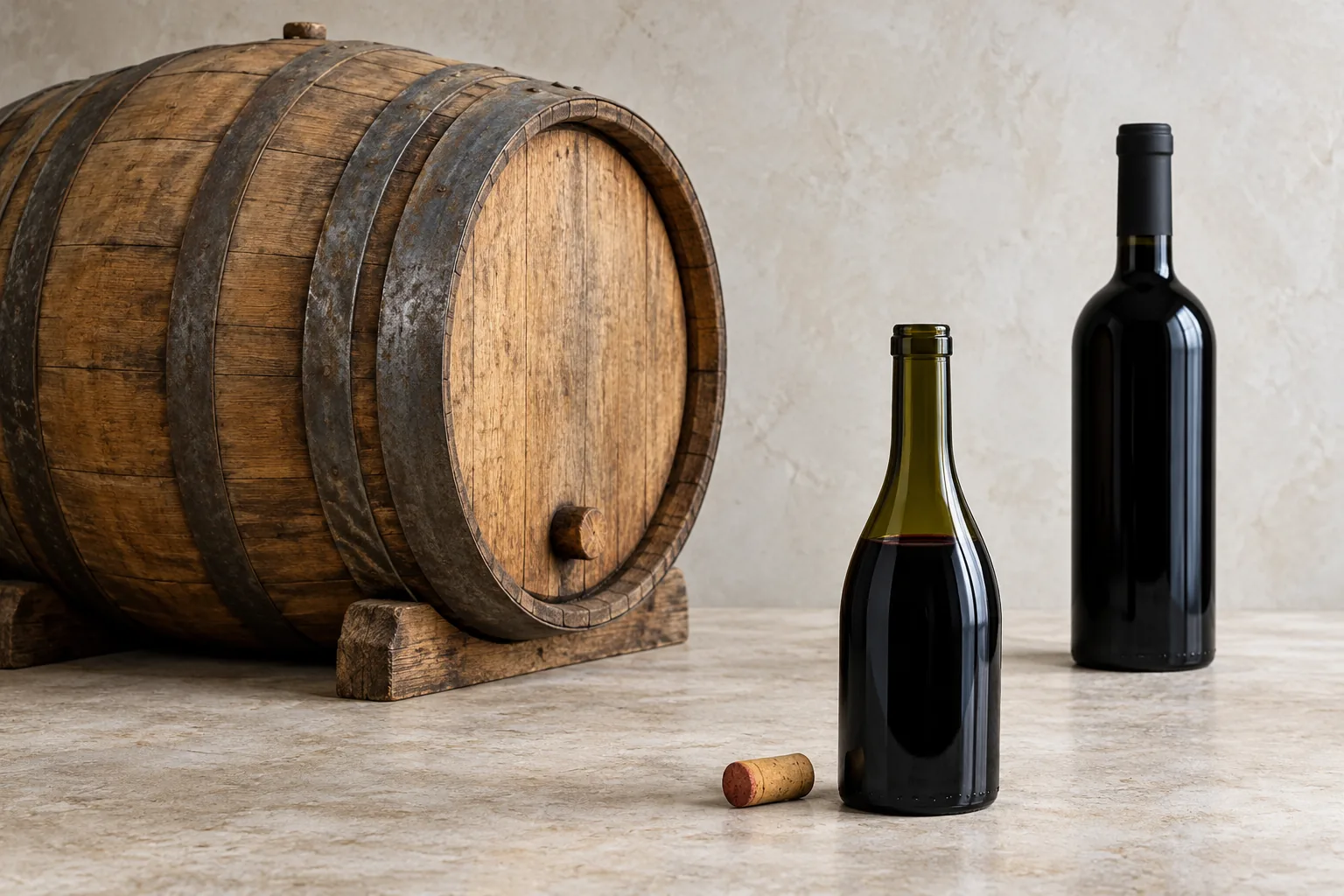
Producer recommendations can also differ within a named style. Quinta do Tedo’s page gives its Vintage Port a longer refrigerated interval than Taylor’s after-opening recommendation. These are different producers’ instructions, with different stated conditions; averaging them would create a figure neither producer supplied. The Port examples above also establish no duration for a bottle of sherry, Madeira or another fortified family.
What should an opened-bottle record include?
Record the style and producer, opening date and time, replacement closure, storage location, remaining volume and any change in colour or aroma. Keep the producer’s instruction or source link alongside that record so the condition behind a time window stays visible.
Iowa State’s browning and bruised-apple descriptors help describe a change; they do not identify every possible cause. A sparkling bottle can also lose the quality being preserved—its bubbles—without following the same visible changes as a still white.
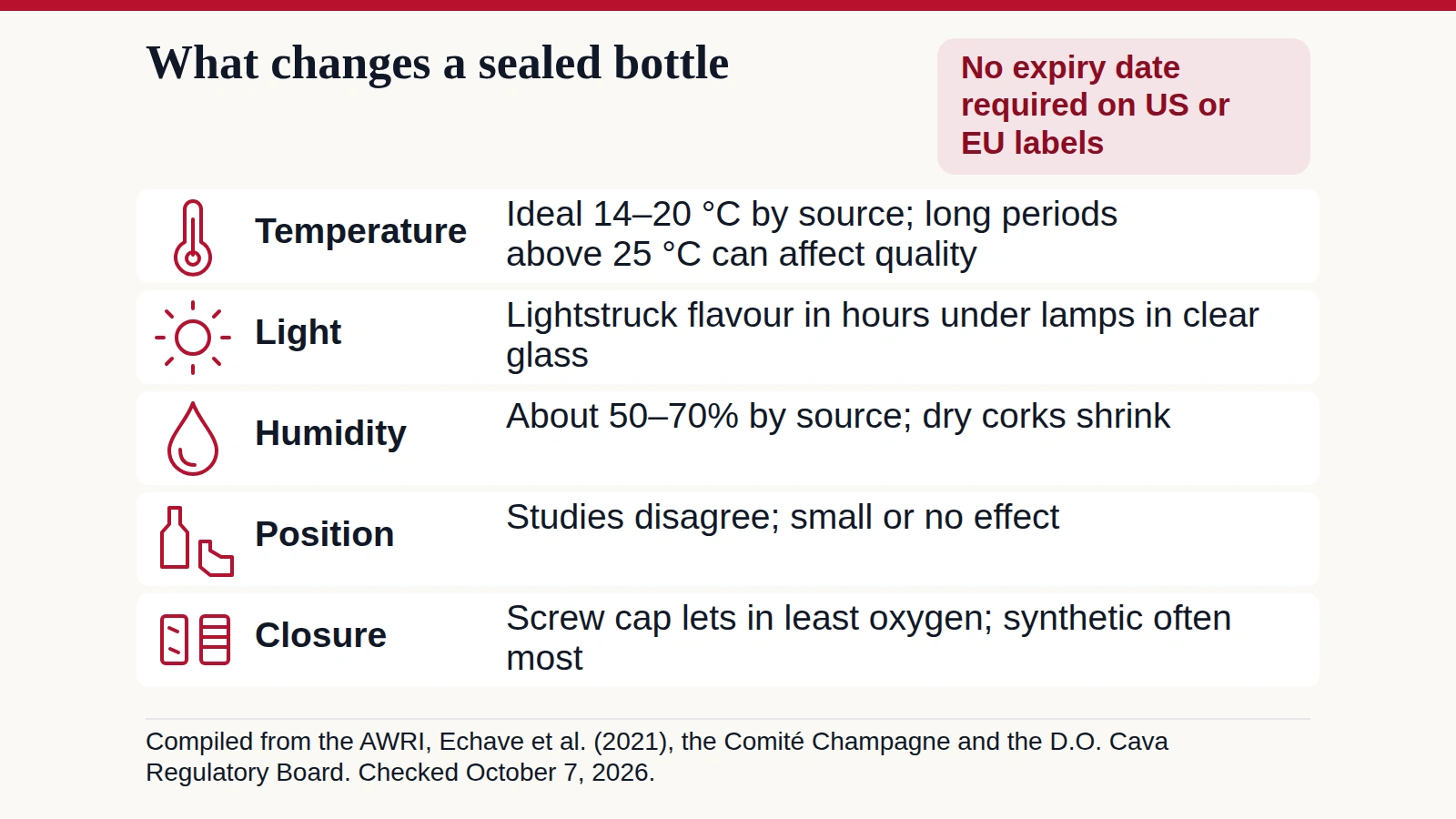
For bottles whose closures are still intact, use the separate guide to unopened wine shelf life and storage. The relevant conditions change once that original seal is removed.
What do these sources establish?
This comparison combines university extension guidance, a university experiment on resealing and primary producer or regional-body instructions, all retrieved October 19, 2026. Extension advice supplies broad categories; the experiment explains preservation variables; producer instructions supply narrower quality windows. They do not establish a universal expiry date, a precise household oxygen threshold or an independent day count for every lighter-red or fortified style.