Labels and Filling
How to Read a Wine Label: Mandatory TTB Fields, Appellation & ABV Tolerances
Learn how to read a wine label: find the brand and type, check appellation wording, compare alcohol tolerances, and decode estate bottled.
All articles and explainers tagged under #wine-labels.
Learn how to read a wine label: find the brand and type, check appellation wording, compare alcohol tolerances, and decode estate bottled.
Understand the U.S. sulfite label threshold, organic wine claims, pH-dependent molecular SO₂ and the measurements that matter at bottling.
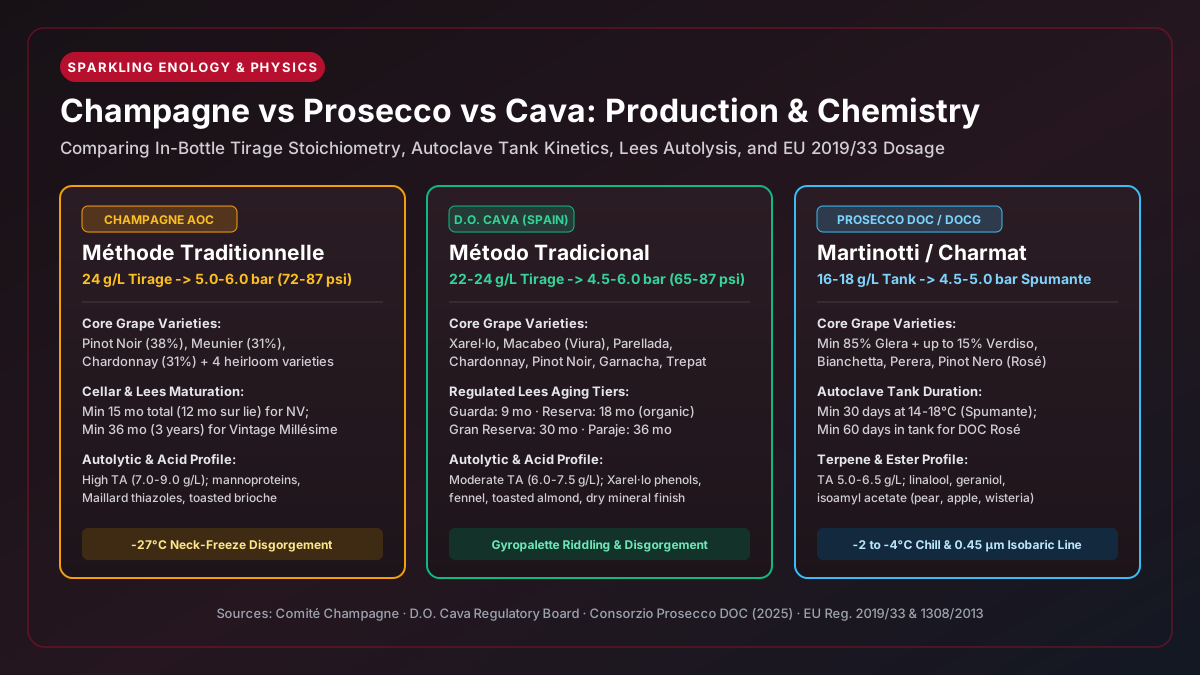
Compare Champagne AOC, Prosecco DOC/DOCG, and Cava DO across traditional method vs Charmat secondary fermentation, tirage pressure stoichiometry, lees autolysis, and Mimosa sugar balance.
Compare wine bottle sizes by volume and standard-bottle equivalents, with Champagne names, US fill standards and checks for confusing formats.
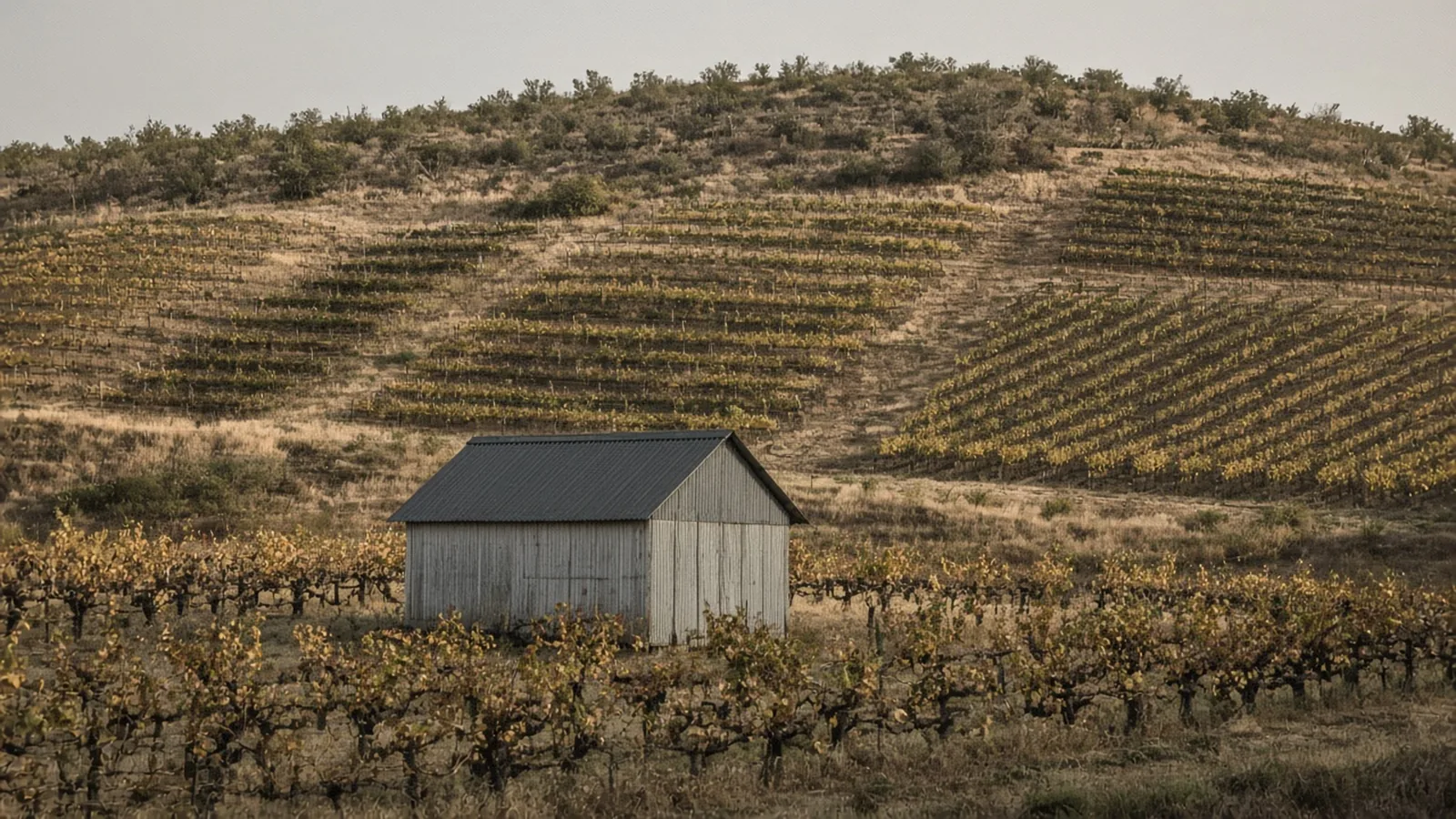
Compare Napa estate bottled (100% owned or 3-year leased AVA grapes, bottled on-site) vs single vineyard (95% named-site fruit) under 27 CFR 4.26 and 4.39(m).
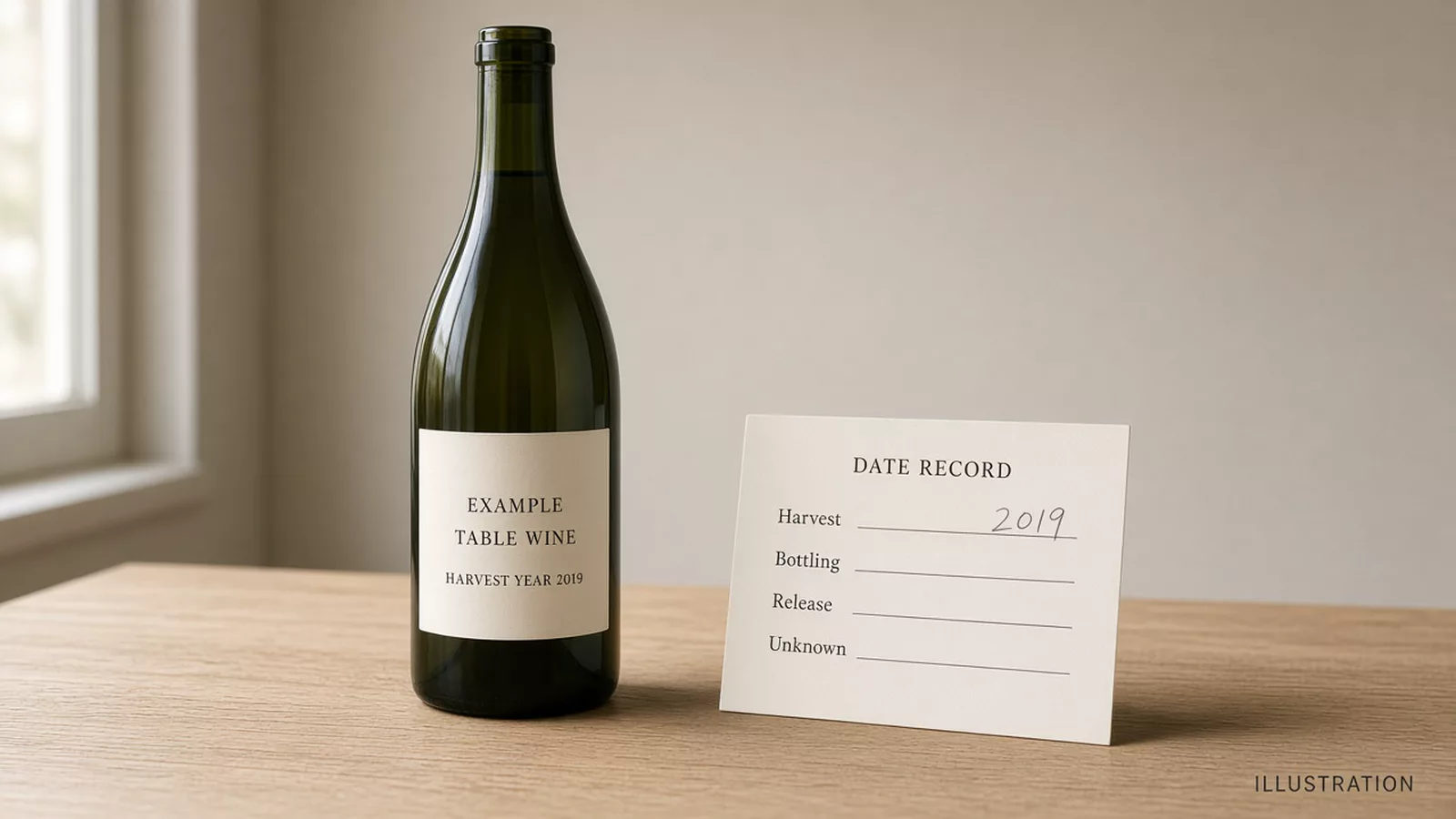
A wine vintage date is the grape harvest year, not the bottling date. Learn the 95% AVA and 85% US label rules, global minimums, and how to verify bottle dates.
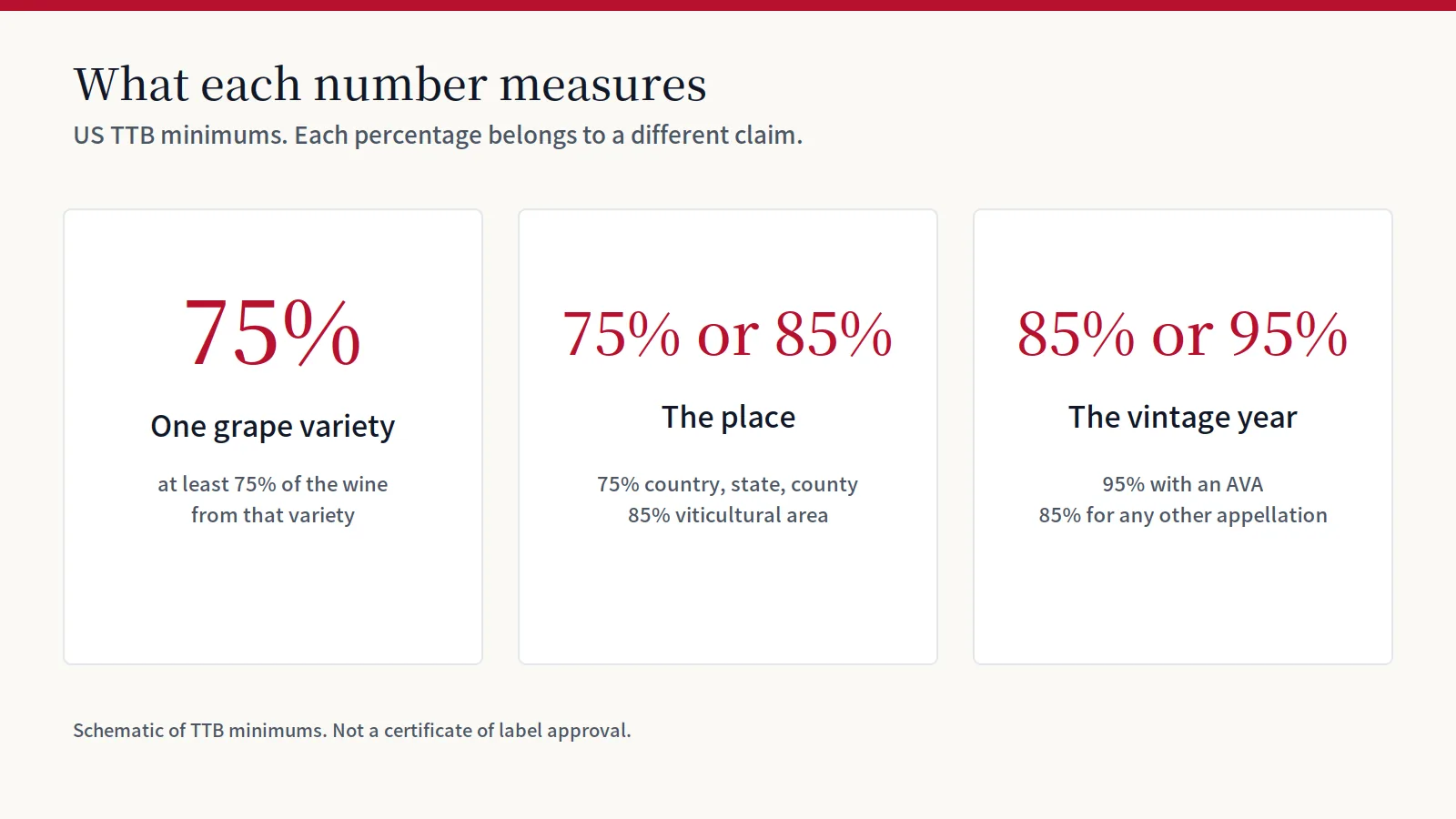
What is the 75-85-95 rule for wine? See the exact U.S. TTB minimums for grape variety, appellation, and vintage year, plus worked labels and key exceptions.
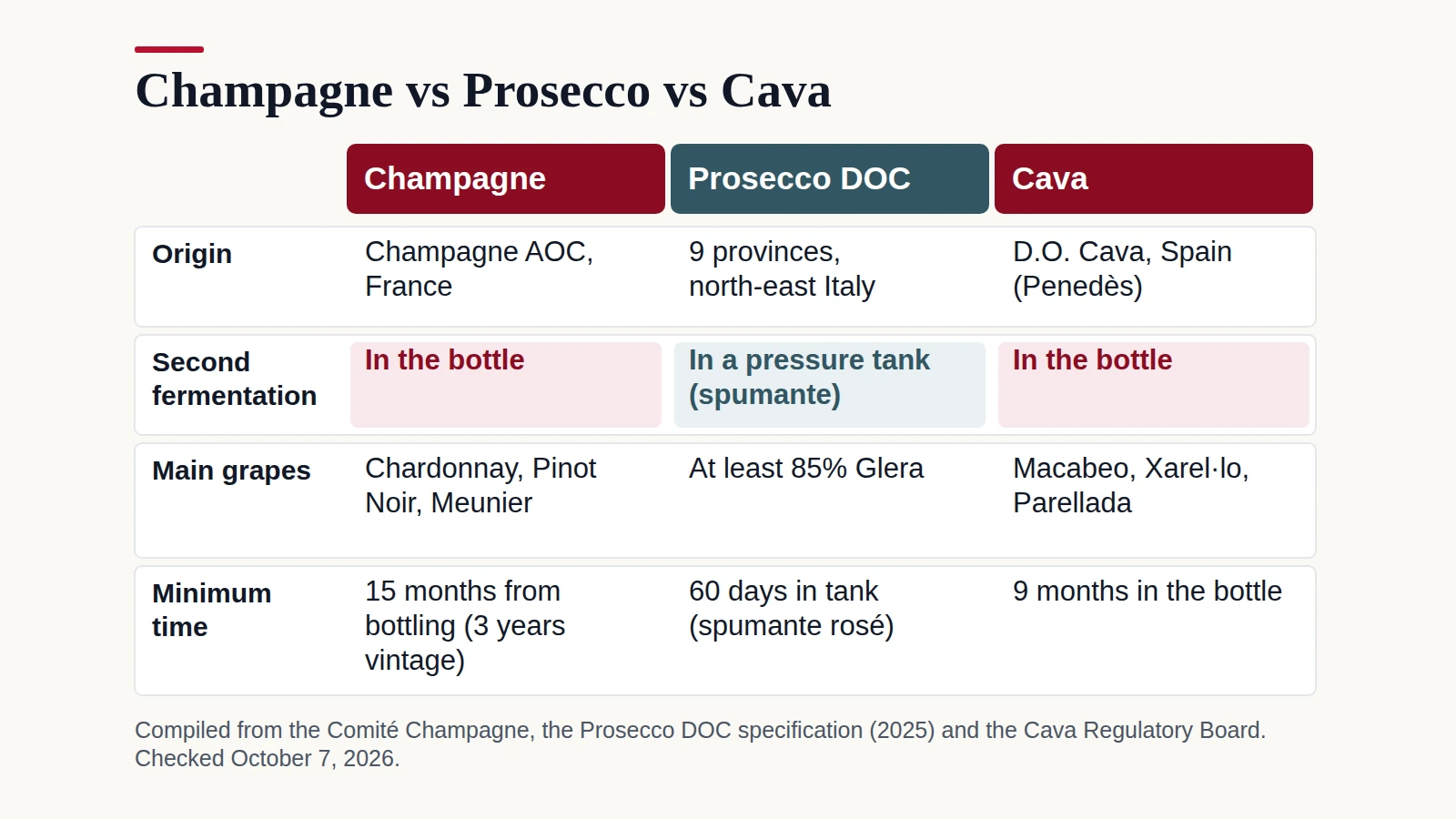
How Champagne, Prosecco and Cava differ in where they come from, how the bubbles are made, what Brut or Extra Dry means in grams per litre, and why the bottles are sealed differently.
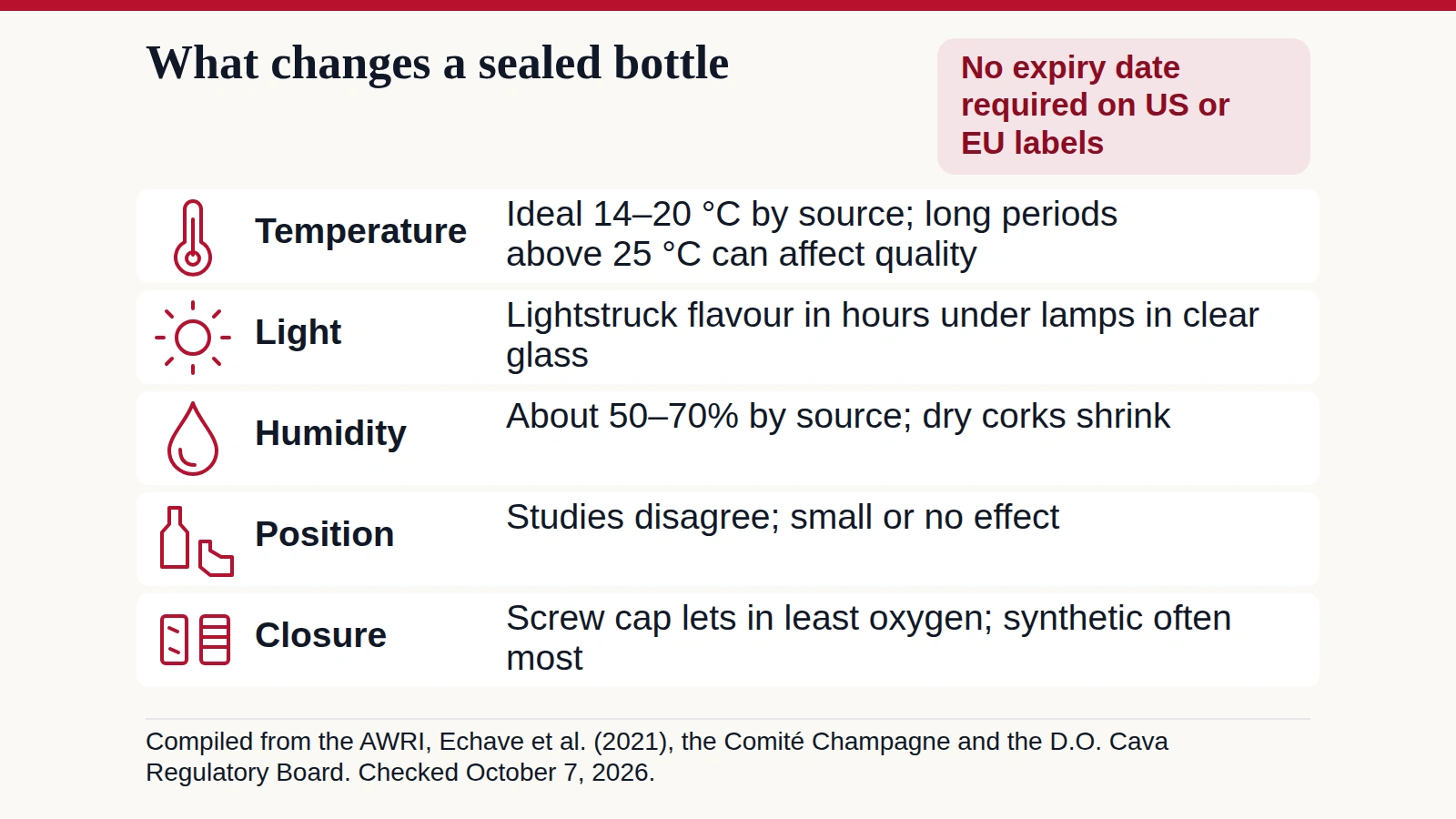
Wine labels carry no required expiry date, but sealed wine still changes. What research says about temperature, light, humidity, position and closures, plus a simple storage record.